Why Crypto Is Evolving Beyond Pure Price Action
Audio Brief
Show transcript
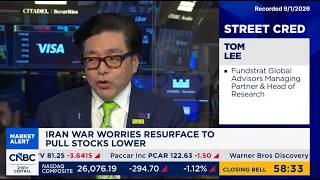
This episode covers Tom Lee's perspective on the cryptocurrency market's transition from a retail movement to an institutionally adopted asset class integrated with Wall Street and AI.
There are three key takeaways from the discussion with the Head of Research at Fundstrat.
First, focus on on-chain metrics rather than just price action. While market prices have remained stagnant, fundamental indicators like active wallet addresses and daily transaction volumes are surging. This divergence suggests that network utility is expanding rapidly, contradicting the narrative of a crypto winter.
Second, monitor retail sentiment in parallel markets like precious metals. Current market stagnation is partly due to retail liquidity shifting temporarily toward gold and silver. A reversal in those leverage-heavy commodity trades could signal a rotation of capital back into digital assets.
Third, view institutional skepticism as a contrarian indicator. The current doubt expressed by traditional finance leadership mirrors early skepticism toward mobile technology before the iPhone. Lee argues that as operational teams at major banks continue building on blockchain, high-level doubt actually signals that the market is still early in its adoption curve.
Ultimately, investors should look past the lack of FOMO-driven price spikes and recognize that the underlying infrastructure of the crypto ecosystem is stronger than current valuations imply.
Episode Overview
- A Shift in Market Drivers: Tom Lee, Head of Research at Fundstrat, discusses the transition of crypto from a retail-driven, ideological movement to an institutionally adopted asset class integrated with Wall Street, AI, and stablecoins.
- Current Market Stagnation: Despite favorable macroeconomic conditions like central bank easing and geopolitical uncertainty, crypto prices have lagged due to retail traders favoring precious metals and the lingering effects of deleveraging events in late 2023.
- The Case for Optimism: Lee argues that on-chain metrics (active addresses, transaction volume) contradict the narrative of a "crypto winter" or a standard four-year cycle, suggesting a market bottom is near or already passed.
- Existential Risks and Opportunities: The conversation covers the potential threat of quantum computing to Bitcoin encryption and compares Ethereum's dominance to historical tech standards, ultimately framing current institutional skepticism as a buying opportunity.
Key Concepts
- The Institutionalization of Crypto: The next decade of crypto will be defined not by evangelists or programmers, but by Wall Street's integration of blockchain for stablecoins and AI agents. This transition period is currently causing friction because the market still relies on "FOMO" and leverage, which were wiped out during the deleveraging event of October 2023.
- Disconnect Between Macro and Price: Traditional indicators that usually boost crypto—dollar weakness, central bank easing, and geopolitical instability—are currently failing to lift prices. This is largely because retail liquidity has temporarily shifted toward leverage-friendly assets like gold and silver, rather than Bitcoin.
- On-Chain Activity vs. Price Cycles: While price action suggests a bear market or "crypto winter," fundamental on-chain data tells a different story. Metrics such as active wallet addresses, daily transactions, and Total Value Locked (TVL) are surging, indicating that the network's utility and adoption are growing even while market prices remain stagnant.
- The "Lindy Effect" in Blockchain: Ethereum's longevity and 100% uptime position it as the dominant standard for smart contracts, similar to how VHS became the standard for video. Despite newer, faster competitors like Solana, Ethereum's deep entrenchment in the financial ecosystem makes it difficult to displace.
- Quantum Computing Risk: There is a growing narrative around "quantum risk"—the idea that future quantum computers could break Bitcoin's encryption. While current technology cannot do this, the anticipation of this progress is affecting institutional confidence and pricing, though Lee believes the network will eventually fork or upgrade to become quantum-resistant.
Quotes
- At 0:18 - "As you look at the next 10 years, it's really about blockchain and being adopted by Wall Street to build stablecoins... and it's a lot about creators and others blurring whatever is money. But because we're in that transition, crypto still relies on FOMO and price." - Explaining the friction between crypto's speculative past and its utility-driven future.
- At 2:31 - "However, on-chain activity is arguing against the four-year cycle... Usually on-chain activity starts to fall... but look at Ethereum... active addresses is up like 115%, daily transactions are up 77%." - Highlighting the divergence between stagnating prices and booming network fundamentals.
- At 6:40 - "Mobile wasn't really mainstream until Apple made the world take it seriously... Up until that point, cellular was kind of an industry that many thought wouldn't survive... One day Wall Street will wipe it off the face of the earth. And I think that's how people view crypto." - Comparing current institutional skepticism of crypto to the early days of mobile technology.
Takeaways
- Monitor On-Chain Metrics Over Price Actions: When evaluating the health of the crypto market, look beyond the daily price ticker. Rising daily active users and transaction volumes are leading indicators of adoption that often precede price recovery.
- Watch Retail Sentiment in Parallel Markets: To gauge when retail liquidity might return to crypto, track activity in speculative commodities like silver and gold. A saturation or reversal in those leverage-heavy trades may signal a rotation back into digital assets.
- View Institutional Skepticism as a Contrarian Indicator: Recognize that high-level institutional doubt often marks the "opportunity zone" in an emerging technology's lifecycle. If top brass at major banks still doubt the asset class while their operational teams are building on it, the market is likely still early in its adoption curve.