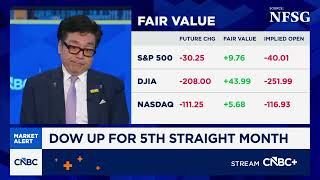
Tom Lee: Why AI Stocks Are Selling Off? (Trailer)
Audio Brief
Show transcript
Episode Overview
- This episode features a market analysis by Tom Lee of FS Insight, recorded during a period of early-year volatility in February.
- The discussion centers on investor psychology, specifically addressing why sudden bearish sentiment during market "wobbles" is actually a counter-intuitive signal regarding the health of the bull market.
- Lee sets the stage for a broader macro discussion, highlighting two specific factors currently agitating the markets, including the behavior of precious metals relative to equities.
Key Concepts
-
Price-Driven Sentiment as a Contra-Indicator When investors allow falling prices to immediately shift their mood to "depressed" or "bearish," it reveals a fundamental lack of conviction in the market. Lee suggests that true market tops are usually characterized by euphoria or stubborn bullishness, not by investors who are ready to flee at the first sign of trouble.
-
The Anatomy of a Bull Market Top Understanding market cycles requires recognizing how tops form. Lee argues that if the general consensus turns bearish quickly after a solitary month of volatility (like a rough January), it indicates the market is not at a peak. A true top typically involves widespread overconfidence, whereas current conditions show fragility in investor confidence.
-
Macro headwinds vs. Tailwinds The presentation teases a conflict between two major macro factors currently "roiling" the market. While the visual aid points to rising precious metals as a potential warning sign for equities, Lee notes that one of the two major pressure points has actually begun to pivot in a direction favorable for stocks, suggesting the full picture is more nuanced than the bearish price action suggests.
Quotes
-
At 0:30 - "If you're quick to turn bearish and your sentiment is affected by price, it shows you that conviction in this market is still quite low." - Explaining why emotional reactions to price drops reveal the underlying fragility—and potential upside—of the current market structure.
-
At 0:38 - "That is not what happens at a bull market top." - challenging the fear that the current downturn signals the end of the cycle, implying that true tops look psychologically very different.
-
At 1:17 - "There's two things I think that are roiling markets at the moment... One of them is actually have turned in a favorable way for equities." - Highlighting that despite the volatility, the underlying macro data is shifting in a way that may support a recovery.
Takeaways
-
Separate Price Action from Thesis Conviction Avoid the trap of changing your fundamental market outlook solely because prices have dropped; use periods of volatility to test the strength of your conviction rather than succumbing to immediate bearishness.
-
Monitor Sentiment for "Quick Bearishness" Use the speed at which the crowd turns negative as a gauge for market health. If sentiment sours rapidly, view it as a signal that the bull market likely has more room to run, rather than a sign of an imminent crash.
-
Watch the Gold/Equity Divergence Pay close attention to the relationship between precious metals and stocks (as highlighted in the slide). A continued rise in precious metals can signal underlying stress in the equity markets that needs to be factored into risk management.