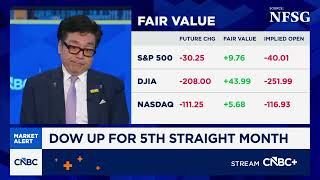
Why Energy & Materials Are Winning While Tech Falls Behind | Mark Newton
Audio Brief
Show transcript
This episode covers critical technical market shifts, economic data interpretation, and investment strategies tailored for the current political and monetary landscape.
There are three key takeaways for investors. First, a significant sector rotation is underway, moving capital from technology into energy and materials. Second, historical presidential cycles suggest the upcoming year will be defined by consolidation rather than rapid growth. Third, changes in Federal Reserve leadership introduce volatility risks that markets may not be fully pricing in.
Regarding the sector rotation, the market narrative is pivoting. Technology, particularly software and AI stocks, is showing signs of bifurcation and fatigue. In contrast, hard assets like crude oil and precious metals are gaining traction, driven by geopolitical tensions and inflation dynamics. This suggests investors should consider rebalancing portfolios toward real assets and away from overextended tech names.
The second point focuses on historical precedent. Data from the second year of presidential terms indicates these periods are often challenging for equities, with average drawdowns historically reaching seventeen percent. Rather than a bull market or a recession, investors should prepare for a year of consolidation. This environment favors stock selection over broad index buying.
Finally, the introduction of a new Federal Reserve governor historically correlates with market instability. The panel notes that markets often struggle to adapt to new communication styles from central bank leadership. Additionally, there is a current dissonance where weak economic data, like the recent ADP jobs miss, is fueling market rallies on hopes for rate cuts. However, new leadership could complicate this dynamic by prioritizing balance sheet reduction over liquidity.
The bottom line is that while broad indices may hold steady, the real opportunity lies in rotating toward commodities and defensive sectors while preparing for policy-driven volatility.
Episode Overview
- This episode of Mornings with Maria features a panel discussion centered on technical market analysis, economic data interpretation, and investment strategies for the current year.
- The conversation focuses heavily on sector rotation away from technology and into energy and materials, driven by historical trends in mid-term election years and shifting Federal Reserve leadership.
- Viewers interested in portfolio rebalancing, understanding the impact of weaker-than-expected jobs data (ADP report), and the potential implications of a new Fed governor on asset prices will find this discussion particularly relevant.
Key Concepts
- Sector Rotation and Leadership Shift: The primary market narrative is moving away from technology dominance toward energy and materials. This shift is attributed to "bifurcation within technology," where previous leaders (specifically software and AI stocks) are consolidating or deteriorating, while hard assets like crude oil and precious metals gain traction due to geopolitical tensions and inflation dynamics.
- Historical Presidential Cycles: Investment strategy is being informed by historical data regarding second terms of U.S. presidents. The second year of a second term (which coincides with mid-term elections) has statistically been challenging for markets, with average drawdowns around 17%, suggesting a year of consolidation rather than rapid growth.
- The "Fed Governor" Effect: The introduction of new leadership at the Federal Reserve historically correlates with market volatility. The panel suggests that markets struggle to adapt to new communication styles from Fed governors, leading to potential sell-offs as investors attempt to parse new policy language and priorities.
- Economic Data Dissonance: There is a notable disconnect between market performance and economic data. despite a significantly weaker-than-expected ADP jobs report (22k actual vs. 48k estimated), markets rallied. This suggests that bad economic news is currently being interpreted as "good news" for stocks because it increases the likelihood of Federal Reserve rate cuts.
Quotes
- At 0:35 - "The three key points is that the sector rotation is very real and is something that likely can start to spread to other areas of the market. Technology is not the leader anymore. We've seen energy and materials start to take center stage." - Highlighting the fundamental shift in market leadership that investors need to recognize.
- At 1:25 - "For those of us that like to study Fed language every single day, to have a new Fed governor where we have a whole new style of communication... is going to prove to probably be a challenge for the markets to just simply continue to go up." - Explaining why changes in central bank personnel introduce uncertainty and risk, regardless of the underlying economic data.
- At 6:04 - "The big thing about Kevin Warsh that nobody's talking about is that what he's effectively going to do is pay for rate cuts at the expense of the bond market by shrinking the Fed balance sheet." - Offering a contrarian view on how potential monetary policy changes might mechanically impact different asset classes.
Takeaways
- Rebalance Portfolios Toward Real Assets: Investors should consider reducing exposure to overextended technology and software stocks and increasing allocations to energy, materials, and commodities, as these sectors are positioned to outperform in the current environment.
- Prepare for Consolidation: Adjust expectations for the coming year; rather than anticipating a bull market or a recession, plan for a "year of consolidation" with potential volatility, making it crucial to be selective rather than buying broad indices.
- Monitor the Dollar and Precious Metals: Use gold and silver performance as a hedge against dollar devaluation ("de-dollarization"), recognizing that while stocks may appear up in nominal terms, their real value against hard assets may be stagnant or declining.