The most unexpected answer to a counting puzzle

Audio Brief
Show transcript
This episode examines a physics puzzle that surprisingly reveals the digits of pi.
There are three key takeaways. First, simple physical systems can hide deep mathematical connections. Second, an idealized two-block collision system can compute pi's digits. Third, pi's appearance often suggests a hidden circularity in the underlying math.
The episode details an elastic collision puzzle on a frictionless surface, involving two blocks and a wall. When the blocks' mass ratio is a power of one hundred, the total number of collisions surprisingly matches the digits of pi. This connection highlights how conservation of energy can implicitly contain circular relationships.
While mathematically elegant, this method is an incredibly inefficient way to calculate pi. This elegantly demonstrates profound links between physics and mathematics.
Episode Overview
- The video introduces a physics puzzle involving two blocks of different masses colliding elastically on a frictionless surface next to a wall.
- The objective is to count the total number of collisions that occur before both blocks are moving away from the wall, never to touch again.
- The surprising result is that when the mass ratio between the blocks is a power of 100, the total number of collisions corresponds to the digits of the number pi.
- This setup is presented as an elegant, yet comically inefficient, algorithm for computing the digits of pi.
Key Concepts
- Elastic Collisions: The core physics principle where both kinetic energy and momentum are conserved during collisions.
- Mass Ratio and Pi: A specific relationship is demonstrated where if the mass of the larger block is 100^N times the mass of the smaller block, the number of collisions will yield the first N+1 digits of pi.
- Idealized Physics: The problem operates in a perfect, theoretical environment with no friction and no energy loss during collisions, which is essential for the mathematical pattern to emerge.
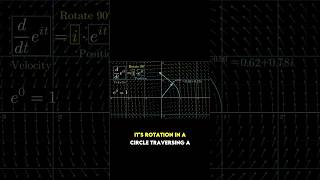
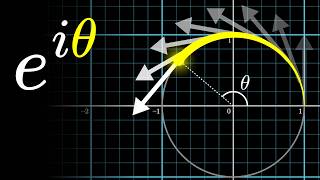
- Hidden Circularity: The narrator hints that the appearance of pi is due to a hidden circle in the problem's underlying mathematics, specifically related to the conservation of energy.
Quotes
- At 02:23 - "When the mass of that first block is some power of 100 times the mass of the second, the total number of collisions have the same digits as pi." - The narrator reveals the central, mind-blowing connection between the physics problem and the mathematical constant.
- At 04:09 - "It's mind-boggling because why on Earth would pi show up here?" - This quote captures the central mystery of the video: the unexpected appearance of pi in a seemingly simple mechanics problem.
Takeaways
- Seemingly simple physical systems can hide deep and unexpected mathematical connections.
- The number of collisions in an idealized system of two blocks can be used to compute the digits of pi.
- For
ddigits of pi, the mass of the larger block needs to be 100^(d-1) times the mass of the smaller one. - This method, while mathematically beautiful, is an incredibly impractical and inefficient way to calculate pi in the real world.
- The presence of pi often hints at an underlying circular or periodic relationship, in this case, found within the conservation of energy equation for the system.