Robyn | Good Hang with Amy Poehler
Audio Brief
Show transcript
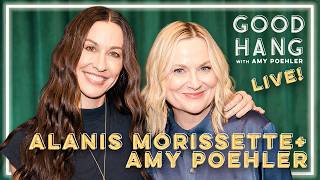
In a politically correct era focused on safety, people often mistake feeling uncomfortable for being in the wrong place, whereas Swedish pop icon Robyn thinks the artist who can sit with an uncomfortable feeling the longest can probably write the more interesting song. On Amy Poehler's show, released on November 10, 2026, Poehler talks with Zara Larsson and Robyn about sustaining artistic integrity and navigating pop industry pressures. By the end, you will learn how they find personal power through creative process, bodily confidence, and solo motherhood.
Why sitting through boredom unlocks better creative work. Robyn is a process person who goes into the studio with longtime collaborator Klas Åhlund to joke around and sit through frustration until a song crystallizes, much like treating creativity as an endurance sport.
How walking away from the commercial machine built an iconic career. Although she and Britney Spears started around the same time with the same Swedish collaborators, including producer Max Martin, watching Spears perform the Pharrell Williams-produced song "I'm a Slave 4 U" on MTV made Robyn realize she could not and did not want to pursue that type of commercial pop stardom. She returned to Sweden and started her own record label at age twenty-four, joking she thought she would retire in two years, and built a catalog including her album Body Talk and her new album and title track "Sexistential."
That fiercely independent streak started with an upbringing where taking an office job triggered a family intervention. Robyn confirms her parents ran an independent Swedish theater company deeply into Russian traditions. When Robyn's brother, a dancer, wanted to take an office job for retirement security, their parents staged an intervention begging him not to, and he later retired from dancing at age thirty-five to avoid retiring at forty-five, got an education, and now choreographs video games.
How solo motherhood transforms heavy loneliness into a life skill. Having a child on her own brought her back to the emotional state of her hit "Dancing on My Own," teaching her to turn heavy loneliness into power. Although Robyn hedges that solo parenting is not necessarily the best way and thinks it is great for children to have many close relationships, her female friends pointed out the upside of making every decision yourself without compromise.
That journey into solo motherhood began with the egalitarian mechanics of Swedish in vitro fertilization, a medical process to help people get pregnant. Robyn explains that when using a sperm bank in Sweden, the patient cannot choose the donor; instead, the doctor chooses one to match the parent's physical appearance. As recounted in her song "Sexistential," when her doctor asked who her dream donor was, Robyn joked about Adam Driver because she likes a big nose, and after she got pregnant, her doctor joked she had picked Adam Sandler.
How moving your body and taking up space builds confidence and longevity. While Larsson hedges that she does not know what is going on in Robyn's head, she notes Robyn exudes confidence. At a recent photoshoot together, Robyn sat in a skirt with her legs spread wide to take up space rather than for the male gaze. You can use physical movement and singing to break through sadness or anxiety, relying on embodied action to lift your spirit rather than waiting for your mood to improve first.
What Swedish traditions and early internet battles reveal about unfiltered expression. Discussing how narrow the definition of cringe has become for young people, Robyn notes Larsson told her she developed her strong political views by defending her thoughts against angry trolls on her childhood blog. Sharing Swedish culture, Robyn claims Eurovision today is just shit and overstimulating in a bad way.
Creative power and confidence come from embracing discomfort, moving your body, and refusing to shrink for others. As Zara Larsson learned after a four-year hiatus between albums stalled her momentum, you can maintain creative momentum by continuing to produce and share work during difficult personal periods rather than taking multi-year breaks.
Episode Overview
- Amy Poehler talks with Zara Larsson and Robyn about sustaining artistic integrity, navigating pop industry pressures, and finding personal power through creative process and solo motherhood.
- The episode opens with Zara Larsson discussing the physical joy of live performance, how a 4-year hiatus stalled her momentum, and what she has learned from Robyn about unapologetically taking up space.
- Robyn traces her unconventional upbringing in a Swedish avant-garde theater family to her early US pop career, explaining why she walked away from commercial teen-pop stardom to start her own record label.
- The conversation explores how Robyn's relationship with her music evolved through solo motherhood and Swedish IVF, alongside candid discussions on aging, creative discomfort, and Swedish cultural traditions.
Key Concepts
- Creativity as an Endurance Sport for Discomfort: Answering a question from Zara Larsson, Robyn explains that she is a "process person" rather than waiting for intuitive inspiration, going into the studio with longtime collaborator Klas Åhlund to joke around and sit through frustration and boredom until a song crystallizes. She notes that in a politically correct era focused on safety, people often mistake feeling uncomfortable for being in the wrong place, whereas she thinks the artist who can sit with an uncomfortable feeling the longest can probably write the more interesting song.
- Reclaiming Artistic Autonomy from the Commercial Machine: Early in her US career, Robyn toured with the Backstreet Boys and Destiny's Child, performed at stadium radio shows, and endured 1990s US radio hosts (mostly men) whom she and Poehler describe as vicious, creepy, and mean, frequently handing young artists papers to read on-air as pranks to make them look stupid. Although she and Britney Spears started around the same time and worked with the same Swedish collaborators, including producer Max Martin, watching Spears perform the Pharrell Williams-produced "I'm a Slave 4 U" on MTV made Robyn realize she could not and did not want to pursue that type of commercial pop stardom. She returned to Sweden and started her own record label at age 24 (joking she thought she would retire in 2 years), building a catalog that includes her album Body Talk, songs "Dancing on My Own" and "Call Your Girlfriend," and her new album and title track "Sexistential."
- Avant-Garde Roots and Anti- Corporate Values: Prompted by Poehler's reference to Jia Tolentino's New Yorker profile, Robyn confirms her parents ran an independent theater company together in Sweden, deeply into Russian theater traditions and recreating Meyerhold's biomechanic choreography for parades. Their biggest theatrical hit before their theater collapsed was a Dadaist poetry evening that opened with her mother and five other actors picking their noses while Robyn's only job was handing out programs. This artistic belief system was so strong that when Robyn's brother, a dancer, wanted to take an office job for retirement security, their parents staged an intervention begging him not to; he later retired from dancing at age 35 to avoid retiring at 45, got an education, and now choreographs video games.
- Transforming Loneliness into Power Through Solo Motherhood: Robyn's song "Dancing on My Own" was written in a very short time after 12 to 15 years of hard work allowed her to trust her intuition, leading to a 2011 SNL performance, a viral video of a packed NYC subway station spontaneously singing it after a New York show (which she saw the next day on a local TV news channel), and David Byrne asking her to perform it with him for the SNL 50th anniversary concert before they had ever met in person. Having a child on her own brought her back to the emotional state of that song, teaching her that turning heavy loneliness into power is a valuable life skill. Although Robyn hedges that solo parenting is not necessarily the best way and thinks it is great for children to have many close relationships, her female friends pointed out the upside of making every decision yourself without compromise, alongside going to therapy with her father, who is now an amazing presence in her life.
- The Egalitarian Mechanics of Swedish IVF: Zara Larsson first met Robyn at a dinner in Sweden during peak COVID times, where Robyn declined a hug because she was in the middle of her IVF journey. Robyn explains that when using a sperm bank for IVF in Sweden, the patient cannot choose the donor; instead, the doctor chooses the donor for you based on matching the parent's physical appearance. As recounted in her new song "Sexistential," when her doctor asked who her dream donor was, Robyn joked about Adam Driver because she likes a big nose, and after she got pregnant, her doctor joked she had picked Adam Sandler.
- Embodied Performance, Confidence, and Longevity: Growing up, Beyoncé was and still is Zara Larsson's biggest inspiration and idol, and Larsson attended the Royal Swedish Ballet School as a child and took after-school dance classes. Larsson mentions her song "Midnight Sun" (which she performs twice during her live sets, prompting hundreds of people in a summer festival crowd to lift their friends in the air during the second performance to mimic her dancers lifting her), her collaboration with Robyn on "Talk to Me," and Robyn's remix of her song "Puss Puss." While Larsson hedges that she does not know what is going on in Robyn's head, she notes that Robyn exudes confidence, recalling a recent photoshoot together where Robyn sat in a skirt with her legs spread wide to take up space rather than for the male gaze, and Robyn notes that she worked with choreographer Decida for the Body Talk era, currently works with Canadian choreographer Erik Christensen (who also choreographed Charli XCX's tour), and discusses physical longevity tests for people in their 50s ("do these five things") with Poehler, hedging that she thinks she can get up from the floor without using her hands right now because she has to do it on tour, though there are several of the other five tests she cannot do yet.
- Cultural Identity, Unfiltered Expression, and Swedish Traditions: "Robin" is traditionally a boy's name in Sweden, and her mother cut Robyn's hair very short as a child under the folk belief that cutting hair short makes it grow back thicker, which Robyn explicitly debunks as "not real." Discussing how narrow the definition of "cringe" has become for young people, Robyn notes that Larsson told her she developed her strong political views because she had a blog when she was younger and had to defend her thoughts against angry trolls in the comments. Sharing Swedish culture (while Poehler notes her brother, Greg, has lived in Stocksund/Stockholm for almost 20 years with her Swedish sister-in-law, Lotta, and sponsors Hilton at 01:18 - 01:49 promoting Curio Collection by Hilton and Waldorf Astoria Hotels and Resorts, and Visible by Verizon at 12:38 - 13:15 promoting a $19/month wireless plan using promo code "HOLIDAYHACK" support the show), Robyn explains that musician Neneh Cherry is Swedish (her mother is Swedish, her biological father is African, her stepfather was jazz musician Don Cherry, and Robyn hedges that she thinks Cherry's other last name is Carlsson, like hers), that ABBA was one of the first Swedish acts to win Eurovision with "Waterloo" followed later by Carola (though Robyn claims Eurovision today is "just shit" and overstimulating in a bad way), that she dislikes Kalles Kaviar (smoked cod roe paste in a tube), that Midsommar involves jumping like frogs around a phallic maypole to "Små grodorna" ("The Little Frogs") alongside a tradition/myth about losing your virginity, and that she ranks crayfish parties third (last) because she dislikes crayfish while ranking Lucia on December 13th (when the sun sets at 3:00 PM with a candlelit crown procession, hedging that she thinks St. Lucia is an Italian saint they made their own and thinks it falls on an old pagan holiday) as her favorite holiday.
Quotes
- At 0:03:53 - "Even if I'm sad one day or feel a bit anxious, I know when I have finished my show, or even two songs in, I just, I just know I will have a good time after the show is wrapped because I will have moved my body, I will have been singing for an hour and a half, and my spirit is just lifted." - Zara Larsson explaining how physical movement and live performance reliably shift her emotional state.
- At 0:08:13 - "She was sitting like in a skirt, legs wide, like just spreading. And they were like, 'Um, excuse me, um, we can see your panties.' And she was like, 'Yeah, that's the point.' And it wasn't because of the, like a sexy gaze, or that she wanted to, you know, like, 'Look at my panties.' It was like, 'Yeah, I know, and I'm taking up space, and you can see my panties and so what?'" - Zara Larsson illustrating how Robyn models bodily autonomy and unapologetic confidence on set.
- At 0:18:07 - "My parents were in theater, and so I grew up with, you know, this community of people doing things together, building things together, rehearsing, you know, big children pretending to be grown-ups. And I always, I was brought up in, you know, in that belief system that that's how things happen." - Robyn describing how her childhood in an independent Swedish theater troupe shaped her collaborative worldview.
- At 0:20:15 - "They had an intervention with him. They were like, 'You're going to be unhappy, we don't think you should do this. What, you need to, you need money for retirement? That's not important in life! We're worried about you. Don't take this job!'" - Robyn recounting how her artist parents begged her dancer brother not to take a corporate office job.
- At 0:27:29 - "I just want to say, it's very narrow now what is cringe, and just being like human and being silly and being unfiltered is, is not as easy as it used to be. And I think for, for younger people it's very hard. And I think that's bad for the world." - Robyn observing how modern self-consciousness and fear of judgment restrict young people's freedom.
- At 0:29:40 - "I remember definitely being like, you know, I'm watching, coming back to Sweden, watching like MTV, like seeing Britney Spears doing like 'Slave 4 U,' like this amazing record she made with Pharrell Williams, and I was just like, 'I'm not going to be able to do that. Like I can't, I can't, I love, I wish I could, but I can't, you know?'" - Robyn pinpointing the moment she realized she needed to leave mainstream American teen-pop to find her own path.
- At 0:35:50 - "The cool thing about it is that you can signal things with the way you look, and I think that's what, that's what music does too. You can send these secret messages and that people understand. It's like you don't really know even exactly what it means, but you can feel it." - Robyn explaining how personal style and music communicate subconscious emotional truths to an audience.
- At 0:38:38 - "When there's nowhere to go, I have to find myself out of this sticky situation with like my own machine, and that's what that song is about, like reveling in this feeling of loneliness and like finding power in it. And I think when I had a child on my own, I found myself, even if I had made up with the sad little girl that wrote that song, I found myself in that situation again, and I started looking at 'Dancing on My Own' very differently, like that's actually a really good skill to have." - Robyn connecting the emotional core of her biggest hit to the resilience required in solo motherhood.
- At 0:44:10 - "Two of my best friends, women, they were like, 'You will actually enjoy this more than having a baby with someone else.' And not specifically like a man, but they were like, 'You can decide everything yourself, there's a lot of upsides to being a single person, parent, as well, actually.'" - Robyn sharing the perspective that helped her overcome her fear of becoming a single mother.
- At 0:46:47 - "The donor was chosen for me by the, by the doctor, and they do it so that the, the kid looks like you, basically, that's the, that's the only... But then of course you have to have a doctor that you trust." - Robyn detailing how Sweden's medical system handles sperm donor selection for IVF patients.
- At 0:58:23 - "It's not a, necessarily a sign that it's going to be bad just because you feel uncomfortable doing it. And it's almost like we're in a time now where we are so, also politically correct, that any environment that doesn't feel safe can sometimes be a place where you, you're not, you don't think you're supposed to be there, right? But learning how to kind of sit through that uncomfortableness, it's like almost like a, an endurance sport in a way, right? Like if you can sit, the person who can sit with the uncomfortable feeling the longer can probably write the more interesting song, I think." - Robyn offering her core philosophy on why tolerating emotional discomfort is essential for creative breakthroughs.
Takeaways
- Use physical movement and singing to break through sadness or anxiety, relying on embodied action to lift your spirit rather than waiting for your mood to improve first.
- Maintain creative momentum by continuing to produce and share work rather than taking multi-year breaks when going through difficult personal periods, as Zara Larsson learned after a 4-year hiatus between albums did not feel good and stopped her momentum.
- Treat creative frustration, boredom, and emotional discomfort like an endurance sport by staying in the room and resisting the urge to self-censor until an interesting idea crystallizes.
- Take a "party nap" before going out dancing and refuse to feel parental guilt over staying up for 30 hours or being hungover once a year.
- Practice clear boundary-setting in everyday situations by following Robyn's two-strike rule for bad massages: ask for more pressure once, tell them "you can go even harder" a second time, and end the session early if it still does not improve.
- Read the book Is It Ever Just Sex? by psychoanalyst Darian Leader (recommended by Robyn and identified by Poehler) to better understand human sexual habits from a psychoanalytic perspective.