Public Market Calls With Timestamps: GLD & SPX Case Studies | Institutional Analysis
Audio Brief
Show transcript
This episode explores the methodology behind Equidamus, a proprietary trading service that distinguishes itself by favoring predictive market intelligence over reactive commentary.
There are three key takeaways from this discussion. First, the critical distinction between market commentary and true market intelligence lies in the timestamp. Second, successful long term positioning requires understanding the structural difference between a trend reversal and a violent pullback within a super cycle. And third, retail traders face a significant disadvantage due to information asymmetry, specifically regarding access to institutional hedging data.
The conversation begins by dismantling the value of standard market commentary. While most financial media explains why markets moved after the fact, true edge comes from forecasting structural limitations before they occur. The speaker emphasizes that predictive models must be audited through timestamped, public records. By reviewing specific calls on Gold and the S P 500 made years in advance, the episode demonstrates that genuine alpha is not about reacting to news, but about identifying inflection points through data that precedes price action.
This leads into the second concept of interpreting volatility regimes. A major theme of the discussion is the Gold super cycle thesis. The speaker outlines how structural models identified specific entry points long before the broader market caught on. Crucially, this involves a mental model for handling volatility. In strong upward paradigms, markets often experience violent, sharp pullbacks designed to shake out weak hands. By understanding the underlying data, traders can identify these moments as strategic buying opportunities rather than reasons to panic sell.
Finally, the episode addresses the barrier of information asymmetry. The speaker argues that the gap between retail and institutional results is rarely a matter of skill, but rather access. Institutional edge is derived from proprietary infrastructure tracking option positioning, dealer flows, and hedging obligations. This data reveals where market makers are mathematically forced to buy or sell, dictating price movement regardless of sentiment. The takeaway is that traders must either invest heavily in building this infrastructure or leverage existing models to bridge the gap.
In summary, successful trading relies on accessing institutional grade data to predict structural moves and having the discipline to trust those models during volatile market corrections.
Episode Overview
- This episode serves as a detailed audit and promotional showcase for a proprietary trading service, "Equidamus," led by a trader known as "Blue Deer."
- The narrative centers on distinguishing "market commentary" (hindsight) from "market intelligence" (foresight), using a series of timestamped, public tweets to verify the accuracy of long-term market predictions made years in advance.
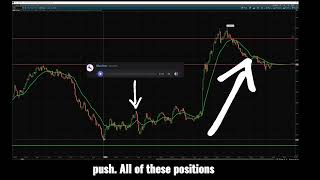
- The presenter walks through specific case studies involving Gold (GLD), the S&P 500 (SPX), and volatility indices (UVXY), demonstrating how institutional-grade data and positioning models were used to predict major market inflection points, such as the 2023 rally and the recent Gold super-cycle.
Key Concepts
-
Market Intelligence vs. Market Commentary
- The core philosophy of the episode distinguishes between two types of analysis. Commentary explains what happened after the fact, offering little predictive value. Intelligence, conversely, predicts future movements based on structural data before they occur. The speaker emphasizes that true edge comes from the ability to forecast, not explain.
-
Information Asymmetry and Institutional Edge
- Retail traders are often at a disadvantage not because of a lack of skill, but because of a lack of access. The speaker argues that "edge" is derived from proprietary data infrastructure—specifically option positioning, dealer flows, and institutional hedging behavior—that costs six figures annually. This data reveals the structural limitations and obligations of market makers, which dictate price movement regardless of sentiment.
-
The Gold "Super Cycle" Thesis
- A significant portion of the analysis focuses on a long-term bullish thesis for Gold. The speaker outlines a multi-year roadmap that identified specific entry points (e.g., at \$190 and \$1231) and predicted a "super cycle" where dips are violent but short-lived buying opportunities. This concept illustrates how long-term structural models can identify trend changes years before they become obvious to the general public.
-
The Psychology of "Violent Pullbacks"
- The speaker introduces a mental model for handling volatility during bull markets. He explains that in a strong upward paradigm, the market often experiences "violent pullbacks" that shake out weak hands but are actually strategic buying opportunities. Understanding this structure allows traders to avoid panic selling during flash corrections and instead add to positions, as demonstrated in the SPX calls during late 2023.
Quotes
- At 0:18 - "Commentary tells you what happened after it's over. Intelligence tells you what's coming before it happens. And puts a timestamp on it so you can verify the call was real." - distinguishing the core value proposition of predictive modeling versus reactive analysis.
- At 0:44 - "Institutional hedging behavior that retail traders do not have access to. Not 'do not know how to analyze,' do not have access to." - highlighting the barrier to entry in professional trading is often data access rather than just analytical capability.
- At 12:30 - "This is the same gap that exists between retail and institutional research in every other market. Information asymmetry. You can either spend a decade trying to build it yourself, or you can delegate to a team that's already done it." - explaining the economic reality of trading infrastructure and the value of leveraging existing institutional-grade models.
Takeaways
- Audit Track Records via timestamps
- When evaluating any trading service or strategy, ignore the narrative and focus entirely on timestamped, unedited predictions. Look for clear "if/then" roadmaps posted in advance rather than post-trade explanations.
- Contextualize Volatility Regimes
- Do not treat all market dips equally. Determine if the market is in a structural "super cycle" or bullish paradigm; if so, interpret sharp, violent corrections as buying opportunities rather than trend reversals.
- Leverage Institutional Positioning Data
- Move beyond technical analysis of price charts and incorporate data regarding options flow, dealer gamma exposure, and hedging obligations. Understanding where big players must buy or sell due to liquidity constraints provides a more reliable directional bias than sentiment alone.