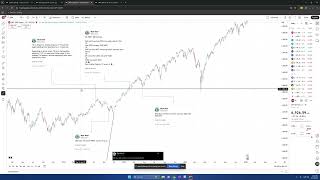
Market Recap: Predictive Paths, Not Reactions | Volatility Setting Up
Audio Brief
Show transcript
This episode analyzes a case study of a specific trading day, demonstrating how to navigate volatility by identifying a sharp intraday reversal on the S&P 500.
There are three key takeaways. First, successful traders trust technical market structure over reactive news headlines. Second, volatility can be leveraged to secure advantageous entry pricing on asymmetric bets. Finally, late-day reversals often provide high-reward opportunities for patient capital.
The narrative follows a trader who maintained a bullish thesis during a sharp sell-off triggered by news headlines. While the market dropped to the 6800 level, the trader identified this as a structural support floor rather than a crash, predicting a V-shaped recovery. By purchasing inexpensive out-of-the-money call options during peak fear, they capitalized on the mispricing. When the index rebounded as forecasted, these contracts appreciated over two thousand percent, illustrating how technical discipline combined with contrarian timing can yield exponential returns.
Ultimately, this case study underscores the value of trading defined risk parameters rather than emotional sentiment during market turbulence.
Episode Overview
- This episode serves as a "recap" case study of a specific trading day (January 21, 2026), demonstrating the real-time thought process of a trader navigating market volatility.
- The narrative follows the trader's analysis of the S&P 500 (SPX) during a sharp intraday drop, showcasing how they identified a potential reversal setup despite bearish momentum.
- It highlights the specific execution of a high-risk, high-reward options trade (SPX 6875 Calls) that capitalized on a market recovery, turning a 35-cent entry into a significant profit.
Key Concepts
- Contrarian Analysis During Volatility: The core concept demonstrated is the ability to maintain a bullish thesis during a sharp market sell-off. While the market dropped to 6800 due to a news headline (Greenland), the trader identified this as a temporary move and predicted a recovery back to the highs, rather than a continued crash.
- Price Levels and Structural Targets: The analysis relies heavily on key price levels. The trader identified 6800 as a support floor and projected a move back to specific overhead targets (6825 and the previous highs). This structured approach helps in defining risk and reward parameters rather than trading on emotion.
- Asymmetric Risk/Reward in Options: The episode illustrates the power of asymmetric betting in options trading. By purchasing out-of-the-money calls (6875 strike) when the market was trading significantly lower, the options were extremely cheap ($0.05 - $0.40). When the thesis played out and the market reversed, these contracts appreciated over 2000%, demonstrating how correct directional analysis combined with timing can yield exponential returns.
Quotes
- At 0:14 - "For the moment, it does look like we're going to move either towards about 6800 again, then back up to this area or back above those highs." - illustrates the trader's ability to forecast a "V-shape" recovery pattern before it happens, identifying a dip-buying opportunity amidst selling pressure.
- At 0:53 - "It's a lot higher chance than what the market pricing... I would not be out into it that we get, you know, above 6875 by the close." - highlights the concept of identifying mispricing in the market; the trader believed the probability of a rally was significantly higher than what the cheap option premiums suggested.
- At 1:12 - "Most least likely is going to be that same day, but SPY by end of week has to go up about 100 points... making a move like that is completely on in the realm of possibility." - demonstrates macro awareness, connecting intraday movements to broader weekly volatility expectations to justify a high-conviction trade.
Takeaways
- Trust Technical Structure Over Headlines: When a sudden news event causes a market drop, evaluate whether the structural support (like the 6800 level here) holds. If the technical thesis remains intact, the news-driven dip often presents a buying opportunity.
- Leverage Volatility for Entry Pricing: Use moments of peak fear or downward momentum to enter bullish positions at depressed prices. The trader bought calls when they were worth pennies because the market sentiment was negative, maximizing the potential percentage return.
- Plan for Late-Day Reversals: Recognize that significant market moves, especially recoveries, can occur late in the trading session. The trader anticipated a "late day push," suggesting that patience is required to let a thesis play out even if the morning session looks weak.