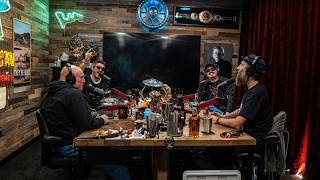
JRE MMA Show #189 with Tommy McMillen
Audio Brief
Show transcript
How did fighter Tommy McMillen break a world striking record, win his next fight seven weeks later, and then end up needing two doses of the overdose reversal drug Narcan to survive a nightclub collapse? On the November 17, 2026 episode of The Joe Rogan Experience, host Joe Rogan talks with rising Ultimate Fighting Championship featherweight Tommy McMillen. You will learn how unpunished fouls alter championships, how athletes drop massive water weight, and how McMillen healed severe spine and shoulder injuries without surgery.
Why a single unpunished foul can derail a championship career. Joe Rogan claims heavyweight champion Tom Aspinall had to undergo four surgeries and relinquish his belt because he cannot fight right now after being fouled multiple times. In contrast, McMillen states he has fought in the cage 22 times and never eye poked anybody.
How a chaotic upbringing forges a relentless cage mentality. At 18 years old, McMillen fought two amateur mixed martial arts bouts on back to back nights after partying on two hours of sleep. He grew up wrestling in Great Falls, Montana, where his father opened one of the city's first mixed martial arts gyms, and on that second amateur night, McMillen broke his opponent's orbital eye bone.
The hidden physiology of extreme weight cutting. McMillen competes at the 145 pound limit, yet he weighed 171 pounds in his underwear right before walking out to fight Marwan Rahiki. To shed the final 11 pounds that week, McMillen used a hot tub and a sauna. If you need to cut water weight for athletics, try using a hot bath or lowering your sauna temperature to the 160s for a longer duration instead of 195 degrees Fahrenheit to reduce the physical drain.
When record breaking athletic output collides with life threatening addiction. McMillen broke the world record for most significant strikes in a three round fight against Alberto Montes, partied for two weeks straight, and then trained for five weeks to beat Rahiki. On November 7, in the middle of a packed club, he became unresponsive while choking on fluid after he maybe mixed the wrong substances or got a bad batch, waking up at the hospital six to seven hours later after two doses of Narcan.
How to heal severe nerve and joint injuries without going under the knife. For over two years, a pinched sciatic nerve and a flat lower spine made McMillen's feet go numb during workouts, preventing him from grappling for a year and a half before his Contender Series win. He resolved the condition without surgery by sitting on his knees and heels and leaning backward to stretch his hip flexors for two hours a day for a year.
That physical recovery protects a massive financial upside, which is why treating a fighting career like a high stakes business means delaying top rankings to gain experience. Yet inside the sport, McMillen deliberately avoids calling out a top 15 opponent right now because ranked fighters cannot fight as frequently, preferring to log more cage time first.
Why your deepest fears might actually belong to your ancestors. Rogan and producer Jamie Vernon examine an article about a 10 year old in Japan named Jo Nagai, who worked with entomologist Doctor Martha Weiss to condition caterpillars to dislike lavender using a mild electrical pulse. That conditioned memory survived metamorphosis into butterflies and passed directly to their offspring, leading Rogan to speculate that inherited memory is probably where human phobias like arachnophobia originate.
Elite fighting requires managing extreme physical stress and protecting your career as a high upside business before outside habits derail it. You are also a business, a business that has a massive upside.
Episode Overview
- Joe Rogan and Tommy McMillen discuss McMillen's upbringing in Great Falls, Montana, his training alongside Sean O'Malley and Tim Welch, his high-output UFC fighting style, and a recent drug overdose.
- The conversation explores recent UFC heavyweight and lightweight matchups, the career-altering consequences of eye pokes in the octagon, and the physiology of extreme weight cuts.
- McMillen details his early gritty path into mixed martial arts, including back-to-back amateur debuts on two hours of sleep and overcoming a 3.5-year professional layoff without surgery.
- Both speakers examine non-surgical protocols for severe sciatic nerve pain, lumbar compression, and torn shoulder ligaments, alongside the business realities and lifestyle pitfalls facing rising professional fighters.
Key Concepts
- UFC Foul Enforcement and Recent Matchup Dynamics: The lack of immediate point deductions for fouls like eye pokes heavily alters careers and fight outcomes. Joe Rogan claims Tom Aspinall had to undergo four surgeries and relinquish/retire his heavyweight championship belt because he cannot fight right now after being fouled multiple times. Producer Jamie Vernon notes a proposition by "Suga" Sean O'Malley that Ciryl Gane (whom Rogan notes is 240+ pounds) should start his next fight with a two-point deduction in the hole for eye-poking. In contrast, Tommy McMillen states he has fought in the cage 22 times and has never eye-poked somebody. Discussing Gane's recent bout against Josh Hokit, Rogan states Gane won by 1 point, meaning a 1-point deduction for the eye poke would have made it a draw. McMillen claims Hokit has three fights this year ranked in the top 15 on Verdict MMA, and that the Gane vs. Hokit fight was ranked in the top 7 fights of the year. Rogan and McMillen note that Hokit got a heavyweight title fight in one year with only 11 pro fights total, having beaten Curtis Blaydes and Derrick Lewis at the White House. They also discuss Justin Gaethje defeating Ilia Topuria on the White House lawn, noting Topuria threw a celebration party the night before the fight, just as he did before fighting Charles Oliveira and Alexander Volkanovski.
- Early Grit and Unconventional MMA Progression: A fighter's early environment and willingness to endure chaos often forge their competitive mindset inside the cage. McMillen started wrestling at 3 to 3.5 years old in Great Falls, Montana, competing against 4-, 5-, and 6-year-olds because his father was a coach. McMillen's father had McMillen's older sister at age 15, McMillen at age 17, and his younger brother at age 19; he worked as a plumber, bagged groceries, boxed under Olympic boxer Todd Foster in Toughman competitions, and opened one of the first MMA gyms in Great Falls when McMillen was in third grade. After getting kicked out of high school for absences following his senior wrestling season, 18-year-old McMillen won his first amateur MMA fight in the first round on a Friday night, partied all night on 2 hours of sleep, drove 2 hours to Lewistown, Montana, the next day using his Friday weigh-in weight, and broke his second opponent's orbital bone in front of headliner Tim Welch. In 2017, at age 19, McMillen packed a Honda Accord with no A/C to rent a room in Arizona from Sean O'Malley right after O'Malley won on Dana White's Contender Series. McMillen states O'Malley had only 7,000 to 8,000 Instagram followers at the time, drove a beat-up Nissan Altima with no A/C, and weighed in at 135 pounds for his Contender Series fight against Alfred Khashakyan without doing a fight camp or rehydrating weight, hedging that he is pretty sure O'Malley was concussed going into the fight. Now 28 years old, McMillen went pro at age 21 right before COVID, was sidelined for 3.5 years (2.5 years due to COVID shutting down regional scenes and 1 year due to torn foot ligaments he treated without surgery), and then won 5 fights in a year at age 24.
- Weight Cutting Physiology and Extreme Rehydration: Modern MMA fighters manipulate massive amounts of water weight, making the method of dehydration critical to performance. Rogan states that welterweight fighter Michael Morales weighs in at 170 pounds and walks around in the 220s, while McMillen claims many 155-pound fighters blow up over 200 pounds, and Rogan claims Islam Makhachev did as well. Standing 6 feet tall and fighting at 145 pounds, McMillen states he weighs up to 185 to 190 pounds out of camp and weighed 171 pounds in his underwear in the back before walking out to fight Marwan Rahiki. For that fight week, McMillen woke up at 162 pounds on Wednesday, woke up at 159 pounds on Thursday (13 pounds over the 146-pound non-title limit), floated 2 pounds during Thursday to reach 157 pounds, and cut the final 11 pounds in the hot tub and sauna (losing 5 pounds Thursday night, floating 1 pound, and cutting the final 4 to 5 pounds Friday morning). Rogan cites a recent study showing that using a hot bath for weight cutting is better for the body's physiological response than using a sauna. McMillen relays a claim from O'Malley's nutritionist, Dan Garner, that pulling water in a hot tub drains the body less than a sauna because the source from which water is pulled differs, though McMillen hedges that he does not know the reason for that. Rogan adds that fighter Ethan Ewing cuts weight in a sauna set to the 160s (°F) for a longer duration rather than 195°F to avoid draining the body, and also claims that boxer Terence Crawford does not eat red meat because his doctor told him eating too much red meat caused his bowels to get backed up.
- High-Output Pacing vs. Heavy Partying and Overdose Risks: Elite athletic output can coexist with severe substance abuse until the physical toll becomes life-threatening. McMillen claims Great Falls, Montana, is one of the number one meth capitals in the world and that he started partying and using substances in fifth grade to shut his brain off. Seven weeks prior to fighting Marwan Rahiki, McMillen fought Alberto Montes (a 12-1 black belt), breaking the world record for most significant strikes in a three-round fight, then partied for two weeks straight and trained for five weeks for Rahiki. McMillen defeated Rahiki (who was 9-0 with 8 knockouts), winning the first round 10-9, losing the second round 10-9 on all three judges' scorecards after getting dropped by a left check hook, and winning the third round (receiving a 10-8 on one judge's scorecard, resulting in scores of 29-27, 29-28, 29-28). However, McMillen recounts overdosing on Saturday night, November 7th (after attempting "Sober November" for a week), in the middle of a packed club rather than in a bathroom stall as reported by TMZ four days later on Wednesday. Hedging that he does not remember the events after arriving at the club and that he maybe mixed the wrong substances or got a bad batch around 11:00 PM to 12:00 AM, McMillen became unresponsive while choking on fluid coming out of his mouth, was revived with two doses of Narcan, was taken to the hospital for an IV, and woke up around 5:00 AM (6 to 7 hours later).
- Non-Surgical Rehabilitation for Spine and Joint Injuries: Severe nerve impingements and ligament tears can often be resolved through targeted mechanical decompression, mobility work, and peptide protocols rather than surgery. McMillen suffered from a pinched sciatic nerve and a flat lower spine for over two years (hedging that he forgot his doctor's degrees and does not know the medical term for a spine lacking curvature at the bottom), which caused his big toe and feet to go numb during workouts. He resolved the condition without surgery by stretching his hip flexors (specifically sitting on his knees and heels and leaning backward) for two hours a day for a year, and won his Contender Series fight against Arman Tsarukyan's cousin, David Mgoyan, without grappling for a year and a half leading up to the fight. When McMillen was previously scheduled for Contender Series in September 2024, he blew out his shoulder labrum and separated his AC joint a week and a half before the fight; he healed it before entering the UFC by taking the "Wolverine stack" of peptides (BPC-157 and TB-500), which Rogan also takes daily. Rogan mentions the Austin clinic Ways2Well while praising their work with Robert F. Kennedy Jr. to push compounding pharmacies' ability to sell peptides through the FDA, and McMillen discloses that he and YouTuber "SteveWillDoIt" are launching a peptide and supplement company called PEPS the following week. For back injury recovery, Rogan recommends red light therapy (which he does at least twice a week), hyperbaric oxygen chambers, the Reverse Hyper machine (invented by Louie Simmons of Westside Barbell for active spinal decompression), and the Teeter Dex II (a hip-hanging decompression and back extension device), while noting that fighter Justin Gaethje only gets massages once a week.
- The Fighter as a High-Stakes Business Entity: As an athlete's earning potential scales, managing lifestyle risks and strategic fight matchmaking becomes a critical business operation. McMillen promotes his upcoming cannabis strain "Tommy Montana" (packaged in lunchboxes with edibles and eighths), states he is signed with Monster Energy, and discloses that SteveWillDoIt signed him to a $100,000-a-month gambling deal to represent the online sportsbook Gamdom and Motion Pouches (zero-nicotine nootropic performance pouches in which McMillen has partial ownership, containing 100 mg Guarana Seed Extract, 100 mg Green Coffee Bean Extract, 100 mg Alpha-GPC, 100 mg L-Theanine, 100 mg Citicoline, 50 mg Ginseng, 50 mg Rhodiola Rosea, and 2000 mcg Vitamin B12). Rogan also reads episode sponsorships for Uber Eats / Wingstop (offering 10 free boneless wings from Wingstop on qualifying orders between November 2nd and November 16th) and ARMRA Colostrum (offering 30% off with code "Rogan"). Exposed to massive wealth through these deals, McMillen states he watched Dana White and SteveWillDoIt each bet $1,000,000 cash per hand on baccarat and both win $1,000,000, while Rogan recalls watching Dana White play blackjack until 6:00 AM the night before a UFC event while down $600,000 before eventually winning. To protect his career upside, McMillen deliberately avoids calling out a top-15 opponent right now because ranked fighters cannot fight as frequently, preferring to log more cage time and experience while unranked before making a rapid title run.
- Epigenetic Memory Inheritance Across Metamorphosis: Environmental conditioning can survive profound biological restructuring and pass directly to offspring. Rogan and Jamie Vernon examine an article titled "10-Year-Old Discovers That Butterfly Memories Survive Metamorphosis and Can Be Inherited," which details how second-grader Jo Nagai from Kobe, Japan (working with Georgetown University entomologist Dr. Martha Weiss), used an electrical pulse from a muscle therapy device paired with lavender oil to condition Asian swallowtail caterpillars to dislike lavender. The conditioned memory survived metamorphosis into butterflies and was inherited by their offspring in Y-shaped maze tests, leading Rogan to speculate, with a hedge, that inherited memory is probably where human phobias like arachnophobia originate.
Quotes
- At 0:02:34 - "Could fuck a guy's whole career up. Look at Aspinall. Four fucking surgeries, man. The guy's the heavyweight champion of the world, he has to retire his belt. He's—because he can't fight right now. So he has to relinquish his belt because he got fouled multiple times." - Joe Rogan explaining the severe career consequences of unpunished eye pokes in the UFC.
- At 0:03:39 - "It was one of the most entertaining heavyweight fights in the history of the sport. It was madness. Just complete madness. The fact that he just waded in on one of the scariest fucking strikers in the division." - Joe Rogan praising Josh Hokit's aggressive approach against Ciryl Gane.
- At 0:13:20 - "I saw that on TV and I was like, 'Oh, like that's what I'm going to do, like to make a lot of money.' Like that's what—that's literally what I thought. Like I was like, I saw it on TV, I was like, 'Those guys look like they're the man. Like I feel like if I do that, I can have what—like help my family, I can like, you know, just like have financial freedom.'" - Tommy McMillen describing his childhood realization that fighting in the UFC could lift his family out of financial struggle.
- At 0:18:26 - "I literally packed up my old shitty Honda Accord car with no A/C and I was like 19 years old, like just been training in Great Falls to try like get out to Arizona, and I packed up my car right away, drove out to Arizona, just pulled up to Suga's house and was like, 'Yo, what up, dude?' And like just—like we never even met each other, I just pulled up to live with him." - Tommy McMillen recounting how he moved from Montana to Arizona to live and train with Sean O'Malley.
- At 0:21:47 - "He didn't do a fight camp for that camp. I remember he said he weighed in like at 35 and didn't put any weight back on because I think he said he was like—I'm pretty sure he was concussed going into that fight so he wasn't training." - Tommy McMillen sharing how Sean O'Malley fought on Dana White's Contender Series without cutting weight or doing a full training camp.
- At 0:23:02 - "He's like, 'Well, yeah, dude, you fucking—' He's like, 'Last night for dinner you ate a block of cheese and fucking a bag of Sour Patch Kids.' Like, he's like, 'Of course you can't move your back, bro, you ate a block of cheese.'" - Tommy McMillen quoting coach Tim Welch confronting him about his poor diet when he first moved to Arizona.
- At 0:32:47 - "I went out, I—so I beat that kid up Friday night, went out, partied all fucking night like an idiot, got like two hours of sleep, hopped in the car with my girlfriend at the time, and drove two hours to this other town to fight this kid." - Tommy McMillen detailing how he fought his first two amateur MMA bouts on back-to-back nights at age 18.
- At 0:36:40 - "It's the mind. The mind's the weapon. And those dudes that have that fucking—like what Hokit did on Saturday night, that is the mind. That's 100% because he made a choice, like a crazy choice to do something he absolutely—nobody wants to wade in on Ciryl Gane and risk getting fucked up." - Joe Rogan emphasizing that mental resolve is the primary differentiator in elite combat sports.
- At 0:40:51 - "To me, it almost doesn't—wouldn't make sense to not have the mentality that, 'Hey, every time I sign the like contract to go fight in the UFC, like I'm down to die about it.' Like I really am. Like people can say that, but there's like—I feel like there's fewer people that actually believe it." - Tommy McMillen explaining his uncompromising mentality when stepping into the octagon.
- At 0:55:44 - "I fought seven weeks before this against Alberto Montes, 12-1 black belt, slick boxer, broke the world record for most significant strikes in a three-round fight, then went, partied for two weeks straight, and then had five weeks ready to—five weeks to get ready for Marwan." - Tommy McMillen describing the chaotic seven-week turnaround between his record-breaking fight against Alberto Montes and his win over Marwan Rahiki.
- At 1:00:55 - "They weigh you in the back before you go out for your fight, right? My last fight I weighed 71 in the back in my underwear after 45—making 45. So I'm already weighing 71 shredded up, so it's like it's not that hard for me to go splurge for two weeks and get up to 85." - Tommy McMillen illustrating how quickly he rehydrates from the 145-pound featherweight limit back to 171 pounds by fight night.
- At 1:06:34 - "I was in the middle of the club and, you know, I had a few different—few different substances on me and maybe just mixed the wrong kind of substances or maybe had a little bit of a bad batch of something and yeah, like I guess my body like gave out." - Tommy McMillen clarifying the circumstances of his November 7th drug overdose in a nightclub.
- At 1:07:03 - "You know, they gave me a couple—they had to give me like two Narcans or something like that, took me to the hospital, gave me like an IV and stuff, and then when I finally came to, I think that happened at like 11:00 PM at night, 12:00 AM, I didn't wake up and like come to till like 5:00 AM the next day." - Tommy McMillen detailing his revival with Narcan and his six-to-seven-hour blackout at the hospital.
- At 1:13:03 - "I said one time that like I used to go to bed pissed off in third grade because I wasn't old enough to fight in the UFC. But that's really how I felt, like my mind was so insane that I wanted success and financial freedom, like I hated seeing people around me struggle from money and I couldn't do anything about it." - Tommy McMillen reflecting on the intense childhood drive that fueled both his athletic career and his need to numb his mind.
- At 1:18:58 - "You are also a business, like a huge business. A business that has a massive upside. Like your business could be a multi-, multi-million-dollar business, and so anything can derail that. So you should have someone who, just as a business decision, have someone around you that like makes sure." - Joe Rogan advising Tommy McMillen to put safeguards in place to protect his career from substance abuse and bad batches of drugs.
- At 1:24:20 - "Even going into that Contender Series fight, that was a big mental test for me because I went into that fight without grappling. And I don't know if you know about the Contender Series fight against—that was Arman Tsarukyan's little cousin, that David Mgoyan, he's a very good grappler, and I wasn't able to grapple for about a year and a half leading up to that." - Tommy McMillen revealing how a severe sciatic nerve injury prevented him from grappling before his Contender Series victory.
- At 1:26:25 - "Because I would kind of stretch my hip flexors, but when I really was like, 'Hey, this—that's the problem,' and really overly focused on it, stretching them for like two hours a day, like that's when it finally like fixed and I was like, 'Holy shit.'" - Tommy McMillen explaining how two hours of daily hip flexor stretching cured his two-year sciatic nerve impingement.
- At 1:28:20 - "I got on some peptides to like fix it, and dude, that shit, I never felt so good in my life. I was doing like the Wolverine stack. Man, like that shit's insane." - Tommy McMillen discussing how BPC-157 and TB-500 healed his blown shoulder labrum and separated AC joint without surgery.
- At 1:46:28 - "I was with Dana White and him, and they both bet million-dollar hands of baccarat. Bro, and like I'm sitting there so I—like, you know what I mean? Like this is all new to me, like I haven't been around like a bunch of crazy shit all the time, but we—like they just bring in a mil cash each, put it on the table." - Tommy McMillen describing witnessing Dana White and SteveWillDoIt wager $1,000,000 per hand in cash on baccarat.
- At 2:20:14 - "Once you get to the top 15, you can't be as active, you know? There's only so far you can go to the top, and I almost kind of want to get a few—a couple more fights in to just keep getting that experience before I call out my top-15 shot, because I feel like when I get to the top 15, I'm going to be fighting for a belt quick after that." - Tommy McMillen explaining his strategic decision to delay entering the UFC top-15 rankings so he can fight more frequently.
Takeaways
- Address chronic sciatic nerve pain and lower back compression before resorting to surgery by dedicating intense daily time (up to two hours a day for severe cases) to stretching the hip flexors, such as kneeling and leaning backward onto your heels.
- Pair hip mobility work with active spinal decompression tools like the Reverse Hyper machine or hip-hanging inversion devices like the Teeter Dex II to relieve lumbar nerve pressure while strengthening surrounding back musculature.
- Explore regenerative peptide protocols like the "Wolverine stack" (BPC-157 and TB-500), alongside red light therapy at least twice a week and hyperbaric oxygen chambers, to accelerate recovery from ligament and labrum injuries without surgical intervention.
- Optimize athletic weight cuts by utilizing hot baths rather than high-heat saunas, or by lowering sauna temperatures to the 160s (°F) for longer durations instead of 195°F, to pull water weight with less physiological drain on the body.
- Eliminate highly inflammatory processed foods like blocks of cheese and refined candy during training camps, and monitor red meat intake if experiencing digestive sluggishness, to prevent systemic stiffness and mobility lockups.
- Treat your athletic or professional career as a high-upside business entity by appointing a trusted person in your inner circle to monitor your environment and prevent lifestyle habits from derailing your earning potential.
- Avoid mixing recreational substances in nightlife settings and keep emergency reversal agents like Narcan accessible, recognizing that a single bad batch or contaminated substance can cause lethal respiratory failure in minutes.
- Delay chasing premature status markers or top-15 rankings early in your career if staying unranked allows you to maintain higher activity, log more real-world experience, and build a stronger foundation before competing at the championship level.
- Maintain strict focus during the final hours before a major professional performance rather than throwing pre-event celebration parties that can dull your competitive edge against hungry underdogs.
- Relocate directly into the environment of high-performing peers and coaches—even if it requires living in modest conditions with no air conditioning—to accelerate skill acquisition and professional opportunities.
- Cultivate mental resilience during injury layoffs by focusing heavily on the skills you can still practice, allowing you to remain competitive even when key training modalities like live grappling are temporarily off-limits.
- Penalize rule infractions immediately in competitive environments, such as enforcing automatic point deductions for eye pokes, to deter fouls that otherwise alter match outcomes and cause career-ending injuries.