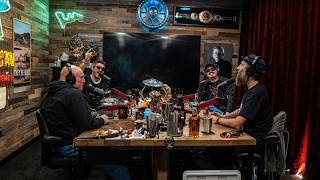
Joe Rogan Experience #2578 - Calley Means
Audio Brief
Show transcript
The day former White House Senior Advisor Calley Means resigned, the stocks of major junk food companies jumped eight percent. On the November 6, 2026 episode of The Joe Rogan Experience, Means tells host Joe Rogan why he walked away from leading the Make America Healthy Again, or MAHA, agenda. By the end of this summary, you will learn how corporate lobbyists and top political staffers block public health policies behind the scenes.
See how one gatekeeper can stall an entire health agenda. Means explains that White House Chief of Staff Susie Wiles holds the most centralized control in modern American history, where no policy moves without her okay. Before joining the administration, Wiles was a top lobbyist who took money from the pharmaceutical and pesticide industries, while Trump's chief pollster Tony Fabrizio vets every policy for political appropriateness while listing clients like Pfizer, Pepsi, and Philip Morris. Paid by pharma, Fabrizio conducted a poll claiming vaccine inquiry was unpopular and, with Wiles, halted all vaccine inquiry for a year until President Trump personally unblocked it.
Follow the family connections behind Washington's revolving door. Wiles's former firm, Ballard Partners, became the highest revenue-generating lobbying firm in history, and her daughter joined a lobbying firm that grew from almost zero in revenue before the administration to roughly 30 million dollars a year. Inside the White House, it was openly discussed that hiring her daughter gave companies high priority.
Learn why American farm states face a historic cancer crisis. The United States has four percent of the world's population but uses 20 percent of the world's glyphosate, herbicides, and pesticides. Means notes that because of this heavy agricultural spraying, Kentucky and Iowa have the highest cancer rates of any geographic location in human history. Even though polling by Fabrizio showed over 90 percent of Republicans want pesticide regulation, bipartisan senators threatened National Institutes of Health funding if the agency even studied glyphosate.
Uncover the secret moves used to shield chemical makers from cancer lawsuits. To protect glyphosate maker Bayer, White House deputy Walker Barrett handed Means a finalized Executive Order, which Means assumes Bayer wrote, declaring glyphosate a national security issue and alluding to liability protection under the Defense Production Act. Barrett and Wiles forbade Robert F. Kennedy Jr. from calling the President, and it was signed the next day without a public signing, though Means says he cannot speak to whether Trump knew about it beforehand.
Understand how midterm fundraising keeps ultra-processed food on school trays. Nearly 40 percent of American teens have pre-diabetes, and 70 percent of a U.S. child's diet is ultra-processed food. When former Food and Drug Administration Commissioner David Kessler petitioned the agency to investigate whether refined sugar is safe for children, Wiles blocked it, telling Means directly that she needed sugar industry money to win the midterms. Means finally resigned when the White House blocked his six-month effort to pass a quarter-page definition of ultra-processed food and reform school breakfasts, where the number one government-funded meal is currently donuts and sugary pastries.
Spot the dangerous products slipping past captured health regulators. After West Wing lobbying, the administration loosened tolerance limits by 20 times on concentrated 7-OH, a kratom compound Means calls gas station heroin and a straight-up opioid. You can protect yourself by exercising extreme caution with retail kratom products and concentrated 7-OH drinks like Feel Free, which can now get a person high in just two or three bottles.
Public health policies cannot survive while politicians depend on corporate lobbyists to fund their campaigns. As Means points out, a U.S. senator spends 90 percent of their time fundraising.
Episode Overview
- Calley Means tells Joe Rogan why he resigned from the White House and how corporate lobbyists and top staffers block public health policies behind the scenes.
- The conversation exposes the centralized control of White House Chief of Staff Susie Wiles, her deputies, and pollster Tony Fabrizio, detailing how their ties to pharmaceutical, pesticide, tobacco, and junk food industries subvert the Make America Healthy Again (MAHA) agenda led by Robert F. Kennedy Jr.
- Means walks through specific cases of regulatory sabotage, including a secret Executive Order protecting glyphosate under the guise of national security, the firing of FDA officials to push through fruit-flavored vapes and an mRNA flu vaccine, and the blocking of ultra-processed food definitions and school breakfast reforms.
- The episode concludes with an examination of the bipartisan revolving door in Washington and why structural campaign finance reform is necessary before any meaningful public health policies can succeed.
Key Concepts
- White House Gatekeeping and Conflict of Interest: Means, who helped set up the political alliance between Robert F. Kennedy Jr. and Donald Trump and recently resigned as a Senior Advisor leading MAHA implementation, explains that White House Chief of Staff Susie Wiles holds the most centralized control in modern American history, where no policy gets done without her office's okay. Before joining the administration, Wiles was a top lobbyist who took money from Benjamin Netanyahu (as a top consultant), the pharmaceutical industry, and the pesticide industry, and she later approved her two top deputies to collect hundreds of thousands of dollars from a foreign government, which caught Trump off guard. Her deputies included Walker Barrett, James Blair (a Florida political consultant who ran political operations before leaving to run midterm efforts and has taken money from special interests like the sugar industry), and Richard Walters (who acted as Chief of Staff while Wiles was out for cancer treatment and came from lobbying firm FSG Global, which lobbied for pharma and pesticide group CropLife in the past year). Furthermore, Trump's chief pollster Tony Fabrizio vets every policy for political appropriateness while his website lists clients including Pepsi, Pfizer, PhRMA, Philip Morris, Procter & Gamble, R.J. Reynolds Tobacco Co., and Dow Chemical. Paid by pharma, Fabrizio conducted a poll claiming vaccine inquiry was unpopular and, with Wiles, put a full halt on any vaccine inquiry for a year until Trump personally unblocked it. Although Harvard Harris polling shows RFK Jr. is the most popular public official in America today, Wiles, Blair, and Fabrizio's midterm strategy relied on surgical redistricting (gerrymandering congressional maps) and campaigning on gimmicks like "no tax on tips" and the tax cut from the "one big beautiful bill," while dismissing MAHA and Rogan's listeners (though Means hedges on the exact internal thoughts of White House political staffers, saying he cannot speak to exactly what is in their head). When Means resigned, Wiles texted him to say how much she admired him and asked him not to speak negatively of her.
- Familial Lobbying and the Bipartisan Revolving Door: Policy subversion in Washington is driven by financial enrichment across both parties. Wiles's former firm, Ballard Partners, became the highest revenue-generating lobbying firm in history, hitting $98 million in 2026 ($202.1 million total), and Means claims lobbyists put a 10x multiple on that for dark money advising. Wiles's daughter became a lobbyist at Continental Strategy, which went from almost $0 in revenue before the administration to roughly $30 million a year ($35.8 million total federal lobbying compensation from 2017 to 2026), and it was openly discussed in the White House that hiring her gave companies high priority. Similarly, Trump campaign co-manager Chris LaCivita has a daughter or son (Means says daughter at 00:09:27 and son at 01:38:53) at a lobbying firm called Checkmate that did not exist before the administration and shot up in revenue. This corruption is structural and bipartisan: Chuck Schumer gave a speech to hospital lobbyists two weeks prior promising to have their backs as corporate money shifts to former staffers of Schumer and Hakeem Jeffries. Means notes that 90% of military generals immediately become military contractors upon leaving, and 19 out of the 20 people he worked with at HHS will become lobbyists for the industries MAHA fights the day after they leave. Meanwhile, Eli Lilly CEO Dave Ricks is in D.C. almost every week having dinner with mid-level White House staffers; at one dinner Means attended, a White House staffer rolled her eyes at his MAHA arguments and later left to become a lobbyist. Inside RFK Jr.'s 90,000-person HHS agency, career officials even circulated a declassified CIA manual on how to be a "bad bureaucrat" and subvert an institution from within through incompetence.
- The Agricultural-Chemical Complex and the Glyphosate Cover-Up: The U.S. has 4% of the world's population but uses 20% of the world's glyphosate, herbicides, and pesticides, spraying 99% of U.S. corn and 98% of U.S. soybeans with glyphosate. Consequently, Kentucky (#1) and Iowa (#2) have the highest cancer rates (such as non-Hodgkin's lymphoma) of any geographic location in the history of human civilization, making water quality from agricultural runoff the #1 election issue in Iowa. Rogan reads a CHD.tv article pulled up by producer Jamie Vernon about Tennessee teenager Arden Allison, who was drenched in glyphosate while working on a cell tower maintenance crew and spent the next 7 years fighting Hodgkin lymphoma ("Massive Alien" tumor). Although Tony Fabrizio's own polling showed 92% of Republicans want to regulate pesticides and 95% of the country opposes legal immunity for pesticide makers, bipartisan senators from agricultural states threatened NIH appropriations if the NIH even studied glyphosate. The EPA has not reviewed glyphosate in close to 30 years, and an EPA review 5 years ago claiming it did not cause cancer was thrown out in court when it was revealed that glyphosate maker Bayer ghostwrote the research and bribed EPA officials. When Rogan asks how much money is spent on glyphosate annually, Means admits he does not know the raw numbers; using podcast sponsor Perplexity live on air (alongside standard episode commercial reads for DraftKings and OnX Hunt), Rogan and Jamie find commercial market estimates of roughly $7 billion to $12 billion worldwide annually (Global Market Insights: $6.8B; InsightAce: $9.3B; Transparency Market Research: $12.4B), with Roundup alone at ~$2.6 billion, though Rogan notes these are commercial market estimates rather than an audited tally.
- The Secret Glyphosate Executive Order and DOJ Intervention: To shield Bayer from cancer lawsuits, White House deputy Walker Barrett called Means into a room and handed him a finalized Executive Order (which Means assumes was written by Bayer) declaring glyphosate a national security issue by citing elemental phosphorus for munitions and semiconductors, and alluding to liability protection under the Defense Production Act. Barrett and Wiles forbade RFK Jr. from calling the President or discussing it, and it was signed the next day without a public signing (Means hedges that he cannot speak to whether President Trump knew about the EO before it was signed). National Security Council Director of Global Supply Chain Courtney Knupp drove the EO with Wiles and immediately left the White House to become CEO of the United Soybean Board, a pro-glyphosate lobbying group. Simultaneously, Wiles ally Heidi Overton worked with the DOJ without consulting RFK Jr., and DOJ lawyer Sarah Harris (who came from Bayer's main law firm) wrote an opinion urging the Supreme Court to take a case granting legal liability protection to Bayer for glyphosate, which the Court took and sided with Bayer. In a meeting with Trump, RFK Jr., and regenerative farmers including Will Harris and Jonathan Lundgren, a farmer brought up the Supreme Court decision; Trump had no idea his DOJ had supported it and called it a "terrible decision" (though Means hedges that he cannot speak to whether Trump investigated who was responsible for the brief, noting the President has a lot going on).
- The Chronic Disease Crisis vs. Ultra-Processed Food and Sugar Lobbying: The U.S. spends half as much of its national income on food as Europe does (Europe spends double), while healthcare consumes 25% of the U.S. economy and the U.S. spends 3 times more on healthcare than any other country (since Obamacare was written by the insurance industry, premiums have gone up 1.5x and insurance company stocks have gone up 15x). American children are the sickest in the developed world, hitting puberty 2 to 3 years younger than they did 50 years ago, and recent USDA statistics show 38% of U.S. teens have pre-diabetes (pre-type 2 diabetes), 45% of teens are overweight or obese, 20% of young adults have fatty liver disease, and almost 80% of American adults are obese or overweight. While 15% of Americans depend on SNAP (food stamps), the #1 item purchased on SNAP is soda (generating ~$8 billion in taxpayer money for Coca-Cola), followed by candy at #2/#3 and potato chips; MAHA successfully got 30 states (including Texas under Gov. Greg Abbott and Florida, but not California) to remove soda from SNAP. However, when former Clinton FDA Commissioner David Kessler submitted a petition to the FDA (featured on 60 Minutes with RFK Jr.) with full interagency approval to investigate whether sugar and refined carbohydrates in children's diets are safe, Wiles blocked it, telling Means she needed sugar industry money for the midterms. Although 70% of a U.S. child's diet is ultra-processed food (compared to 10% in Spain) and 90% of the country wants it defined, Means finally resigned when the White House blocked his 6-month, interagency-aligned efforts to pass a quarter-page definition of ultra-processed food (after a Mondelez/Oreo lobbyist threatened to call Wiles and Marc Short) and to reform school lunches (where there is no breakfast protein requirement and the #1 school breakfast is government-funded donuts and sugary pastries). The day Means resigned, major junk food company stocks rose 8%.
- FDA Capture: Vapes, mRNA Vaccines, Psychedelics, and Kratom: Public health standards at the FDA were repeatedly overridden by political staffers. While psychedelic reform was totally blocked by a full directive from the top of the White House until Joe Rogan called President Trump (who ordered it on his desk in the next week), FDA Commissioner nominee Heidi Overton tried to block psychedelics, referring to ibogaine in the same class as recreational "street drugs." Instead, the #1 most prioritized HHS health issue for political heads James Blair and Richard Walters was getting a better pathway for fruit-flavored vapes, arguing it was a core midterm issue for young men (Means hedges that he thinks the vaping lobby hired Ballard or one of the top firms, and explicitly states he cannot substantiate a rumor he heard that Blair is currently taking vaping industry money). In a high school survey, ~5% said they vape, they said 50% of their friends vape, and 70% said people would not vape if there were not flavored vapes; Perplexity estimates the global vaping industry at $24.5 billion in 2026, with U.S. tracked retail at $6.2 billion in 2025 and U.S. vape shops at $8.0 billion in 2026. FDA Commissioner Marty Makary refused to relax fruit-flavored vape standards (citing a Congressional law requiring studies showing they aren't harmful to kids), but Makary was fired (and Vinay Prasad was pushed out by Wiles), Overton relaxed the standards, and the policy was immediately sued by the American Heart Association. Before being fired, Makary and Prasad also required Pfizer to conduct an immediate new safety and efficacy study when re-approving its COVID vaccine (which the FDA dropped after Makary was fired; Means hedges he has no personal insight into who ordered it, but notes nothing like that happens without a directive from the top) and sent back an application for a Moderna mRNA flu vaccine (a joint venture with hundreds of millions of dollars invested by Blackstone) because it compared against an antiquated flu vaccine (which the Biden administration had warned them about), had only a 0.8% absolute risk reduction, and had deaths in the clinical trial group (Means qualifies that in his opinion they rigged the study, and hedges it cannot be definitively said that the vaccine caused the trial deaths). After Makary was fired, Overton and vaccine center head Dr. Kaslow (former Merck head of vaccines who wears an N95 mask every day and has a "VACCINATE" license plate) set up a sham advisory committee and approved the Moderna flu shot as "safe and effective," despite 90% of Americans distrusting the pharmaceutical industry. Finally, on kratom—which Means understands is a $3 billion U.S. industry and calls concentrated 7-OH a straight-up opioid ("gas station heroin"), while Rogan recounts taking 2 kratom capsules from a guest as a mild stimulant, 10 capsules making him high without affecting fine motor skills, and friends getting addicted to 2-dose dark glass bottles of "Feel Free"—the FDA and DEA set a 0.05% 7-OH tolerance limit (requiring 20 to 30 bottles to get high), but after West Wing lobbying, the administration increased the limit by 20x, allowing people to get high from 2 to 3 bottles.
Quotes
- At 0:02:24 - "The simple reality and why I left is that there is a very concentrated group of people in the Trump administration that are antagonistic to what people voted for and are frankly, I think it's very clear, doing things for other reasons, particularly in many cases to enrich their families." - Calley Means explaining the core reason for his resignation from the White House.
- At 0:04:38 - "Susie Wiles is the most powerful Chief of Staff in modern American history, and she has taken a stranglehold on any policy decision. No policy decision gets done without her office giving it the okay." - Means describing how White House Chief of Staff Susie Wiles centralizes policy control.
- At 0:08:46 - "Susie's daughter went to a lobbying firm, and it was an open discussion in the White House: if a company hired Susie's daughter, then that was getting a high priority." - Means detailing how corporate interests bought priority access in the West Wing through Continental Strategy.
- At 0:09:46 - "Ballard Partners has become the highest revenue-generating lobbying firm in history. And when Ballard—it's just an open, everyone knows this—if you hire Ballard, you get a meeting with Susie, and you can get things done." - Means explaining the financial pipeline between Wiles's former lobbying firm and White House policy decisions.
- At 0:20:35 - "Americans did not vote to have a group of lobbyists from Tallahassee be slowing down every policy that people voted for, and often saying that's because we need to get special interest money." - Means contrasting the voter mandate for MAHA with the Florida political consultants running the White House.
- At 0:25:03 - "Then it came out in court that Bayer, the maker of glyphosate, ghostwrote research for the EPA report and bribed EPA officials." - Means explaining why the EPA's previous safety review of glyphosate was thrown out by a court.
- At 0:28:48 - "And he said, 'This is final, it's national security, it's coming out tomorrow,' other people in the room, and he said, 'Please inform Bobby, and this is not up for discussion. And Bobby should not be calling the President or calling anyone, this is not up for discussion.'" - Means recounting how Wiles's deputy Walker Barrett handed him a finalized Executive Order protecting glyphosate and forbade RFK Jr. from contacting Trump.
- At 0:34:40 - "Of any geographic location in the history of human civilization across the world, Iowa and Kentucky and other U.S. farm states have the highest cancer rates of any location in the world." - Means highlighting the health consequences of heavy agricultural pesticide and glyphosate usage in the United States.
- At 0:35:43 - "President Trump reacted to the Supreme Court decision saying it's a terrible idea, how the hell did this happen, had no idea that the Department of Justice—" - Means describing Trump's shock upon learning from regenerative farmers that his own DOJ had backed legal immunity for Bayer.
- At 0:51:12 - "A senator spends 90% of their time fundraising." - Means illustrating how the constant need for campaign money corrupts legislative priorities in Washington.
- At 0:51:57 - "That's the Susie Wiles premise, directly: 'Calley, we can't do this, I need sugar money.' Direct quote. 'I need the money from the sugar people to win the midterms.'" - Means quoting Wiles's explanation for blocking David Kessler's bipartisan FDA petition to investigate sugar and refined carbohydrates.
- At 0:54:04 - "They should say, 'This is going to Congress the day I get into office, and I'm not signing a fucking bill until Congress passes this. And if you vote for me, this is a mandate to actually pass structural reforms.'" - Means proposing how a presidential candidate must force Congress to ban corporate money in politics.
- At 0:57:20 - "And when I left, the day I left, the stocks of the major junk food companies went up 8%." - Means demonstrating the market reaction to his departure after his ultra-processed food and school lunch reforms were blocked.
- At 1:02:13 - "Because the 20 people I worked with at HHS—I laid them out—19 out of 20 will be lobbyists for the interests that we're trying to fight the day after they leave." - Means exposing the revolving door between health regulators and the industries they regulate.
- At 1:18:13 - "He's got a 90,000-person agency. He's surrounded by demons who want him out and want him just destroyed. That's his staff." - Means describing the internal bureaucratic resistance RFK Jr. faces inside the Department of Health and Human Services.
- At 1:27:47 - "When 38% of kids have pre-diabetes, 45% of teens are overweight or obese, 20% of young adults have fatty liver disease, almost 80% of American adults are obese or overweight, we're beyond a personal choice issue." - Means citing USDA statistics to argue that systemic food policy, not just individual willpower, drives America's metabolic crisis.
- At 1:28:32 - "Nobody gives a shit. Like, nobody gives a shit about these things. Like, you don't have meetings in D.C. and talk about those statistics and people say, 'We better do something.' Nobody cares." - Means reflecting on the apathy of Washington political operatives toward childhood chronic disease data.
- At 1:31:26 - "It was the single, in my opinion, the single most prioritized issue at HHS among any health issue for James Blair, who really has a stranglehold on policy, policy has to go through him... this was the top issue for the White House, and the issue was to get a better pathway for fruit-flavored vapes." - Means revealing that White House political leadership prioritized fruit-flavored vapes over all other public health initiatives.
- At 1:46:55 - "It's a straight-up opioid. It's very—it's called gas station heroin. It is an opioid, period." - Means characterizing concentrated 7-OH kratom products after West Wing lobbying increased the allowed concentration limit by 20x.
- At 2:15:46 - "Do you know what the number one breakfast for schoolchildren is in America? Donuts and sugary pastries. We have tens of millions of donuts and sugary pastries going, government-funded, to kids every day, destroying their metabolic health." - Means explaining the school breakfast status quo that his blocked regulation sought to reform by requiring protein like eggs.
Takeaways
- Demand that presidential candidates run on a single-issue mandate to pass a 1-page Constitutional Amendment banning corporate lobbying money and Super PACs, refusing to sign any congressional bills until it passes.
- Support calling a two-thirds state constitutional convention to ban corporate money in politics and consider repealing the 17th Amendment to return the appointment of U.S. Senators to state legislatures so senators do not spend 90% of their time fundraising.
- Evaluate political appointees and campaign strategists by auditing their client lists and their family members' lobbying firms, recognizing that polls fromPew, CNBC, and Fox News rank corruption and money in politics as the #1 issue for Americans.
- Advocate at the state level to remove soda and junk food from SNAP benefits, following the model of the 30 states (such as Texas and Florida) that successfully restricted taxpayer-funded soda purchases.
- Push for federal school meal standards that ban sugary pastries and donuts for breakfast and mandate a minimum protein requirement, such as whole eggs.
- Pressure the FDA to establish a formal, quarter-page regulatory definition of ultra-processed food so government purchasing and nutrition policies can distinguish real food from industrial formulations.
- Support the bipartisan FDA petition initiated by former FDA Commissioner David Kessler to formally investigate the safety of refined carbohydrates and sugar levels in children's diets.
- Oppose federal Executive Orders and DOJ briefs that use national security pretexts or the Defense Production Act to shield pesticide manufacturers like Bayer from state-level cancer liability lawsuits.
- Demand independent NIH and EPA safety evaluations of glyphosate and agricultural runoff, ending the nearly 30-year gap in legitimate EPA review and protecting agricultural states like Kentucky and Iowa from record cancer rates.
- Insist that the FDA enforce strict clinical trial standards for new vaccines—requiring comparisons against the current best standard of care rather than antiquated vaccines—and enforce post-approval safety study preconditions.
- Exercise extreme caution with retail kratom products and concentrated 7-OH drinks like "Feel Free," recognizing that concentrated 7-OH acts as an addictive opioid and that federal tolerance limits were recently loosened by 20x due to industry lobbying.
- Uphold Congressional laws requiring safety studies on how fruit-flavored vapes affect children before relaxing FDA pathways, rather than trading youth health standards for short-term midterm political strategies.