Joshua Gibbs: Teaching From a Spirit of Love, Helping Students Care
Audio Brief
Show transcript
This episode covers Joshua Gibbs' distinctive vision for classical teaching, emphasizing a reawakening of wonder and a new metric for success: a student's lasting, voluntary love for specific great works.
There are three key takeaways from this discussion.
First, the ideal classical teacher embodies a "fine sense of the uncanny," drawing inspiration from literary figures to rehabilitate students' spiritual sensibilities. This approach aligns with C.S. Lewis's insight that to make modern people receptive to deep spiritual truths, one must first reawaken a basic sense of wonder and awe, essentially making them "pagans first."
Second, the true goal of classical teaching is to cultivate a specific, enduring love for the good things themselves, such as Dante or Boethius, rather than an abstract "love of learning" or unattainable moral perfection. A teacher knows they have succeeded if a student, on their own volition, ever reads a great work again after the class has ended, demonstrating a personal, lasting connection.
Third, cultivating a taste for good but difficult things, much like learning to love coffee, requires a three-pronged approach. This involves disciplined, daily engagement, gradual acclimatization to make it more palatable initially, and immersion in a community of enthusiasts where the love for these things is absorbed ambiently. This process helps students differentiate between pop culture, consumed for immediate pleasure, and high culture, pursued for its inherent goodness even with effort.
Ultimately, this conversation challenges educators to redefine success by fostering genuine, deep appreciation for timeless works, thereby transforming students' engagement with enduring knowledge and beauty.
Episode Overview
- Guest Joshua Gibbs shares his vision for a classical teacher—one who reawakens a sense of wonder and the "uncanny" in students, inspired by literary and mythological figures.
- The conversation defines a new metric for a classical teacher's success: instilling a lasting love for the specific works being studied, so much so that a student will voluntarily return to them later in life.
- The discussion contrasts the goals of classical education with non-classical approaches, which are often either "ridiculously high" (like graduating sinless students) or "ridiculously low" (like focusing only on test scores).
- Using an extended analogy of learning to love coffee, Gibbs illustrates how to cultivate a taste for good things through disciplined exposure, gradual acclimatization, and immersion in a community of enthusiasts.
Key Concepts
- The Teacher as a Mythic Figure: The ideal teacher embodies a "fine sense of the uncanny," drawing inspiration from literary figures like Robert Graves and Hermann Hesse to rehabilitate students' spiritual sensibilities in a modern world.
- Paganism Before Christianity: C.S. Lewis's idea that to make modern people truly receptive to deep spiritual truths, one must first reawaken a basic sense of wonder and awe, essentially making them "pagans first."
- The True Goal of Classical Teaching: The primary aim is not to produce "virtuous" graduates or to instill an abstract "love of learning," but to cultivate a specific, enduring love for the good things themselves, like Dante, Boethius, or Geometry.
- A New Metric for Success: A teacher knows they have succeeded if a student, on their own volition, ever reads a great work again after the class has ended.
- The Coffee Analogy for Cultivating Taste: Learning to love a good but difficult thing is a process that requires three elements: disciplined engagement (daily exposure), acclimatization (making it more palatable at first), and community immersion (absorbing the love from others).
- The "Good" vs. The "Pleasant": A distinction is drawn between pop culture, which is consumed because it is immediately pleasant (like a Drake song), and high culture, which is pursued because of its inherent goodness, even when it requires effort to appreciate (like Beethoven).
Quotes
- At 0:11 - "Welcome to Classical Education, a podcast for those who believe in rediscovering the art of asking questions, engaging in conversation, and attending to the ideas at the heart of well-ordered teaching and learning." - This quote is from the podcast's opening mission statement, defining its purpose.
- At 2:58 - "I know now that the teacher I always wanted in high school thought like Robert Graves, wrote poetry like Hermann Hesse, was as unreasonable as the Fox from Till We Have Faces... As an adult, there is absolutely nothing stopping me from being this person for my students." - Host Trey Bailey reads a key passage from Joshua Gibbs' book that frames the subsequent discussion.
- At 4:13 - "[Hermann Hesse's] interest was in rehabilitating the spiritual sensibilities of men coming back from world wars." - Gibbs explains the context of Hermann Hesse's writing and its focus on restoring a spiritual sense in a traumatized generation.
- At 5:56 - "In order to make modern men Christians, we have to make them pagans first." - Joshua Gibbs quotes a letter from C.S. Lewis to illustrate the need to reawaken a sense of wonder before introducing deeper spiritual truths.
- At 26:22 - "How will you know when you're successful? Maybe that's an interesting question to start with. How would you know if you were a successful teacher?" - The speaker frames the discussion by suggesting that the true mark of a teacher's philosophy is their definition of success.
- At 27:32 - "The goals of the non-classical teacher... tend to be either ridiculously high or ridiculously low." - Gibbs explains that a non-classical mindset often misses the proper, attainable goal of education by aiming for either unachievable perfection or purely functional outcomes.
- At 29:33 - "You know that you've taught The Divine Comedy successfully if your students ever read it again. Just once." - This quote serves as the speaker's central thesis for how to measure the success of classical teaching: instilling a love for the work itself that endures beyond the classroom.
- At 30:18 - "I wouldn't say a love of learning. I would say a love of Boethius. I'll say a love of Dante." - The speaker clarifies that the goal isn't to love an abstract idea of "learning" but to develop a genuine affection for the specific, substantive, and good things being studied.
- At 48:17 - "You don't like a Drake song because it's good, you like it because it's pleasant... You want to learn to like Beethoven not because it's pleasant, but because it's good." - Gibbs draws a sharp distinction between pop culture, which is consumed for immediate pleasure, and high culture, which is pursued because of its inherent, even if challenging, goodness.
- At 51:28 - "You should probably go to coffee shops all the time and hope that the love of coffee from other people will just be like absorbed ambiently into you." - The speaker shares a student's insightful conclusion to his coffee analogy, highlighting the importance of community and immersion in learning to love good things.
Takeaways
- Redefine your measure of teaching success: focus on whether you have cultivated a genuine, lasting love for a subject that might inspire a student to engage with it again in the future.
- Intentionally cultivate taste for good things in students by using a three-part strategy: disciplined and regular exposure, gradual acclimatization to the difficulty, and immersion in a community that already loves it.
- Prioritize reawakening a sense of wonder and spiritual sensibility in students before diving into complex abstract truths.
- Aim to foster a specific love for particular works, authors, or ideas (like Dante or Euclid) rather than a vague, abstract "love of learning."
- As a teacher, consciously embody the passion and "uncanny" wonder you wish to see in your students, becoming the kind of guide you once wished for.
- Help students learn the difference between consuming culture for immediate pleasure and pursuing culture that is inherently good, even when it requires effort and acquired taste.
More from Classical Education Podcast
Jonathan Pageau: A Deep Dive Into Teaching Fairy Tales
Mar 18, 2025

Is Charlotte Mason Classical? Panel: Dr. Louis Markos, Dr. Patrick Egan, and Jason Barney
Jan 15, 2025
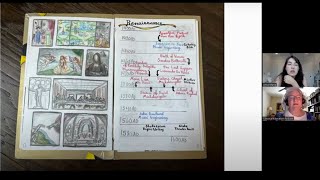
Creating a Book of Century in Art Class to Support History and Music with Anna-Marie Carter
Aug 07, 2024
An Interview with David V. Hicks, Author of Norms & Nobility
Jun 11, 2024