Is Charlotte Mason Classical? Panel: Dr. Louis Markos, Dr. Patrick Egan, and Jason Barney

Audio Brief
Show transcript
This episode explores how Charlotte Mason's educational philosophy aligns with, rather than opposes, the classical education tradition, dispelling common misconceptions about her approach.
There are three key takeaways from this discussion.
First, Mason's ultimate goal for education is identified as paideia, the classical concept of enculturation and character formation. This involves cultivating virtue, good habits, and a moral imagination, aimed at shaping the whole person for a fulfilling life. Her work emphasizes a holistic view of the child, echoing ancient philosophical traditions.
Second, Mason's core pedagogical method of narration is highlighted as a prescient form of retrieval practice. This involves a child reading a text once attentively and immediately narrating it back in their own words. Modern learning science now validates this technique for building robust, long-term memory by actively processing information.
Third, Mason advocated for a democratized, rich education accessible to all children, regardless of social class. She championed providing a high-quality intellectual feast, not by simplifying curricula, but by lifting students up into a timeless tradition of great ideas. Her approach contrasts sharply with movements that lowered educational standards for the masses.
This conversation reframes Charlotte Mason's legacy, positioning her as a synthesist of classical principles and modern insights relevant for today's holistic educational challenges.
Episode Overview
- This episode explores how Charlotte Mason's educational philosophy aligns with, rather than opposes, the classical education tradition, dispelling common misconceptions.
- The speakers place Mason in her proper historical and intellectual context, showing how she synthesized timeless classical principles with modern scientific insights of her era.
- The discussion delves into Mason's core pedagogical methods, such as narration, connecting them to modern learning science and contrasting them with other educational approaches.
- The ultimate goal of a Mason education is identified as paideia: the formation of virtuous character, good habits, and a moral imagination, aimed at shaping the whole person for life.
Key Concepts
- Mason's Place in the Classical Tradition: The speakers argue that Charlotte Mason's philosophy is a rich continuation of the classical tradition, sharing roots in virtue ethics, the use of great books, and a holistic view of the child.
- Correcting Misinterpretations: The discussion clarifies that Mason's ideas are often misunderstood; "self-education" refers to the student's active mental processing, not unschooling, and her child-centric focus has ancient, not just progressive, roots.
- Synthesis of Old and New: Mason is presented as a thinker who integrated timeless classical and Christian principles with the emerging scientific understanding of her time, from early brain science to child development.
- Narration as Retrieval Practice: Mason's method of having a child read a text once and immediately narrate it back is highlighted as a prescient form of "retrieval practice," a technique now validated by modern learning science for building long-term memory.
- The Goal of Paideia: The ultimate aim of a Mason education is identified as paideia—the classical concept of enculturation and character formation through habits, great ideas, and the development of a moral imagination.
- A Democratized, Rich Education: Unlike progressives who simplified curricula for the masses, Mason's "democratizing spirit" aimed to give all children, regardless of social class, access to a rich intellectual feast of the highest quality.
- The Unity of Knowledge: Based on her "Great Recognition," Mason's philosophy dissolves the distinction between sacred and secular subjects, viewing all fruitful ideas and truth as being divinely inspired.
Quotes
- At 5:11 - "Charlotte Mason really revolutionized my pedagogy... to encourage the student not just to encounter the text, but to be transformed by it." - Dr. Patrick Egan describes how Mason's methods offered a transformative alternative to traditional lecturing.
- At 24:23 - "She does have a democratizing spirit that wants to educate rich and poor, but not doing it by a lowest common denominator... but by lifting them up into the tradition." - Louis Markos distinguishes Mason's approach from other modern educational movements, emphasizing her goal of universal access to a high-quality, traditional education.
- At 46:17 - "We've got now a body of evidence on retrieval practice as a keystone of modern learning science that shows that when you do an initial test or assessment, it practically stops forgetting from happening." - Jason Barnes explains the modern scientific validation for Charlotte Mason's method of single-reading narration.
- At 59:51 - "Our schools today, she says, 'they turn out a good many clever young persons, wanting in nothing... except in initiative, the power of reflection, and the sort of moral imagination which enables you to put yourself in someone else's place.'" - Louis Markos quotes Charlotte Mason to highlight her critique of an education that prioritizes cleverness over character and empathy.
- At 1:00:27 - "The Florentine mind of the Middle Ages... believed not only that the seven liberal arts were fully under the direct outpouring of the Holy Spirit, but that every fruitful idea, every original conception, whether in Euclid or grammar or music, was a direct inspiration from the Holy Ghost." - Patrick Egan quotes Charlotte Mason's description of her "Great Recognition," which unified all knowledge under divine inspiration.
Takeaways
- View education's primary goal not as mere information transfer but as character formation (paideia)—the cultivation of virtue, habits, and moral imagination.
- Implement narration (a single, attentive reading followed by recall) as a powerful learning tool, validated by modern science as a form of retrieval practice that builds long-term memory.
- Reject the false divide between sacred and secular knowledge by treating all subjects as avenues for discovering truth and beauty.
- A rich, high-quality education built on great ideas is a right for all children, not a privilege for a select few.
More from Classical Education Podcast
Jonathan Pageau: A Deep Dive Into Teaching Fairy Tales
Mar 18, 2025
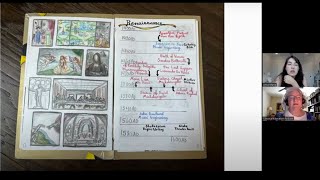
Creating a Book of Century in Art Class to Support History and Music with Anna-Marie Carter
Aug 07, 2024
An Interview with David V. Hicks, Author of Norms & Nobility
Jun 11, 2024
The Progymnasmata: Classical Writing with Benjamin Lyda
Feb 20, 2024