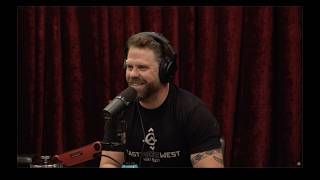
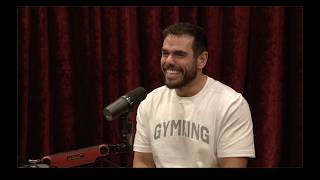
Joe Rogan Experience #2562 - Dan McClellan

Audio Brief
Show transcript
What if an ancient Israelite temple altar had three different kinds of cannabis on it, and an inscription from 800 BCE paired the God of Israel with a wife named Asherah, as biblical scholar Dan McClellan explains? On The Joe Rogan Experience, Rogan sits down with McClellan, who holds a PhD in biblical studies and the cognitive science of religion. You will learn how the Bible was actually written and how human cognitive biases shape religious authority today.
How daily nutrition and altitude intervals can support your brain and body. McClellan avoids FODMAPs while taking 10 grams of creatine daily for brain function, and Rogan uses a hypoxia chamber for four rounds of four minutes of hard cardio and two minutes of recovery.
What physical artifacts reveal about ancient Israelite worship. A jar fragment from 800 BCE asks for blessings from the Lord of Samaria and his Asherah, which most scholars agree depicts the God of Israel and his wife.
How Egyptian hieroglyphs became the alphabet and dated the Hebrew Bible. Canaanites simplified hieroglyphs into an alphabet of 22 to 30 letters, yet no historical narrative prose in any alphabetic script existed until the mid-ninth century BCE. The oldest parts of the Hebrew Bible are archaic poems from around 1000 BCE, while narrative prose was written around or shortly after the mid-ninth century BCE.
Why biblical authors borrowed monster myths from their neighbors. Texts from the ancient city of Ugarit, which was destroyed around 1200 BCE, describe the god Baal slaying Litan, or Leviathan, the twisting seven-headed serpent. Five hundred years later, Isaiah and Psalms used those exact words to describe the God of Israel crushing Leviathan.
Why many scholars think Genesis originally circulated without Noah's flood. In Genesis 4, early patriarchs are named as the living ancestors of all tent-dwellers, musicians, and metalworkers. Because a global flood chapters later would have wiped out those lineages, many scholars think the flood was inserted later around the sixth or fifth century BCE.
How to spot bad language arguments online. John Marco Allegro argued that biblical words derive from Sumerian words for mushrooms and God's semen, which leading linguists tore apart because Sumerian is an unrelated language that died before Hebrew existed. Do not assume looking up a word in an online dictionary gives you authority over ancient meaning.
Why Adam and Eve were not ancient Israel's main explanation for evil. Up until the New Testament, the dominant Jewish explanation for evil was Genesis 6 and the book of First Enoch, written around 300 BCE, where subordinate deities mated with human women to produce giants.
How waiting for Jesus changed early Christian rules and manuscripts. In his genuine letters, Paul expected Jesus back any day and told everyone to remain celibate, whereas the Pastoral Epistles like First Timothy were written decades after Paul's death and promoted saving women through childbearing.
How Hell evolved and why a single unified biblical voice is a myth. Hell does not appear in the Hebrew Bible outside late inklings, and the New Testament holds three competing views of punishment: ceasing to exist, temporary torment, and eternal torment. Insisting the Bible speaks with one unified voice forces readers to elevate their own dogma over the text.
Why your brain alters reality to protect your tribe. Just as an optical illusion tricks your intuitive brain into seeing two identical gray blocks as different shades, we use intelligence to rationalize our biases. Question your gut reactions, look past religious displays, and care for those outside your tribe.
The core lesson is to recognize that your intuitive brain alters incoming information to defend your expectations and your group, while ancient texts reflect diverse historical struggles rather than one unified voice. As McClellan puts it, sacrificing our time and resources to care for someone who cannot care for themselves is the closest we can get to what it means to be human.
Episode Overview
- Joe Rogan and biblical scholar Dan McClellan (who holds a PhD in biblical studies and the cognitive science of religion and a Master's degree from the University of Oxford) examine how the texts of the Bible actually came to be historically, linguistically, and culturally, and how human cognitive biases shape the way we interpret religious texts and authority today.
- The conversation opens with personal routines—covering McClellan's ~4,000 educational videos, Rogan's nearly 2,900 podcast episodes (or almost 3,000 including Fight Companions and MMA podcasts at 2 to 3+ hours each), nutrition, and altitude training—before exploring physical archaeological artifacts that challenge modern religious assumptions, such as an 800 BCE inscription pairing the God of Israel with a wife, Asherah, and cannabis residue on ancient Israelite temple altars.
- McClellan traces the linguistic and literary origins of the Bible, detailing the invention of the alphabet in the Sinai, the discovery of Ugaritic texts, the dating of Genesis and the Gospels, the disputed authorship of several Pauline epistles, and scribal additions removed from modern Bible translations.
- Finally, the discussion bridges ancient history with cognitive science and human evolution, analyzing how "covert monitors" (Big Gods), parochial empathy, and intuitive versus reflective cognition govern how humans construct authority, rationalize in-group dogma, and use concepts like Hell or ritual worship to control behavior.
Key Concepts
- Speaker Background, Projects, and Disclosed Ties: Dan McClellan joined the LDS Church at age 20 and served a 2-year mission in Uruguay a year later. He is the author of The Bible Says So: What We Get Right and Wrong About Scripture's Most Controversial Issues (published last year), is currently under contract writing a new book tentatively titled God's Biography: A Biblical History (expected early 2028), and is working on a translation of the Hebrew Bible. He also mentions his friend Robert Algott’s website
relics3d.com, which makes 3D artifact replicas, and notes that he ran twice for the Utah state legislature in a very conservative part of Salt Lake County, facing a 50-point deficit against a state representative and a 40-point deficit against a state senator, chipping ~16 points off both margins. Disclosed episode sponsors include AG1 (drinkag1.com/joerogan, claiming over 500 peer-reviewed studies on creatine and a 90-day money-back guarantee), Call of Duty: Modern Warfare 4 (callofduty.com, launching October 23rd), and Perplexity (displayed on a visual sponsor banner). - Nutrition, Supplements, and Hypoxia Protocols: McClellan takes 10 grams of creatine every day (citing research suggesting it helps brain function), alongside fiber and vitamins, and avoids foods high in FODMAPs (Fermentable Oligosaccharides, Disaccharides, Monosaccharides, and Polyols—short-chain carbohydrates and sugar alcohols poorly absorbed by the small intestine) after eating half a watermelon caused severe gas and bloating within a couple of hours. Rogan eats fiber via fermented vegetables (kimchi), noting that people with autoimmune issues often do zero fiber on a carnivore diet due to sensitivities to plant-based chemicals, glyphosate, herbicides, and industrial fertilizers. Rogan hedges that he is not a health and nutrition expert and does not know where he stands on fiber because contradictory information makes it hard to know who is right, though he notes that during his 60-day and 30-day strict carnivore diet trials, he had "remarkable" diarrhea for the first 4 or 5 days before bowel movements became less frequent and easy with no fiber. For fitness, McClellan runs at altitude near Salt Lake City, making running at Austin's altitude (which Rogan estimates is under 1,000 feet) much easier. Rogan uses an Exalt XP hypoxia chamber set to 14,000 feet above sea level for VO2 max workouts (4 minutes of hard cardio at 14,000 feet followed by a 2-minute recovery period, repeated for 4 rounds), while both speakers hedge on oxygen-restricting workout masks as "controversial" (Rogan) and "probably not as effective" (McClellan).
- Archaeological Evidence of Polytheism, Foreign Hegemony, and Rural Temples in Israel: Archaeological finds frequently contradict the unified narrative presented by later biblical editors. A replica of a pithos (large jar) fragment from Kuntillet Ajrud (near the Sinai Peninsula) dating to 800 BCE features an inscription asking for or thanking for blessings by "Adonai of Shomron" (Jehovah/Lord of Samaria) and "his Asherah," which the majority of scholars agree depicts the God of Israel and his wife, Asherah, using Egyptian iconographic motifs of the deities Bes and Beset. Similarly, a clay seal impression (bulla) bearing King Hezekiah's name features an Egyptian winged scarab, reflecting Egyptian hegemony over Israel. Furthermore, although Deuteronomy was written to centralize power and claim Jerusalem had the only legitimate temple, an 8th-century BCE Judahite fortress at Tel Arad in the southern Negev contains an Israelite temple (with a courtyard, broad room, Holy of Holies, a standing stone for the God of Israel, and "House of Adonai" inscriptions), and another temple was found 10–15 years ago at Tel Motza outside Jerusalem. At Tel Arad, chemical testing of burnt residue on two incense altars on the steps of the Holy of Holies revealed three different kinds of cannabis used in Israelite worship.
- Invention of the Alphabet and the Origins of Hebrew Prose: Ancient Hebrew derives from Egyptian via the Sinai. While ancient Egyptian, Sumerian, and Akkadian required memorizing hundreds of syllabic or logographic signs, inscriptions from 1700 to 1900 BCE show Canaanites repurposing Egyptian hieroglyphs into an acrophonic alphabet of 22 to 30 letters (for instance, the glyph for house, bet, represented the "B" sound). Spread via Phoenicia, almost every alphabet on Earth (except Korean Hangul) descends from this script. However, no historical narrative prose in any alphabetic script existed until the mid-9th century BCE (first appearing in Moabite and Aramaic), with Biblical Hebrew narrative prose written around or shortly after that. The oldest parts of the Hebrew Bible are archaic poems dating to around 1000 BCE: Judges 5 (Song of Deborah), Exodus 15 (Song of the Sea), Genesis 49 (Blessings of Jacob), and Psalm 68.
- Discovery of Ugarit and Ancient Near Eastern Literary Borrowing: Biblical authors routinely adapted myths from surrounding cultures to make theological and political statements in their own time. In 1929, a Syrian farmer hit a rock while plowing and discovered the ancient city of Ugarit (destroyed around 1200 BCE during the Late Bronze Age collapse; McClellan cites Eric Cline's book 1177 B.C.), yielding ~1,000 texts in an unknown 30-sign alphabetic cuneiform deciphered by assigning the most frequent sign to mem ("M"). These Ugaritic texts predate Hebrew and feature El, Baal, and Asherah, including a ~1200 BCE text describing Baal slaying Litan (Leviathan), the "wriggling serpent, the twisting serpent, the dragon with seven heads." Five hundred years later (before 700 BCE), Isaiah 27:1 and Psalm 74 apply those exact words and imagery to Adonai crushing Leviathan's multiple heads (an image echoed in a recently found Tel Hazor drawing of a warrior fighting a seven-headed serpent beast). Similarly, the Moses baby-in-a-basket river story shares a genetic relationship with the Akkadian legend of Sargon of Akkad, whose earliest birth legend text dates to the 9th or 8th century BCE right when the Exodus narrative was coming together.
- Dating Genesis, the Flood, and Creation Myths: Genesis was written between the 8th and 5th centuries BCE, riffing on Babylonian and Assyrian literature from the 8th to 6th centuries BCE (such as Enuma Elish versions from 600 BCE) rather than directly from older Sumerian tablets. For example, the Tower of Babel reflects the Babylonian ziggurat Etemenanki (which McClellan hedges was built by "I want to say, Old Babylonian—don't quote me on that, though"), which was partially destroyed by Assyrians and underwent a stalled 80-year restoration in the 8th century BCE. Likewise, the oldest Sumerian King Lists feature kings reigning for 10,000 years with no flood story; a flood was added only in secondary versions (which McClellan hedges was "probably somewhere in the early third millennium BCE, so maybe somewhere mid-2000s BCE, I don't remember"). In the Bible, many scholars think Genesis originally circulated without a flood story (with Noah simply as a horticulturist) and that the flood was added around the 6th to 5th century BCE, evidenced by a continuity error in Genesis 4, which names early patriarchs as the living progenitors of all tent-dwellers, musicians, and metalworkers—lineages that would have been wiped out chapters later by a global flood. When asked for the oldest creation myth overall, McClellan hedges that it is probably Egyptian or Sumerian, possibly the Egyptian myth where the head god masturbated existence into being, though he cannot say for sure off the top of his head. He also notes there is not a lot of evidence to make ancient alien theories a plausible solution for global parallels, hedging that similar ideas emerging simultaneously might relate to the evolution of the brain.
- Linguistic Rigor vs. Pseudohistory: Evaluating ancient texts requires strict linguistic methodology. McClellan notes that online creators who rely on interlinears often "know just enough Greek to be dangerous." As an example of failed linguistic methodology, the speakers discuss John Marco Allegro's book The Sacred Mushroom and the Cross (which Rogan notes was republished around the early 2000s by Jan Irvin alongside The Dead Sea Scrolls and the Christian Myth), which argued that Greek and Hebrew biblical words derive from Sumerian words for mushrooms and God's semen. McClellan explains that leading linguists like Sumerologist Thorkild Jacobsen and Hebrew Semiticist James Barr tore Allegro's work to shreds because Sumerian is a language isolate that was dead before Hebrew existed, leaving no plausible chain of custody for Allegro's imaginary reconstructed words.
- The Origin of Evil: Adam and Eve vs. the Watchers of 1 Enoch: While modern Christianity centers the fall of humanity on Genesis 2–3 (a composite story for which McClellan hedges we cannot hunt down a single source, admitting scholars have "no idea" why Eve adds "neither shall ye touch it" to God's command), Adam and Eve's story is never mentioned again in the entire Hebrew Bible (save for a genealogical name-drop in 1 Chronicles and a separate "mountain of Eden" tradition in Ezekiel 28). Up until the New Testament, the dominant Jewish explanation for evil was Genesis 6 and 1 Enoch (written ~300 BCE), in which subordinate deities ("sons of God" or Watchers) mated with human women, producing giants/Nephilim whose dead souls became demons, and taught humans warfare and makeup (McClellan hedges that how the Flood and Enoch traditions merged remains speculation until more data is available). In the New Testament, the book of Jude quotes 1 Enoch directly as prophecy. While 1 Enoch is preserved in the Ethiopian Bible—which descends from a Greek Septuagint collection brought to Aksum in the late 3rd or early 4th century CE, with the earliest Ge'ez Garima Gospels dating to the 4th–6th centuries CE and most manuscripts dating to the 11th century or later, meaning it is not the "earliest Bible" text-critically—it fell out of favor in the Roman Empire during the 2nd and 3rd centuries (despite Tertullian defending it around 175 CE in On the Apparel of Women) and was excluded from 4th-century codices (Sinaiticus and Vaticanus) because it is a compilation of 5 different books (including the Book of the Watchers, Parables of Enoch, and the Animal Apocalypse) that contradicted Christian doctrine and itself.
- New Testament Dating, Authorship, and Textual Criticism: The phrase "Word of God" is never used in the Bible to refer to biblical texts themselves; it refers to the oral/circulating message or to Jesus. The Gospels were written decades after Jesus's death: Mark around 69, 70, or 71 CE; Matthew 5 to 10 years after Mark; Luke 5 to 10+ years after Matthew; and John shortly after that. Furthermore, scholars widely agree that several Pauline epistles were not written by Paul: the Pastoral Epistles (1 Timothy, 2 Timothy, Titus) date to the late 1st or early 2nd century (30+ years after Paul's death), while Colossians, 2 Thessalonians, and Ephesians are disputed. This explains a major shift in teaching: in genuine letters, Paul expected Jesus back any day and advocated total celibacy even for married couples (mirroring Matthew 19, where Jesus praises those who make themselves eunuchs for the kingdom, and aligning with a university professor/Vatican tour guide's claim to Rogan that Greek and Roman statues have small penises because large ones were considered gauche symbols of brutish men governed by fleshly urges). Decades later, facing the "delay of the Parousia" (second coming) and the risk of the movement dying out, spurious letters like 1 Timothy 2:15 claimed women would be saved through childbearing. Additionally, discoveries like the Dead Sea Scrolls at Qumran (found in 1947 by a shepherd throwing a rock into a cave at a site destroyed by Romans around 68 CE) and early codices show how texts changed over time. Modern translations omit about 16 passages (more than a dozen verses) found in the King James Version because earlier manuscripts prove they were later scribal additions—such as the Longer Ending of Mark (Mark 16:9–20) and Matthew 17:21 (which a mid-4th-century CE scribe of Codex Sinaiticus scribbled in the top margin with a star, borrowing from Mark 9, before later manuscripts absorbed it into the main text).
- The Evolution of Hell and the Myth of Univocality: Hell does not appear in the Hebrew Bible, except for late inklings in Daniel 12 and Isaiah 66:24 (where "the worm does not die and the fire is not quenched" refers to a perpetually fueled trash/corpse fire, not eternal conscious torment). The New Testament contains three competing views of post-mortem punishment: annihilation (ceasing to exist), temporary conscious torment followed by salvation or annihilation, and eternal conscious torment. Citing Candida Moss, McClellan explains that Hell evolved from a comfort for oppressed Judeans (that wicked empires would face justice) into a behavioral stick formalized by Augustine in the 4th–5th century CE to enforce church doctrine. When readers insist the Bible is "univocal" (speaking with one unified, consistent voice), they must invent a "second-order story"—their own interpretive dogma—and elevate that interpretation as the true authority over the diverse texts themselves.
- Cognitive Science of Religion, Human Evolution, and the Prophetic Critique: Citing Ara Norenzayan's Big Gods, McClellan explains that evolution gave humans hyper-sensitive agency detection, leading to belief in "covert monitors" (watching gods) and "costly signaling" (rituals and dress) to scale trust beyond small kin groups. However, this also fuels "parochial empathy"—restricting empathy only to one's in-group while remaining apathetic or hostile toward outsiders. In contrast, McClellan points to the Shanidar 1 Neanderthal remains (an individual with profound deafness, blindness, and disabilities who lived to an advanced age because his social group sacrificed resources to care for him) as the closest thing to a necessary and sufficient definition of humanity (alongside evolutionary and existential discussions where Rogan notes the discovery in China of Homo juluensis with a 20+% larger brain capacity than modern humans, the Toba volcano 70,000+ years ago reducing humanity to a few thousand people, AI CEOs citing a 10% chance AI could wipe out humanity, and Alan Watts's 1952 book The Wisdom of Insecurity: A Message for an Age of Anxiety mirroring 2026 technological anxieties). To explain why humans resist objective evidence, McClellan contrasts intuitive and reflective cognition using the Cornsweet optical illusion (where a central gradient tricks the intuitive brain into seeing two identical gray blocks as dark gray and white), V.S. Ramachandran's mirror-box therapy for phantom limb pain (Phantoms in the Brain, The Tell-Tale Brain), and Jonathan Haidt's elephant-and-rider metaphor (The Righteous Mind). Rather than using reflective cognition to "decouple" from intuitive biases, people usually engage in "rationalization" to defend their in-group. This aligns with the biblical "prophetic critique" (found in Isaiah, Micah, Amos, and Jesus in Matthew), where God despises public religious rituals and sacrifices when they are used as a cover for exploiting the poor, abusing immigrants, and consolidating land.
Quotes
- At 0:14:06 - "And the inscription talks about somebody asking for or thanking somebody for blessings by Adonai of Shomron, or Jehovah of Samaria, the Lord of Samaria and his Asherah. And so I think the majority of scholars agree this is probably intended to reflect the interpretation of these two deities as the God of Israel and God's wife, Asherah." - Dan McClellan explaining the 800 BCE Kuntillet Ajrud pottery fragment and ancient Israelite polytheism.
- At 0:19:41 - "Every author wrote it down because they wanted to achieve something. We tend to think of language as just about communicating information, but nothing happens in a vacuum. It's all happening in circumstances, in contexts where they're trying to achieve something." - Dan McClellan on why historical and political context is essential for understanding biblical texts.
- At 0:26:00 - "That phrase is never used anywhere in the Bible to refer to texts, specifically as the texts that are in circulation. So, 'Word of God' is always a reference to just the message, however it's circulating, whether it's oral or whatever, or to Jesus. In the New Testament, Jesus is the Word, but it's never used to refer to a specific textual manifestation of the message." - Dan McClellan clarifying what "Word of God" actually means within scripture.
- At 0:28:00 - "Scholars are in pretty widespread agreement that there are several of those texts that weren't written by Paul. They were written decades after he was dead." - Dan McClellan introducing the scholarly consensus on the pseudepigraphical Pauline epistles.
- At 0:28:56 - "In the genuine Pauline epistles, Paul was like, 'You know, Jesus is coming back any day now, so don't change your situation in life. Don't get married if you're not married. If you're married, don't get divorced.' And he suggests that everybody should be celibate." - Dan McClellan contrasting the authentic Paul's apocalyptic celibacy with later letters promoting childbearing.
- At 0:32:50 - "We want someone to come along and say, 'I know, I know.' And it's so compelling when someone does, when they say it with authority, when they say it with confidence, it's like, 'Ah, finally, a guy who knows.' And this is how all cults get started." - Joe Rogan on the human psychological craving for certainty and authoritarian leaders.
- At 0:38:49 - "There's no historical narrative prose in any alphabetic script, any language that was written in an alphabetic script, until the middle of the 9th century BCE." - Dan McClellan establishing the earliest possible linguistic timeline for the writing of Hebrew Bible narratives.
- At 0:44:38 - "To learn ancient Egyptian, you had to memorize hundreds and hundreds of signs. And to learn Sumerian or Akkadian or something like that, hundreds of signs. But an alphabet is 22 to 30 letters, so it's a lot easier to memorize." - Dan McClellan explaining why the Canaanite invention of the alphabet revolutionized literacy.
- At 0:50:51 - "There's a saying that somebody who, you know, goes online and uses an interlinear or something like that, they know just enough Greek to be dangerous. Really, they imagine that they know a lot more than they do, and when they go out and try to use that knowledge to try to, you know, go make videos on social media or something like that, they end up stepping in it because they really don't know what they're talking about." - Dan McClellan warning against amateur word-study fallacies on social media.
- At 1:03:09 - "The phrase is 'covertly monitoring us.' And once you become in charge of the relationship between the people and the covert monitor, you then have an awful lot of power to say, 'Well, it turns out we're all supposed to do this, and the deity is watching us, and anybody who is not doing this is going to be punished by the deity.'" - Dan McClellan on how the cognitive evolution of "Big Gods" enabled religious and political control.
- At 1:06:24 - "The idea that we shouldn't extend our empathy beyond a particular in-group boundary is the most toxic kind of empathy, because that is the empathy that others someone else and says, 'No, I care about my people, and I dislike or am apathetic to someone who's not part of the in-group.'" - Dan McClellan critiquing parochial empathy and tribalism.
- At 1:09:47 - "Sacrificing our own efforts, time, resources, things like that, to care for someone who can't care for themselves, I think, that's about the closest I think we can get to a necessary and sufficient feature of what it means to be human." - Dan McClellan reflecting on the prehistoric Neanderthal remains of Shanidar 1.
- At 1:17:21 - "One interesting thing about the story of Adam and Eve, specifically Adam and Eve: their story is never mentioned once again anywhere in the Hebrew Bible." - Dan McClellan highlighting that Genesis 2–3 was not the primary explanation for evil in ancient Israel.
- At 1:22:26 - "Most modern translations of the New Testament have taken out more than a dozen verses that are in the King James Version." - Dan McClellan explaining how the discovery of earlier manuscripts exposed later scribal additions.
- At 1:36:03 - "This is one where they tested the burnt residue that was on top of the incense altars, and one of them had three different kinds of cannabis on it. So we know for a fact they were using cannabis in their worship practices in ancient Israel." - Dan McClellan discussing archaeological findings from the 8th-century BCE Israelite temple at Tel Arad.
- At 1:41:38 - "A lot of scholars think that Genesis actually was circulating in a version that didn't have a flood story until someone put it in there." - Dan McClellan explaining why continuity errors in Genesis 4 point to Noah's flood being a later insertion.
- At 1:56:54 - "It's not the text itself that's authoritative, it's the interpretation that is authoritative—the interpretation that allows the text to all be consistent, and the word I use is 'univocal': it speaks with one single, consistent, unified voice from one single, unified, and consistent perspective." - Dan McClellan demonstrating how believers prioritize their own interpretive frameworks over the actual biblical text.
- At 1:57:11 - "When we get to Hell in the New Testament, scholars suggest there are three different ideas about post-mortem divine punishment that seem to be represented there: one is annihilation, that the wicked just cease to exist; one is temporary conscious torment followed by either salvation or annihilation... and then the third idea is eternal conscious torment." - Dan McClellan breaking down the competing views of the afterlife in the New Testament.
- At 2:04:00 - "Basically, you have someone rifling through the mail of your senses... our intuitive cognition, our mind. And this mind is saying, 'This does not match what I expect, so I'm changing what you're going to experience.'" - Dan McClellan using the Cornsweet optical illusion to illustrate how intuitive cognition alters perception before conscious thought occurs.
- At 2:14:06 - "Because the prophetic critique is basically God saying, 'I hate your worship. I hate your new moons and your Sabbaths, and I don't delight in the blood of bulls, and I will have mercy and not sacrifice.'" - Dan McClellan summarizing how biblical prophets condemned performative religion that ignored social justice.
Takeaways
- Practice cognitive "decoupling" over rationalization: Recognize that your intuitive brain alters incoming information to protect your expectations and social in-group (just as it alters shades of gray in the Cornsweet illusion). Actively pause to question your initial gut reactions rather than using your intelligence merely to rationalize what you already want to believe.
- Separate ancient texts from "second-order" interpretive dogma: Drop the assumption of "univocality" (that all biblical texts must speak with one unified voice). Instead of forcing contradictory passages to fit a modern theological framework, let each text speak from its own author's distinct historical perspective.
- Ask what an author was trying to achieve in their historical moment: Rather than treating ancient texts as timeless information drops, analyze the political and social problems the writers were navigating—such as centralizing worship in Jerusalem, responding to Babylonian hegemony, or managing the delay of Jesus's second coming.
- Check modern translations and textual notes when studying the Bible: Do not rely exclusively on the King James Version for historical accuracy; compare modern translations that utilize earlier manuscripts (like Codex Sinaiticus and the Dead Sea Scrolls) to identify where ~16 passages of later scribal additions were inserted.
- Avoid the "interlinear fallacy" in language arguments: Do not assume that looking up a Greek or Hebrew word in an online interlinear dictionary gives you authority over ancient semantics. Demand rigorous linguistic methodology and a plausible historical chain of custody before accepting sensational etymological claims (such as John Marco Allegro's mushroom theories).
- Evaluate religious and political actions through the "prophetic critique": Look past public costly signaling—such as loud displays of piety, ritual observance, or ideological dress—and judge institutions by whether they exploit the vulnerable or actually practice mercy, justice, and care for the poor and outsiders.
- Expand empathy beyond your immediate in-group: Guard against "parochial empathy," which weaponizes care for your own tribe to justify apathy or cruelty toward outsiders. Measure your humanity by your willingness to sacrifice time and resources to care for those who cannot care for themselves.
- Question those who claim absolute certainty: Be skeptical of charismatic figures who project total confidence over complex, unknowable questions, and watch out for leaders who claim exclusive authority to speak on behalf of a "covert monitor" (whether divine or ideological) to police behavior.
- Adopt scholarly intellectual humility when data is incomplete: Follow McClellan's example by explicitly hedging when evidence is thin or speculative—readily admitting "I don't know" or "we don't have enough data" rather than filling historical gaps with confident conjecture.
- Consider creatine for both cognitive and physical support: Look into daily creatine supplementation (McClellan takes 10 grams daily) to support brain function alongside physical performance.
- Track FODMAPs and plant sensitivities if experiencing digestive distress: If you suffer from severe gas, bloating, or autoimmune flare-ups, experiment with eliminating high-FODMAP foods (like watermelon) or testing fermented vegetables and elimination diets to identify specific triggers.
- Use interval protocols to maximize VO2 max training: Structure high-intensity cardio around targeted work-to-rest intervals—such as Rogan's 4-round cycle of 4 minutes of hard effort followed by 2 minutes of recovery—to systematically build aerobic capacity.