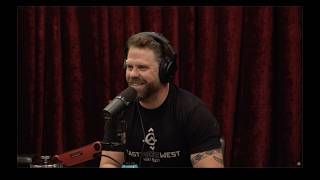
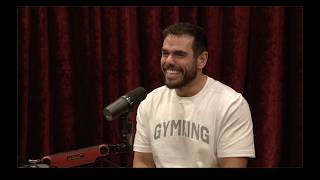
JRE MMA Show #187 with Robert Whittaker
Audio Brief
Show transcript
What makes an elite cage fighter move up a weight class? For Robert Whittaker, it was the depressing realization that after 15 years in the Ultimate Fighting Championship, or UFC, he might retire with a closet full of tailored suits that only fit his starved fight camp body. On The Joe Rogan Experience, UFC commentator Joe Rogan and former champion Whittaker, produced by Jamie Vernon, explore how mixed martial arts athletes balance brutal physical demands with aging and family life. Stick around to learn how physical flaws create championship styles, why training tired ruins technique, and what separates fighting smart from fighting for the crowd.
Why extreme weight cuts can break a fighter's mind before they ever step on the scale. For years, Whittaker dropped about 30 pounds to make welterweight, once sweating out around 17 pounds on the morning of the weigh in alone. Now at light heavyweight, he walks around closer to his natural size and only sweats out 15 pounds in the bath.
Why exhausting yourself before practice actually makes you a worse athlete. Rogan notes that fighter Cub Swanson had his worst performances after training with conditioning coach Sam Calavitta because the workouts broke his body down too much. Schedule your technique and timing drills before exhausting conditioning sessions so you wire sharp movements instead of sloppy habits.
How devastating injuries and missing limbs can forge unstoppable fighting styles. Grappler Jean Jacques Machado was born with only a thumb on his left hand, forcing him to use overhooks and underhooks rather than grabbing the traditional uniform, which translated directly to dominance at the Abu Dhabi Combat Club submission wrestling championships. Instead of forcing movements your body cannot support, build a specialized system around your own anatomy.
Building unstoppable grappling control and core power from the ground up. In submission grappling without the traditional uniform, pure athleticism can let you get away with mistakes, which is why Whittaker says training in the traditional kimono forces much sharper positioning. Legends like Rickson Gracie taught a philosophy of incremental control, moving from a neutral zero to one, two, three, and checkmate without ever giving back ground, much like a ratchet that only clicks forward.
The genetic freaks and lifestyle rebels who break every rule of athletic longevity. Clean living and youth are supposed to rule sports, yet Carlos Prates smokes cigarettes in the locker room on fight day, once said he trained hard by not drinking for two weeks, and still knocked out Leon Edwards. Rogan and Whittaker speculate on whether his habits hurt him physically more than they help him psychologically, concluding they do not know where the tipping point is.
Why winning safely without taking brain damage can still cost a fighter their job. Fighters face a brutal tug of war between protecting their health and entertaining promoters. Rogan notes that elusive striker Michael Venom Page only lost once in the UFC, yet was not offered a new contract after winning his last fight because of his point fighting style.
From steroid contracts to one eyed champions, the wild unpredictability of fight night. Enson Inoue once told Rogan his Pride Fighting Championships contract stated in capital letters that they do not test for steroids. Even stricter rules get bent, as Michael Bisping fought 11 UFC bouts blind in one eye, allegedly passing medicals by memorizing the eye chart while the doctor stepped out, a detail Jamie pulled from a Reddit comment.
Surviving a multi decade combat career requires training smart, adapting to your body's limits, and knowing when to step back from the grind. As Whittaker puts it, trading extra runs up sand hills for his kids' soccer games is what keeps him fresh enough to keep chasing the title.
Episode Overview
- Joe Rogan (UFC commentator and owner of the Comedy Mothership) and Robert Whittaker (former UFC Middleweight Champion and current Light Heavyweight contender, produced off-camera by Jamie Vernon, "Young Jamie") explore how elite combat athletes balance the grueling physical, mental, and weight-cutting demands of a long MMA career with family life, aging, and evolving training methodologies.
- The conversation traces Whittaker's evolution from a 4th-year apprentice electrician who took annual leave during his Capstone test for The Ultimate Fighter (and never went back), starting fighting at 20 with no kids (later clarifying he started at 18 and began his UFC middleweight run around 2015), to a veteran married father of 6 kids (all boys are under 11) with mortgages.
- Rogan and Whittaker analyze the physiological and psychological toll of extreme weight cutting across divisions (from 170 lbs to 185 lbs to 205 lbs), debating optimal strength and conditioning strategies, the separation of skill work from red-line fatigue, and the foundational value of gi jiu-jitsu and gymnastics.
- The episode provides an exhaustive breakdown of MMA history, current divisional landscapes, and athletic outliers—ranging from older contenders defying age to fighters overcoming severe physical limitations—while disclosing Whittaker's business ventures (a supplement partnership with Musashi, the Ascend Fitness by Rob app created with his wife focusing on sports science, longevity, and personal training with monthly Q&As and form feedback from coaches, and his YouTube podcast MMArcade) alongside episode sponsors DraftKings (promo code ROGAN: spend $5, get $200 in bonuses within 21 days, issued as $50 in rewards every 7 days for 21 days), RAF (Real American Freestyle Wrestling streaming on Fox Nation, featuring RAF 14 on Friday, October 23rd with Arman Tsarukyan vs. Dillon Danis), and Perplexity AI.
Key Concepts
- The Physiology and Psychology of Weight Cutting: Whittaker details the severe toll of his career weight cuts. From age 18 to ~23/24, he fought at 170 lbs (welterweight) while walking around at 92–94 kg (~198–207 lbs), cutting ~30 lbs, with his final welterweight cut requiring him to lose 7.4 kg (16–17 lbs) on the morning of the weigh-in. At 185 lbs (middleweight), he cut from ~205 lbs. Now at 205 lbs (light heavyweight), he walks around at 106 kg (~232 lbs), wants to start camp at 103 kg (~225 lbs), and enters the bath at 220 lbs to sweat out 15 lbs in about 1.5 hours. Whittaker also notes the psychological depression of weight cutting, realizing none of his tailored suits fit him outside of fight camp and fearing he would retire after a 15-year UFC career with no clothes that fit his natural body. Meanwhile, extreme cuts don't guarantee victory: Ateba Gautier weighed 231 lbs before cutting to 185 lbs, yet Roman Kopylov stopped him in Round 1. Conversely, Mike Malott started at featherweight (losing to Hakeem Dawodu) before moving up and knocking out Joaquin Buckley at welterweight.
- Sequencing Skill Acquisition vs. Conditioning: Rogan and Whittaker argue against doing exhausting strength and conditioning immediately before technical skill work. Referencing conditioning coach Sam Calavitta ("The Garage"), a cycling-background coach who trains TJ Dillashaw, Aaron Pico, Arman Tsarukyan, Juan Archuleta, and Khamzat Chimaev, Rogan notes that Cub Swanson said he had his worst performances after training there because the workouts broke his body down too much. A live Perplexity AI search by Jamie confirms that while one small laboratory study showed intense cycling before a tracking task improved retention 24 hours and 7 days later, fatigue commonly reduces the quality of sport-specific technique, and lab tracking does not establish that hard cardio before complex sparring or footwork is superior.
- Physical Limitations Shaping Elite Martial Arts Styles: Severe injuries and congenital differences often dictate a fighter's signature technical style. Jean Jacques Machado was born with only a thumb on his left hand, forcing him to develop a jiu-jitsu game based on overhooks and underhooks rather than gi grips, which translated directly to no-gi dominance at ADCC. Similarly, Sean Strickland blew out his right quad in a motorcycle accident (leaving him missing a piece of his quad), which dictated his upright, teep-heavy style that he used to beat Fluffy Hernandez easily (though Strickland now wants out of his UFC contract to box Jake Paul). In live combat, Carlos Ulberg blew out his own right leg (ACL/knee) kicking Jiri Prochazka, leaving him with only one punch option—the left hook—which he used to knock Jiri out.
- Grappling Foundations, Core Strength, and Incremental Control: Whittaker emphasizes that training in the gi allows fewer mistakes than no-gi, where pure athleticism can carry a fighter. They highlight legends of grappling and early S&C: Rickson Gracie pioneered MMA conditioning (doing yoga, balance beam splits, neck exercises against trees, and glacial river cold plunges before Vale Tudo Japan) and taught a philosophy of incremental control—moving from neutral ("zero") to one, two, three, and checkmate without ever giving back ground. Marcelo Garcia achieved almost all his submission victories via chokes (guillotine, rear-naked, north-south) except for a heel hook against Ricco Rodriguez at ADCC absolute, avoiding kimuras as a "strongman move." Both speakers agree that gymnastics and breakdancing build the best core strength for MMA, with Whittaker noting his wife was an elite gymnast who served as his early S&C and nutrition coach, and Galore Bofando (Michael "Venom" Page's former training partner) exemplifying freakish body control by executing a front-flip axe kick on a heavy bag and landing on his feet.
- Age, Genetics, and Lifestyle Outliers in Combat Sports: While hard work is vital, genetics and anomalies abound. Yoel Romero is 49 years old with his neck fused to his skull; Whittaker says kicking Romero's calf felt like kicking metal and hurt his own leg, and Romero recently dropped Darren Till in a bare-knuckle fight. Jared Cannonier is 42 years old, still shredded, and stopped Gregory "RoboCop" Rodrigues after getting blasted in Round 1 (and lost a controversial stoppage to Nassourdine Imavov). Bobby "King" Green changed his name and started winning by TKO at age 40. Meanwhile, Carlos Prates—who had ~100 Muay Thai and kickboxing fights over 6 years in Thailand, beat Jack Della Maddalena, and knocked out Leon Edwards with a left hand—smokes cigarettes in the locker room on fight day and once said in an interview he trained hard by not drinking for 2 weeks (Rogan and Whittaker speculate on whether his drinking and smoking hurts him physically more than it helps him psychologically, concluding they don't know where the tipping point is). Other unique athletes include Arman Tsarukyan (who grew up wealthy, treating Whittaker's "lifeblood" career like a hobby while fighting like a super-soldier), Manny Pacquiao (who warms up for a full hour like Muhammad Ali and has a 15-table pool hall in his Philippines compound where he plays pro-level pool, plays chess, and signs autographs simultaneously), Nick Diaz (who swam back from Alcatraz at least 7 times, had his first fight August 31, 2001 in IFC Warriors, made his UFC debut September 26, 2003 at UFC 44 vs. Jeremy Jackson followed by Robbie Lawler in 2004, and knocked out Paul "Semtex" Daley in Strikeforce after getting dropped twice in Round 1), and Justin Gaethje (who refuses to drink water during training sessions until the session is completely over to toughen himself up).
- The Entertainment Mandate vs. Intelligent Fighting: Fighters face tension between winning safely and entertaining promoters. Rogan notes that Michael "Venom" Page (MVP), at age 39 or 40, only lost once in the UFC (to Ian Garry via grappling) and beat Shara Bullet, yet was not offered a new UFC contract after winning his last fight because of his point-fighting style. Similarly, Rogan claims undefeated fighter Farid Basharat was cut by the UFC due to his style (Jamie notes his brother Javid Basharat or a similar fighter had the same issue in February after winning through Dana White's Contender Series), though Rogan explicitly hedges: "Okay, I'm talking out of school. I didn't talk to Dana or Sean Shelby or Mick Maynard. I don't know what happened." Conversely, dominant wrestling avoids damage: Khamzat Chimaev held Dricus Du Plessis down and put him in a crucifix 3 times across 5 rounds in a championship fight (Rogan also shares a rumor that Chimaev had given up on making 185 lbs before being offered a short-notice money fight against Strickland, hedging with "That's what I had heard" and "I don't think they gave him a lot of time").
- Regulatory Disparities, Environmental Hazards, and Unpredictability: Combat sports history is filled with regulatory wildness and environmental variables. Enson Inoue told Rogan his Pride FC contract explicitly stated in capital letters: "WE DO NOT TEST FOR STEROIDS." Michael Bisping lost vision in one eye from a Vitor Belfort head kick, had oil injected into his eye, and fought 11 UFC fights blind in one eye—recovering from a flying knee at the bell to beat Anderson Silva by decision after Silva celebrated on the cage—by allegedly memorizing the eye chart while the doctor was out of the room (Jamie cites a Reddit comment for this, and Whittaker jokes, "If it's on Reddit, you take that to the bank"). Today, Shara Bullet is blind in one eye, can only get licensed in Middle Eastern commissions (e.g., Doha/Abu Dhabi), and is scheduled to fight Israel Adesanya (who recently left his longtime gym, City Kickboxing, coached by Eugene Bareman). Environment also dictates fights: Anderson Silva vs. Demian Maia in Abu Dhabi was fought outdoors in high heat/humidity with giant bugs (Silva coasted after Round 1, leaving Dana White furious), and the White House UFC Card was held outdoors in ~70-degree weather with high humidity after thunderstorms passed over, where Justin Gaethje said the air felt heavy in Round 1 and Mauricio Ruffy executed Michael Chandler. Inside the cage, anything can happen: UFC 322 broke the UFC record for most knockouts in a single event with 11 KOs (surpassing UFC Fight Night: Imavov vs. Borralho) and 7 consecutive first-round KOs (featuring Natalia Silva vs. Weili Zhang/Wang Cong, Payton Talbott KO'ing Deiveson Figueiredo, Mateusz Rebecki KO'ing King Green, and Roman Kopylov KO'ing Ateba Gautier); Sean Sharaf knocked out Gable Steveson in 11 seconds with the first punch as a +2400 underdog (Steveson was -2400); Bas Rutten won the heavyweight title against Kevin Randleman off his back via elbows and strikes; Kevin Holland knocked out Jacare Souza from his back with a right hook while talking about a dream he had at 17, and told Joaquin Buckley he had a booger on his nose before knocking him out; 5'10" light heavyweight Azamat Murzakanov beat Paulo Costa and is fighting Dominick Reyes; and 6'6" middleweight kickboxer Yousri Belgaroui (who trains with Alex Pereira and Glover Teixeira, fought Pereira 3 times in kickboxing, beating him once while Pereira KO'd him once) brutally beat Mansur Abdul-Malik. Finally, Whittaker briefly discusses electrical physics from his trade days, claiming people survive lightning strikes because lightning has high voltage but low current, before immediately hedging ("I think... I can't tell you right now. I've been out of the game for a little bit"), while Jamie heavily disputes the authenticity of two viral security camera lightning-strike videos as nearly impossible odds and likely fakes.
Quotes
- At 0:01:02 - "From when I started at like 20, I had no kids, to when I'm now married with six kids and mortgages and a life, you know, you kind of juggle it around. It's just balancing act." - Whittaker explaining how his priorities and time management evolved over his career.
- At 0:05:10 - "The huge factor in all this is like there's such small gloves. A touch can stop you. Like that's all you need. And that's kind of been my approach with how I my fight style is just to be fast." - Whittaker on why speed and evasion are paramount in four-ounce gloves.
- At 0:08:01 - "Everybody that doesn't drink and smoke before a fight is waiting for it to catch up with him so they can justify why they don't drink and smoke." - Whittaker joking about clean-living fighters watching Carlos Prates succeed despite chain-smoking and drinking.
- At 0:18:49 - "I'm still a professional athlete. I'm still I'm gunning for that title. Like I'm gunning for the title still. And I picked up I picked up one of my kids and I felt like a twinge in my lat and I'm like, 'Ooh.' You just age creeps up on you." - Whittaker illustrating the reality of aging even while competing at an elite level.
- At 0:30:27 - "I've never thrown a calf kick and come off second best. Like I calf kicked him and that was the last calf kick I did. He didn't check it. It just hurt. He's just he's built different." - Whittaker describing the freakish physical density of Yoel Romero.
- At 0:32:04 - "Hard work will get you very, very far, but there is like talent and genetics are a factor. A huge factor." - Whittaker acknowledging the undeniable role of genetic gifts in combat sports.
- At 0:34:33 - "That was unbelievable in a championship level fight to hold down someone like Dricus who couldn't do anything. He couldn't do anything. And he's a big strong guy." - Whittaker reacting to Khamzat Chimaev putting Dricus Du Plessis in a crucifix three times across five rounds.
- At 0:37:24 - "Everyone's trying to win. You're trying to win a fight. Fights are fucking complicated. And this idea that you're supposed to just be entertaining and put your brain on the line and ignore your skill set, ignore your skill set which is to avoid damage and to fight intelligently." - Rogan defending technical fighters who get cut or penalized by promotions for not brawling.
- At 0:38:01 - "If I could toe-stomp my way to victory, I would. I would. If I could do what Chimaev does, sometimes I'm jealous of these guys that can just wrestle because they take no damage." - Whittaker admitting the appeal of dominant, low-damage grappling styles.
- At 0:55:57 - "A world championship fight should be fought in a controlled environment. It should be an air-conditioned building. It should be a controlled environment that everyone fights in a world championship fight in the same way." - Rogan criticizing outdoor championship events like the Abu Dhabi and White House cards where heat and humidity alter fighter performance.
- At 1:02:01 - "My life sport, my lifeblood on this earth for my family is his hobby. And it annoys me. He just turns up at the highest level to play." - Whittaker expressing comedic frustration at Arman Tsarukyan competing with ferocity despite coming from a wealthy background.
- At 1:06:33 - "I think skill work should be done when you're not tired. You should learn all those sharp movements, all the counters, all the things, it should be sharp." - Rogan advocating for practicing technique while the nervous system and body are fresh.
- At 1:07:27 - "If you go into these sessions tired, you don't want to get used to being tired. I know they say you got to train for when you're tired, but you don't want to get used to being tired." - Whittaker explaining why pre-exhausting yourself before sparring wires sloppy habits.
- At 1:09:20 - "If you want to break yourself doing something, it needs to be in the craft you're doing. Like if you want to get fitter wrestling, you have to wrestle. You have to be put in those positions." - Whittaker emphasizing sport-specific conditioning over generic red-line workouts.
- At 1:13:45 - "You can't make as many mistakes in the gi. It makes your positioning and your decision-making so much more vital. Because let's be honest, if you're an athletic guy, you can get pretty far in no-gi." - Whittaker explaining why training in the gi builds superior technical grappling foundations.
- At 1:20:32 - "He goes, 'We all start at a neutral position. We all start at zero.' And he goes, 'And once I go to one, I'm not going back to zero. I'm going to two, I'm going to three, I'm going to checkmate.'" - Rogan recounting Rickson Gracie's philosophy of ratcheting positional control.
- At 1:25:01 - "She was the one that made me realize how important a strong core is. Like a strong core. Your core is everything. Like as a person, like just being able to move and walk around, and especially with the dynamic movements of MMA." - Whittaker crediting his wife, a former elite gymnast, for transforming his core training.
- At 1:42:58 - "At the end of this career that I've had, like I've been in the UFC for 15 years, end of my career, I'm going to have no clothes. It made me, I was like upset." - Whittaker revealing how outgrowing his tailored suits between middleweight camps contributed to his move up to 205 lbs.
- At 2:17:50 - "I stepped away a little bit from it so that I could go to my kids' soccer games, you know, instead of running sand hills. Things like that. I started enjoying kind of the moments between fighting." - Whittaker on adjusting his training schedule to be present for his family and prevent burnout.
- At 2:26:46 - "Fighting is like, it is the most primal, vulnerable position two men can be in. Like these are two guys out there putting their souls on the line with the consequence of getting knocked out in front of their friends and family and the world." - Whittaker reflecting on the intense psychological vulnerability required to step into the cage.
Takeaways
- Perform technical skill work when fresh: Schedule technique, timing, and counter-drilling before exhausting strength and conditioning sessions so you wire sharp movements rather than training your body to move sloppily while fatigued.
- Build endurance through sport-specific rounds: Rather than breaking your body down with unrelated red-line conditioning, build fighting stamina by doing hard rounds in the exact craft you need to improve, such as live wrestling or bag work.
- Execute hanging strict toes-to-bar for core and grip strength: Incorporate John Danaher's #1 mandatory exercise—lifting your feet to the chin-up bar with zero momentum and stabilizing completely at the bottom—to improve your core, deadlifts, clean and press, and chin-ups.
- Train in the gi to sharpen grappling decision-making: Use gi training to slow down scrambles and strip away pure athletic advantages, forcing yourself to rely on precise positioning and technical discipline.
- Apply the "zero to checkmate" positional ratchet: Adopt Rickson Gracie's grappling mindset by treating every incremental advantage as permanent—once you advance from neutral ("zero") to position "one," refuse to concede space back to zero as you work toward the finish.
- Warm up thoroughly as you age: Follow the example of veterans like Manny Pacquiao and Muhammad Ali by dedicating up to a full hour to warming up your body before intense physical exertion to protect aging joints and muscles.
- Conceal physical therapies and injuries before competition: Avoid therapies that leave visible marks right before a match—such as the red cupping/suction marks Paulo Costa had on his calf, which Israel Adesanya immediately targeted with kicks (while Rogan also speculates Costa was "mind-fucked" by pressure during that fight).
- Audit your weight class for long-term health and quality of life: If extreme weight cutting (like losing 30 lbs overall or 7.4 kg on weigh-in morning) leaves you depleted and depressed outside of camp, move up to a division closer to your natural walking weight.
- Question unproven weight-cutting rituals: Evaluate whether habits like heavy water loading are actually driving weight loss or if the drop is simply from dietary changes; Whittaker notes he isn't sure if water loading actually works and only does it now out of superstition.
- Adapt your technical style around permanent physical limitations: Instead of forcing movements your body cannot support, build a specialized system around your anatomy—like Jean Jacques Machado using overhooks/underhooks without fingers on his left hand, or Sean Strickland using an upright, teep-heavy style after losing part of his right quad.
- Prioritize damage avoidance over crowd-pleasing: Remember that the primary objective of martial arts is to win intelligently while protecting your brain; utilize low-damage control strategies whenever possible rather than brawling recklessly for entertainment.
- Step back from obsessive grinding to preserve longevity: Trade marginal, exhausting extra workouts (like running sand hills) for family milestones (like attending your kids' soccer games) to maintain mental freshness across a multi-decade career.