Incomplete open cubes

Audio Brief
Show transcript
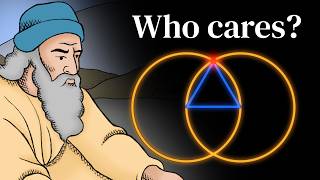
This episode covers a mathematical puzzle about counting rotationally unique "incomplete cubes," connecting this abstract challenge to Sol LeWitt's modern art.
There are three key takeaways from this discussion.
First, seemingly simple counting problems can quickly become complex when accounting for symmetries like rotation. This highlights the hidden depth in combinatorial challenges.
Second, mathematics and art are not mutually exclusive. Systematic, logical processes can underpin compelling artistic expression, as seen in LeWitt's work.
Third, the process of exploring a problem can be as enlightening as the final solution. The journey often reveals powerful mathematical concepts, such as Burnside's Lemma from group theory.
This problem offers an engaging path to deeper mathematical understanding through visual art.
Episode Overview
- The video introduces a mathematical puzzle about counting the number of rotationally unique "incomplete cubes" that can be formed by removing some of a cube's 12 edges.
- It connects this abstract math problem to a real-world piece of modern art: "Variations of Incomplete Open Cubes" by artist Sol LeWitt (1974).
- The host announces a new, longer guest video by Paul Dancstep that tells the story of this artwork and walks through the problem-solving process to find the answer.
- The solution to the puzzle is revealed to involve rediscovering concepts from group theory, specifically a powerful counting tool called Burnside's Lemma.
Key Concepts
- Incomplete Cubes: These are the central objects of the puzzle, which are wireframe cubes with one or more edges removed.
- Rotational Uniqueness: The core constraint of the puzzle. Two incomplete cubes are considered the same if one can be rotated in 3D space to look identical to the other.
- Combinatorics and Group Theory: The video highlights that this is a problem in combinatorics (the mathematics of counting) that is elegantly solved using tools from group theory, which studies symmetry.
- Intersection of Art and Math: The video uses Sol LeWitt's artwork as a prime example of how mathematical and systematic thinking can be the foundation for creative and aesthetic expression.
Quotes
- At 00:00 - "How many ways can a cube be incomplete?" - The video opens with the central puzzle that frames the entire discussion.
- At 00:46 - "...that process is to rediscover a bit of group theory and a very beautiful fact within it known as Burnside's lemma." - This quote connects the accessible puzzle to a more advanced and powerful mathematical concept.
Takeaways
- Seemingly simple counting problems can quickly become complex when accounting for symmetries like rotation.
- Mathematics and art are not mutually exclusive; systematic, logical processes can be the basis for compelling artistic work.
- The process of exploring a problem can be as enlightening as finding the final solution.
- The video serves as an invitation to engage with a deeper mathematical concept through a visually intuitive and interesting puzzle.