How Plastic Waste Becomes Brand New Pipes | Incredible Process
Audio Brief
Show transcript
This episode covers the industrial recycling process used to transform discarded plastic containers into high-density polyethylene agricultural pipes.
There are three key takeaways from this manufacturing cycle. First, raw plastic must be sorted, shredded, and rigorously washed to remove impurities before processing. Second, the clean flakes must be pelletized to ensure a consistent melt during extrusion. Third, a precise extrusion and multi-stage water cooling process is required to form durable, finished pipes without structural defects.
The process begins with mechanical shredding and centrifugal washing. Hard plastics, from small bottles to industrial drums, are crushed into uniform flakes and washed to remove dirt, labels, and chemical residues. This intensive cleaning is critical because any remaining contaminants can compromise the structural integrity of the final product.
Once cleaned, the flakes are melted and formed into uniform pellets, which are then fed into a continuous pipe extruder. The melted plastic is forced through a circular die under immense pressure and immediately cooled with water. This rapid cooling prevents deformation, ensures consistent wall thickness, and allows the flexible finished pipes to be efficiently coiled for transport.
This closed-loop manufacturing system highlights how industrial recycling can successfully turn plastic waste into high-value agricultural infrastructure.
Episode Overview
- This episode demonstrates the industrial recycling process used to transform discarded plastic bottles, containers, and drums into high-density polyethylene (HDPE) agricultural pipes.
- It highlights the step-by-step progression from raw scrap material to shredded flakes, washed resin, melted pellets, and finally extruded finished pipes.
- This content is highly relevant to individuals interested in manufacturing, plastic recycling technology, waste management, and sustainable production processes.
Key Concepts
- Mechanical Shredding: Hard plastics of various sizes, from small motor oil bottles to large industrial drums, must first be cut and crushed into uniform-sized flakes to ensure consistent melting in later stages.
- Centrifugal Washing and Density Separation: The shredded plastic flakes undergo rigorous washing in water basins with mechanical agitators to remove dirt, leftover chemical residues, and labels, ensuring high-quality recycled output.
- Pelletization: Cleaned plastic flakes are melted, extruded into thin strands, cooled in water, and chopped into small, uniform pellets, making the recycled material easy to feed into the final pipe extrusion machine.
- Continuous Pipe Extrusion: Recycled HDPE pellets are loaded into an extruder where they are heated, pressurized, and pushed through a die head, forming a seamless pipe with co-extruded colored stripes for identification.
Quotes
- At 0:08 - [Shredding Process] - "Industrial-scale crushing machines are used to break down highly durable plastic containers into manageable flakes, which serves as the foundational raw material."
- At 5:27 - [Washing Process] - "A rotating mechanical paddle washes the plastic flakes to separate heavier dirt and impurities, which is a critical step for maintaining structural integrity of the final pipe."
- At 12:22 - [Extrusion Process] - "The melted recycled plastic is forced through a circular die under immense pressure, cooled instantly with water to solidify its shape as a finished agricultural pipe."
Takeaways
- Sort and prepare plastic waste by material type and clean off heavy contaminants before processing to avoid damaging recycling machinery and polluting the recycled plastic batch.
- Implement a multi-stage water cooling system during extrusion to solidify the plastic quickly, preventing deformation and ensuring consistent pipe wall thickness.
- Utilize a coiling wheel mechanism at the end of the production line to bundle the finished flexible pipes efficiently for transport and storage.
More from Hard Work and Skills
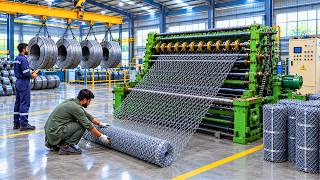
Amazing Manufacturing Process of IRON MESH | Steel Coils to Strong Wire Mesh Making
Oct 17, 2026
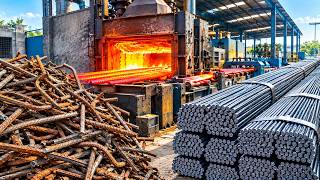
Unbelievable! Top 3 Most Amazing Recycling and Manufacturing Processes Videos
Oct 09, 2026
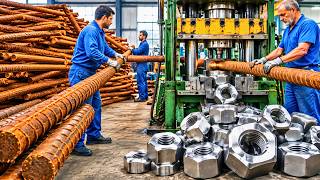
Old Rebar into Hex Nuts — The Incredible Manufacturing Process
Oct 04, 2026
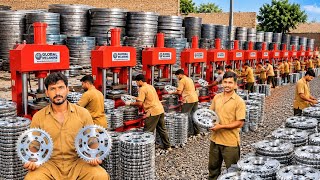
How Motorcycle Rear Sprockets Are Made — The Incredible Manufacturing Process
Sep 27, 2026