Unbelievable! Top 3 Most Amazing Recycling and Manufacturing Processes Videos
Audio Brief
Show transcript
This episode covers the highly efficient world of industrial metal recycling, forging, and manufacturing, detailing how raw and scrap metals are transformed into high-value components.
There are three key takeaways from this analysis of modern metalworking. First, thermo-mechanical reshaping of structural steel offers massive energy savings over complete remelting. Second, hot forging is superior to subtractive machining for high-stress parts because it preserves continuous grain flow. Third, progressive sequential manufacturing is essential for maintaining tight tolerances and high production throughput.
Instead of melting scrap metal down entirely, which is highly energy-intensive, facilities heat old rebar to extreme temperatures and run it through progressive rolling mills. This physical deformation process preserves the steel's structural integrity and carbon structure while using a fraction of the energy. The result is a highly sustainable, low-emission method of turning structural waste back into viable construction material.
When manufacturing heavy-duty components like truck wheel nuts, forging is highly preferred over machining from a larger block of metal. Compressing heated steel blanks directly into dies forces the metal's internal grain structure to flow continuously around the shape of the part. This alignment dramatically increases tensile strength and torque resistance, making the final hardware much safer and more durable.
Precision components, such as motorcycle sprockets, rely on multi-step progressive stamping to achieve high dimensional accuracy. By breaking fabrication down into distinct cold-pressing stages, including blanking, punching, and CNC tooth hobbing, manufacturers can prevent material cracking. This systematic approach ensures maximum consistency and rapid output rates on the factory floor.
Ultimately, these advanced mechanical processes demonstrate how precision engineering and upcycling can optimize industrial efficiency and material strength simultaneously.
Episode Overview
- This episode explores the fascinating, highly efficient world of industrial metal recycling, forging, and manufacturing, showcasing how raw and scrap metals are transformed into high-value components.
- It highlights the step-by-step processes of rolling old, thick rebar into thinner, usable structural steel and upcycling structural scrap into heavy-duty truck wheel nuts.
- The narrative shifts to automated precision manufacturing, demonstrating how raw steel plates are progressively stamped and machined into motorcycle sprockets.
- This content is ideal for anyone interested in metallurgy, sustainable manufacturing, industrial efficiency, and the mechanical processes that turn waste metal into critical industrial and automotive parts.
Key Concepts
- Transforming Rebar through Heat and Precision: Instead of melting scrap metal down entirely—which is highly energy-intensive—old, thick rebar is heated to high temperatures to make it malleable and then run through powerful rolling machines. This mechanical deformation process saves massive amounts of energy while preserving the steel's structural integrity and carbon structure.
- Sequential Rolling and Forging Processes: Metal reshaping requires progressive stages of reduction. Whether reducing the diameter of a steel rod or stamping a steel plate, progressive machine passes shrink and stretch the material gradually to prevent cracking, structural failure, and dimensional inaccuracy.
- Upcycling with Forging vs. Machining: Transforming construction rebar into heavy-duty truck wheel nuts demonstrates the power of industrial upcycling. Forging the heated steel blanks into dies, rather than machining them from a larger block, forces the steel's internal grain structure to flow continuously around the shape of the nut, dramatically increasing its tensile strength and resistance to extreme torque.
- Multi-Step Precision Stamping: The production of motorcycle sprockets from flat steel plates showcases the necessity of progressive dies. Utilizing distinct cold-pressing stages for blanking, hole punching, and structural shaping before final CNC tooth hobbing ensures exceptional dimensional accuracy and high output rates.
Quotes
- At 5:45 - "Once heated, the red-hot rebar passes through a series of powerful machines, gradually being reduced to the required thickness." - Explains the core rolling mill process that mechanically reshapes hot steel progressively without losing material integrity.
- At 12:57 - "After passing through several stages, the same old thick rebar is transformed into new, usable thin rebar." - Emphasizes the successful outcome of physical reconstruction, showing how mechanical recycling turns waste back into high-value construction material.
- At 16:17 - "First, the thick rebar is cut into small pieces using a powerful cutting machine." - Highlights the initial stage of mechanical preparation, where long structural rods are sectioned into precise lengths before undergoing high-heat forging.
- At 19:29 - "The heated steel now passes through powerful machines, gradually taking the shape of a heavy-duty nut." - Captures the forging stage where extreme mechanical pressure forces malleable, hot metal into custom dies to shape heavy-duty automotive hardware.
- At 23:03 - "First, the thick steel plate is cut into a precise circular shape using a powerful press machine." - Shows the transition from raw, flat steel plating to a circular blank, marking the starting point of precision sprocket fabrication.
- At 29:09 - "Finally, the teeth are formed, completing the large motorcycle sprocket." - Represents the final specialized machining stage where teeth are cut into the outer edge to complete the functional gear profile.
Takeaways
- Leverage Thermo-Mechanical Reshaping Over Melting: When recycling structural steel, prioritize heating and mechanical rolling or forging over complete remelting to preserve the metal's internal carbon structure and drastically reduce energy consumption.
- Design for Continuous Grain Flow in High-Stress Parts: For heavy-duty load-bearing fasteners and components, utilize hot forging into custom dies rather than CNC machining from raw stock to align the metal's internal grain flow, significantly boosting shear and tensile strength.
- Implement Progressive Sequential Manufacturing: Break down complex metal fabrication processes into a series of dedicated, single-function machine stages (such as blanking, punching, and hobbing) to maintain tight tolerances and high production throughput.
More from Hard Work and Skills
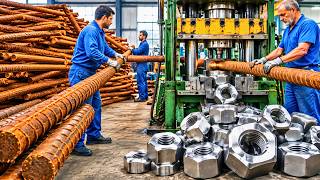
Old Rebar into Hex Nuts — The Incredible Manufacturing Process
Oct 04, 2026
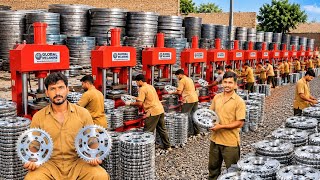
How Motorcycle Rear Sprockets Are Made — The Incredible Manufacturing Process
Sep 27, 2026
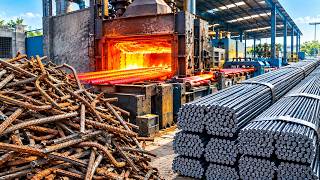
How Old Steel Bars Are Turned Into New Rebar | Full Process
Sep 20, 2026
Top 5 Crazy & Amazing Recycling and Manufacturing Processes in the World | Amazing Factories
Sep 02, 2026