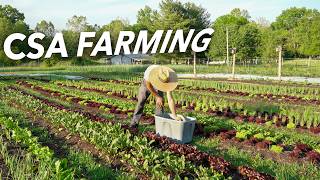
Fitting Ecological Farming into The Economy
Audio Brief
Show transcript
This episode of Growers Daily explores the integration of ecological farming into the modern economy, analyzing the financial viability of sustainable agriculture and global land restoration.
There are three key takeaways from this analysis. First, while no-till farming requires higher upfront capital, it quickly outpaces traditional tillage in long-term profitability by drastically reducing seasonal labor costs. Second, small-scale organic farms must proactively diversify and collaborate to survive shifting consumer spending habits and inflation. Third, grassroots ecological restoration movements and biological technologies are proving that degraded ecosystems can be rehabilitated through community-driven business models.
A comparative analysis of bed preparation reveals that a permanent no-till bed with deep compost mulch costs about eighty-five dollars initially, compared to thirty dollars for a tilled bed. However, because no-till systems require minimal weed management and compost replenishment in subsequent years, they recoup the initial investment within two seasons. When accounting for labor costs at fifteen dollars per hour, the continuous weeding required by traditional tillage makes it the more expensive option over time.
Economic volatility and inflation are squeezing organic markets, particularly in Europe where thousands of hectares of organic farmland are reverting to conventional methods due to low supermarket prices. To build resilience, small-scale growers must shift away from high-end niche products when consumer budgets tighten. Cultivating direct customer relationships, forming cooperative distribution networks with neighboring farms, and simulating worst-case scenarios are critical steps for maintaining market viability.
Beyond individual farms, broader ecological recovery is being driven by localized community action and biological technology. Ecosystem Restoration Communities mobilize local labor to bypass slow corporate structures and directly restore soil health on abandoned lands. Additionally, living water gardens utilize constructed wetlands and bacteria to clean polluted water, proving that ecological remediation can double as a productive, community-based enterprise.
Ultimately, the survival of ecological agriculture relies on combining rigorous financial calculation with collaborative, adaptive business strategies.
Episode Overview
- This episode of Growers Daily explores how ecological farming can be successfully integrated into the modern economy, focusing on the financial and practical realities of sustainable agriculture.
- Host Jesse Frost breaks down the comparative economics of tillage versus no-till farming systems, detailing how initial investment costs stack up against long-term labor savings.
- The episode addresses the challenges of farming in a shifting economy, examining organic market trends in Europe and the US, and discussing strategies for small-scale growers to build resilient businesses.
- Renowned filmmaker and ecological expert John D. Liu joins the show to discuss the global movement of restoring degraded land through Ecosystem Restoration Communities and the rise of "living water gardens."
Key Concepts
- The Long-Term Economics of No-Till vs. Tillage: While starting a no-till bed with deep compost mulch requires a much higher upfront investment (roughly $85 per bed for compost and labor) compared to a tilled bed (around $30), the economic pendulum swings back quickly. No-till beds require significantly less compost replenishment and almost no weed cultivation in subsequent years. In contrast, tilled beds require ongoing, heavy labor for weed management throughout the growing season, making no-till more cost-effective within two seasons.
- Economic Resilience for Small-Scale Farms: In times of inflation and shrinking middle-class budgets, organic and high-end niche produce (like microgreens and salad mixes) are often the first items consumers cut. To survive economic downturns, small-scale growers must focus on building deep customer relationships, diversifying their offerings (possibly through farm cooperatives), finding unfilled market niches, and maximizing operational efficiency.
- Ecosystem Restoration Communities: Degraded, abandoned lands (referred to in Spain as territorios abandonados) can be brought back to life by mobilizing local communities to camp, plant trees, and restore the soil. This collective effort bypasses slow-moving corporate and government structures, directly benefiting the local climate, hydrology, and economy.
- Living Water Gardens (Eco-Machines): Utilizing biological technology first pioneered by Dr. John Todd, these systems use constructed wetlands, plants, and bacteria to treat polluted, nutrient-rich water. These "living machines" rapidly build soil precursors and restore balance to damaged aquatic ecosystems, turning ecological cleanup into a productive, community-based enterprise.
Quotes
- At 5:46 - "In other words, the initial year can cost more for the no-till farm, but the yearly management is less for no-tillage and recoups the difference in less than two seasons." - Explaining why the upfront cost of deep compost mulching is a wiser long-term investment than the continuous labor demands of tillage.
- At 8:44 - "That means they pay less to organic producers than to conventional ones... in France, little less than 100,000 hectares of organic farms have given up or have changed back to conventional because prices are too low." - Highlighting the severe economic squeeze that European organic farmers face due to supermarket pricing structures and inflation.
- At 13:11 - "What keeps any business thriving is their ability to adapt and satisfy demands—to add something to the customer that others cannot." - Pointing out that small farms must remain agile and customer-focused to survive major market shifts.
- At 19:34 - "It becomes like a living laboratory where people can do collaborative inquiry for collective intelligence... so it's not like selfishly trying to gather the knowledge, it's like everybody has—this has to become the common knowledge." - John D. Liu explaining how Ecosystem Restoration Communities foster shared learning to solve complex ecological problems.
Takeaways
- Calculate Your True Labor Costs When Choosing a Farming System: When comparing tillage and no-till, do not look only at the cost of compost and machinery. Factor in the cost of your time (at least $15/hour) spent weeding tilled beds at least twice per crop, and weigh that against the passive weed suppression of a permanent compost mulch system.
- Diversify and Collaborate to Weather Lean Economic Times: If customers are tightening their food budgets, adapt by forming alliances with neighboring farms. Share delivery routes, aggregate produce to offer a wider variety of goods, or open up unused land to other growers to diversify your market stand without increasing your personal workload.
- Run a "Worst-Case Scenario" Business Simulation: Prepare your farm for economic instability by asking: "What would I do if my primary customer base could suddenly no longer afford my premium produce?" Develop a backup plan—such as shifting toward staple crops, altering your sales channels, or lowering certification costs—before a financial crisis hits.