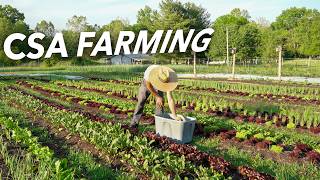
Fall Beet Breakdown (Beetdown?) + Cover Crops for Compost Fodder
Audio Brief
Show transcript
This episode covers the complete process for growing fall beets, focusing on variety selection, planting techniques, and long-term storage methods for market gardeners. There are three key takeaways for optimizing a fall beet crop. Growers must prioritize seed priming and precise direct seeding, manage spacing and moisture to prevent disease, and harvest strategically to ensure long-term storage quality.
Direct seeding is the preferred planting method because it produces superior root shapes and saves significant labor compared to transplanting. To accelerate germination and help the crop outcompete early weeds, growers should prime their seeds by soaking them overnight in compost tea or water before drying and planting. This simple technique gives the crop a critical head start during the warm late-summer planting window.
Proper spacing and moisture management are also vital for crop health and marketability. Growers should aim for three inches of spacing between plants, while avoiding overhead watering once the plants are established. Keeping beet leaves dry prevents cercospora leaf spot, a destructive fungal pathogen that thrives in high-humidity environments like high tunnels.
Finally, successful long-term storage relies on precise timing and immediate post-harvest preparation. Beets must be harvested before the first hard freeze, and the greens must be removed immediately after harvest. Leaving the greens attached will draw moisture and sweetness directly out of the root, whereas trimmed beets stored under refrigeration can keep for up to six months.
Implementing these targeted strategies allows growers to maximize their fall yields, protect crop quality, and supply high-value root crops deep into the winter season.
Episode Overview
- This episode breaks down the complete process for growing fall beets, covering variety selection, planting techniques, and long-term storage methods.
- The host explains why beets are an excellent crop for fall production, noting their resilience to heat during germination, low pest pressure, and improved sweetness after frost.
- It addresses a viewer's question on creating and managing a diverse cover crop mix designed for compost fodder and soil improvement.
- This guide is highly relevant for market gardeners and small-scale farmers looking to optimize their fall root crop yields and integrate cover cropping for fertility.
Key Concepts
- Selecting Beet Varieties for Fall: Most beet varieties perform well in the fall because day-length variations are minimal. Fast-maturing varieties take about 40 days, while slower-storing varieties take around 55 days. While specialized varieties like white (Avalanche) or striped (Chioggia) beets have excellent flavor, classic red beets remain the easiest to sell at farmers' markets.
- Direct Seeding vs. Transplanting Beets: Direct seeding is preferred over transplanting because it results in better root shape and healthier plants. Direct seeding also saves significant labor compared to transplanting multi-planted blocks.
- Seed Priming: Priming involves soaking beet seeds (which are actually clusters of embryos) overnight in compost tea or water, then drying them before planting. This practice significantly accelerates germination, helping beets outcompete weeds in the early stages.
- Rhizosheaths and Drought Resilience: Beets are highly resilient to dry conditions because they form excellent rhizosheaths. These are microscopic structures of soil aggregates and microbes bound to the roots that regulate water and nutrient exchange, acting like a protective blanket for the plant.
- Harvest and Storage Strategy: Beets should be harvested before the first hard freeze to protect the greens. For long-term storage, the greens must be removed immediately after harvest, or they will draw moisture and sweetness out of the root. When stored in perforated bags under high humidity and refrigeration, beets can keep for four to six months.
- Cover Crops for Compost Fodder: When growing cover crops to harvest for compost material, choosing species that can tolerate "cut and come again" management (like rye, vetch, and serradella) allows for multiple harvests while maintaining soil coverage and continuous root growth.
Quotes
- At 2:08 - "I think this is a great crop on many levels: relatively low in pest pressure, germinates well in the heat, grows well in low water conditions like the late summer, tastes really good around the frosts, and it's a winner of a crop headed into the winter." - Explaining why fall beets are highly advantageous for seasonal crop planning.
- At 6:45 - "Priming is when you soak the seeds overnight in a compost tea or extract... and then you dry them, and then you can plant them that way so that they germinate faster." - Teaching a practical germination-boosting technique for direct-seeded root crops.
- At 10:31 - "You want to harvest before the first hard frost if you can... for storage beets, the greens have to come off or the greens will suck the life and thus flavor literally out of the beet." - Explaining the critical relationship between beet greens and long-term storage quality.
Takeaways
- Control Weeds Before Seeding: Ensure your weed control is thorough before direct-seeding beets, as slow early growth makes them highly vulnerable to weed competition.
- Optimize Planting Density: Aim for approximately three inches of spacing between plants, planting three rows on a 30-inch bed or five rows on a 48-inch bed. Tight spacing will result in smaller, baby-sized beets, while wider spacing yields larger roots.
- Prevent Cercospora Leaf Spot: Avoid overhead watering once beet plants are established to keep the leaves dry, and ensure adequate airflow if growing them inside a high tunnel to prevent this destructive fungal pathogen.