What is this Super El Niño and What Will it Mean for Farmers + An “Easy” Interplant In the Field
Audio Brief
Show transcript
This episode covers the scientific drivers behind a Super El Niño and explores practical, climate-resilient strategies for managing water, weeds, and crop space. There are three key takeaways for growers looking to adapt to these shifting conditions. First, farmers must secure infrastructure against extreme weather; second, aggressive weeds require starvation rather than tilling; and third, spatial interplanting maximizes early-season revenue.
A Super El Niño occurs when equatorial Pacific sea temperatures rise significantly above average, triggering severe droughts or intense flooding. To prepare, growers must understand their localized climate patterns and secure their physical infrastructure. This includes elevating potential contaminants like farm chemicals off storage floors in low-lying areas to prevent environmental pollution.
Controlling invasive weeds like horsetail requires a shift away from soil disturbance, as mechanical tilling fragments the deep rhizomes and propagates the plant. Instead, growers should focus on root starvation through heavy mulches and tarps. Additionally, converting weedy lanes into managed living pathways by mowing them close to the ground keeps the farm functional without spreading weeds.
Maximizing farm profitability involves utilizing the empty space around slow-growing summer crops like tomatoes by interplanting quick-turnaround lettuce. This approach optimizes photosynthesis and boosts early-season yields from the same footprint. However, growers must avoid overhead watering to prevent creating a humid microclimate that triggers fungal diseases in the warm-season crops.
By integrating climate-conscious infrastructure, biology-based weed management, and smart spatial economics, modern growers can build highly resilient and profitable agricultural systems.
Episode Overview
- This episode covers the scientific drivers behind a "Super El Niño" and details how farmers in different regions can plan for extreme droughts, wildfires, or intense flooding.
- It addresses invasive weed control, focusing on mitigating horsetail in rows and pathways using heavy mulching, tarps, and the concept of "living pathways."
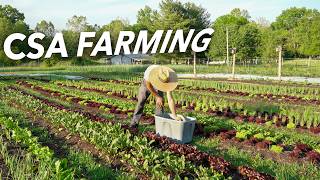
- It provides a real-world, in-field demonstration of interplanting lettuce with slow-growing summer crops (peppers and tomatoes) to maximize space efficiency and farm profitability.
- This content is highly relevant to market gardeners, homesteaders, and ecological farmers looking for practical, climate-resilient strategies for water, weed, and space management.
Key Concepts
- The Dynamics of a Super El Niño: An El Niño occurs when equatorial Pacific sea temperatures rise at least 0.9°F above average for three consecutive months. A "Super" El Niño triples this baseline temperature spike, leading to severe weather feedback loops. Growers must understand their localized climate pattern—whether it swings toward extreme precipitation or severe drought—to adapt their soil and water infrastructure proactively.
- The Rhizomatous Threat of Horsetail: Horsetail is an aggressive, ancient weed that spreads rapidly via deep underground rhizomes and airborne spores. Mechanical tilling or chopping fragments the roots and propagates new plants. Understanding its biology dictates a control strategy centered on starvation (occlusion and heavy mulches) rather than soil disturbance.
- Living Pathways as a Management Tool: Rather than viewing weedy, out-of-control pathways as a failure, farmers can transition them into "living pathways" by mowing them low and maintaining crisp bed edges. This working-with-nature approach reduces labor and soil erosion while keeping pathways functional during high-production seasons.
- The Spatial Economics of Interplanting: Slow-growing, high-canopy summer crops like peppers and tomatoes leave a significant amount of bare, wasted soil in their early growth phases. Interplanting quick-turnaround crops like lettuce fills these spatial voids, maximizing photosynthesis and early-season revenue, provided the grower can balance the competing light and humidity needs of both crops.
Quotes
- At 6:16 - "Success favors the prepared mind, safety favors the prepared farm." - Explaining why anticipating climate events like El Niño and preparing farm infrastructure is vital to long-term resilience.
- At 8:05 - "The TL;DR on horsetail is that you have to starve the roots and not chop them up and spread them out." - Outlining the fundamental biological reality of managing this invasive weed without accidentally propagating it.
- At 14:38 - "This is a much better use of space, both profitability-wise and photosynthesis-wise." - Explaining the dual ecological and financial benefits of keeping soil covered with productive crops during the transition to summer.
Takeaways
- Elevate potential contaminants (such as gas, oil, and farm chemicals) off the floor of low-lying barns or storage structures to prevent environmental pollution in the event of El Niño-induced flooding.
- If pathways become overrun with weeds, convert them into managed living pathways by mowing them extremely close to the ground and cleaning the bed edges with a stirrup hoe or edger instead of tilling.
- When interplanting lettuce alongside solanaceous crops (like tomatoes and peppers), avoid overhead misting or watering that keeps the tomato/pepper leaves wet, as this creates a microclimate highly susceptible to fungal diseases.