Answering Your Mid-Summer Garden Questions LIVE with Farmer Jesse
Audio Brief
Show transcript
This episode covers practical, regenerative strategies for market gardeners to optimize space, improve crop quality, and increase profitability through tactical management and biological soil health.
There are three key takeaways from this discussion. First, staggered succession planting allows growers to bypass seasonal gluts and capture lucrative late-summer markets. Second, preventative physical barriers offer vastly superior pest management compared to reactive chemical sprays. Third, building long-term soil fertility requires continuous biological inputs alongside strict adherence to food safety guidelines.
Staggering planting dates, such as establishing late-round tomatoes, helps growers target high-value windows when early-season crops have already finished. Manipulating planting density also allows growers to customize their harvest size, as tighter spacing yields smaller, highly marketable portions for specific consumer preferences. Sourcing locally adapted seeds further secures these yields by ensuring plants are already acclimated to regional climate patterns.
For pest management, applying physical insect netting immediately after planting until flowering protects young crops from devastating pests without the need for chemical intervention. Similarly, managing environmental stress is critical for crop quality. Utilizing shade cloth and strategic overhead misting prevents bitterness and premature bolting in summer greens, while controlled watering during maturation concentrates fruit flavors.
Proactive soil fertility relies on adding compost during every bed flip and integrating cover crops rather than reactively treating nutrient deficiencies. When incorporating livestock for weed control and manure, growers must strictly adhere to food safety guidelines. This requires at least ninety days before harvest for crops not touching the ground, and one hundred and twenty days for crops in direct contact with the soil.
By focusing on proactive management, environmental adaptation, and strategic market timing, growers can build highly resilient and profitable micro-farming operations.
Episode Overview
- This episode explores practical, regenerative strategies for market gardeners looking to optimize limited space, improve crop quality, and increase farm profitability.
- It covers tactical crop management, such as staggered planting for lucrative late-summer harvests, selecting regionally adapted seeds, and manipulating plant spacing to target specific market sizes.
- The discussion highlights organic pest management and crop stress mitigation, particularly how to prevent bitterness in summer lettuce and protect cucurbits using physical exclusion barriers.
- It addresses biological soil health, outlining the safe integration of livestock under FSMA guidelines, the importance of continuous composting, and how to transition depleted soil using cover crops.
Key Concepts
- Market Timing and Succession Planting: Staggering planting dates (such as late-round tomatoes) avoids market gluts and targets late-summer periods of low competition when early-planted crops have blighted or finished.
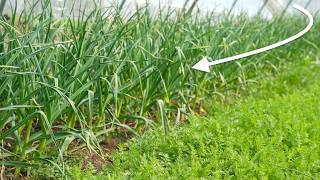
- Local Seed Adaptation: Sourcing seeds locally (especially for climate-sensitive crops like garlic) ensures the plants are pre-adapted to regional soil moisture and temperature profiles, preventing failures common with imported seeds.
- The 90/120-Day Food Safety Rule: Under FSMA guidelines, integrating livestock requires strict safety windows: at least 120 days between manure application and harvest for crops touching the soil, and 90 days for crops that do not touch the ground.
- Proactive Soil Fertility Management: Rather than reactively treating nutrient deficiencies, maintaining soil health requires continuous biological inputs, such as adding compost with every "bed flip" and utilizing cover crops.
- Crop Spacing and Market Sizing: Manipulating planting density (e.g., winter squash) directly affects fruit size and flavor concentration, allowing growers to tailor their harvest to specific consumer preferences.
- Preventative Pest Exclusion: For cucurbit crops, using physical insect netting immediately after planting until flowering is vastly superior to reactive spraying for managing squash bugs, vine borers, and cucumber beetles.
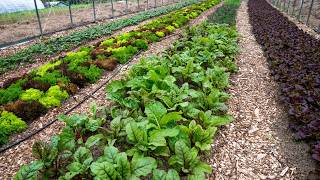
- The Physiology of Crop Stress: Environmental stressors like high heat and water deficits trigger defense mechanisms in crops—such as bitterness and bolting in summer lettuce—which must be managed using shade, consistent moisture, and evaporative cooling.
Quotes
- At 0:05:03 - "The late tomato planting is often the most lucrative because what a lot of people do... is they'll plant their tomatoes early... and then they'll blight out or just be done... by like August." - Explaining the market advantage of staggered planting to avoid seasonal gluts.
- At 0:07:27 - "The Arborio rice... has been the fastest to grow, the fastest to go to seed... and it's almost done, and the other two rices we have are like not even going to seed yet." - Demonstrating the performance difference between dryland rice varieties in a market garden setting.
- At 0:09:02 - "Because it's tall, it would outrun most things but it would also provide a little shade. So if I could do that... and get a decent crop out of that, that would be super cool." - Highlighting the potential of intercropping tall grains like rice with shade-tolerant understory crops like lettuce.
- At 0:15:41 - "You could definitely get away with like fall brassicas... kale, mustards... Chard is a good one." - Advising a grower in USDA Zone 4B on quick-growing fall crops to transplant immediately after the garlic harvest.
- At 0:19:11 - "You want to get something that's adapted to your area, otherwise... ordering in garlic, it's just a crapshoot of whether or not it's going to be effective." - Explaining why local adaptation is vital for garlic success.
- At 0:20:41 - "Overhead watering can dilute the flavor of tomatoes. You get the concentrated flavor when they have the right kind of water at the right time and then it sort of dries out." - Explaining the physiological relationship between water stress and flavor concentration in fruit.
- At 0:24:47 - "We've used that idea with chickens... we would have them go in after our fall brassicas in the spring... rake through the mulch, eat the weed seeds, leave their manure all over the place." - Describing the practical integration of poultry for pest control, weed suppression, and fertility.
- At 0:26:17 - "If you're growing butternut, for instance, and you plant them a little closer, you're going to get smaller butternut squash... which is great in some circumstances." - Explaining how growers can manipulate planting density to target specific market sizes for winter squash.
- At 0:29:22 - "You should be adding a little bit of compost pretty much with like every bed flip, just to make sure you're getting those fresh nutrients in there, but also the microbial life staying happy and healthy." - Emphasizing the need for continuous, proactive soil replenishment rather than reactive fertilization.
- At 0:39:57 - "All the preventative things will make all the difference in the world... Good water, good fertility, cover them till they flower. That's pretty much it." - Summarizing the core philosophy of organic pest management for squash, focusing on plant health and physical barriers rather than reactive sprays.
Takeaways
- Concentrate Fruit Flavor with Strategic Stress: Allow soil to dry out moderately as crops like tomatoes mature to force deeper root growth and concentrate sugars and aromatic compounds rather than diluting flavor with excessive watering.
- Utilize Space via Post-Garlic Interplanting: Plant winter squash, pumpkins, or fast-growing fall brassicas directly into heavily mulched beds immediately after garlic harvest to maximize bed utilization without disturbing soil structure.
- Implement Preventative Pest Barriers: Apply insect netting over young cucurbits immediately at planting and leave it on until flowering to physically exclude squash bugs, beetles, and borers during their most vulnerable growth stages.
- Deploy Multi-Step Cooling for Summer Greens: Combine shade cloth with active daytime misting to lower root zone temperatures for summer lettuce, and immediately refrigerate harvested greens for 24 hours to reduce any minor bitterness.
- Compost Manure Before Application: Avoid applying raw animal manure directly to active beds; compost it thoroughly first to kill pathogens and weed seeds while stabilizing nitrogen.
- Scale Regenerative Transitions Conservatively: When transitioning conventional land, start small (e.g., half an acre) to focus intensively on cover cropping to rebuild soil organic matter and resolve compaction before expanding production.