Dovish Fed Ahead? Why the Supreme Court Tariff Ruling Is Bullish for Stocks
Audio Brief
Show transcript
Episode Overview
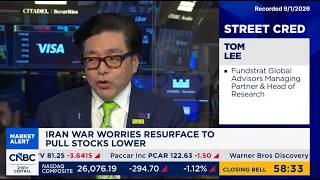
- This segment features Tom Lee of Fundstrat Global Advisors discussing the market implications of a recent Supreme Court decision to strike down the bulk of tariffs imposed by the President.
- The conversation centers on investor sentiment, shifting sector strategies, and the broader economic impact of potential tariff relief on inflation and Federal Reserve policy.
- Lee provides a bullish outlook, suggesting that the removal of tariff uncertainty and potential price relief could support a "dovish Fed" and reinvigorate lagging sectors like technology and software.
Key Concepts
-
Market Relief and Bifurcation: Investors are generally relieved by the Supreme Court's decision as it places limits on executive power regarding trade. However, the market reaction is expected to be split (bifurcated). Stocks unaffected by the original tariffs—specifically technology, software, and crypto—are predicted to rebound because they were previously shielded and now face no "unwinding" risks. Conversely, sectors with direct tariff exposure may see volatility due to uncertain timing of the changes.
-
Sector Rotation and Opportunity: While energy and basic materials remain top picks due to fundamental reasons (like an upcoming investment spending cycle), there is a tactical opportunity in software and "Magnificent 7" stocks. These groups have experienced a "waterfall decline" recently. Lee argues they are in the later stages of this decline, and their stabilization is crucial for the overall market to trade higher.
-
The Inflation-Fed Dynamic: The removal of tariffs is viewed as a deflationary event. Since 2022, the Federal Reserve has maintained a hawkish stance to establish credibility in fighting inflation. If tariffs act as a mechanism to reduce headline and goods inflation, it gives the Fed permission to cut rates without losing that credibility. A cooling job market combined with lower prices creates a conducive environment for a rate-cutting cycle, which is broadly positive for equities.
Quotes
- At 0:09 - "I think investors are... generally relieved... I think that they might actually also breathe a sigh of relief that it's kind of putting limits on executive powers." - explaining why the market might view the legal decision as a stabilizer for governance and predictability.
- At 1:54 - "I think we're kind of in the later stages of that decline for software, which has really had a waterfall decline... I think that that's going to provide a lot of support for the overall index because if Mag 7 and the software stocks stabilize, it allows the market to trade higher." - clarifying the technical setup for a potential rebound in the tech sector.
- At 2:46 - "Now that I think tariffs could reduce headline inflation and... goods inflation... and inflation cooling, I think it does allow a dovish Fed to happen." - connecting the specific policy change (tariffs) to the broader macroeconomic picture (interest rates).
Takeaways
- Monitor the "Magnificent 7" and software stocks for stabilization; their recovery is identified as a necessary condition for the broader indices to move higher, presenting a potential buying opportunity after recent declines.
- reassess inflation expectations downward; the removal of tariffs acts as a deflationary force, which should theoretically support asset prices by enabling the Federal Reserve to cut interest rates more freely.
- Maintain exposure to "real world" companies (industrials, energy, materials) for the long term due to the capital expenditure cycle, but consider balancing this with beaten-down tech stocks that may benefit immediately from improved market sentiment.