AI Fears Are Preventing a Bubble. Tom Lee Explains
Audio Brief
Show transcript
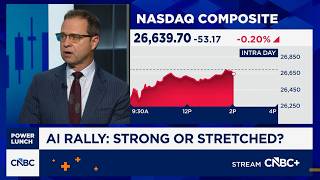
This episode covers analysis from Fundstrat's Tom Lee on the recent Nasdaq sell-off and why the decline in artificial intelligence stocks is a healthy correction rather than a market bubble.
There are three key takeaways from this discussion. First, massive AI spending is a productive infrastructure build comparable to historical mobile networks. Second, deep drawdowns in leading semiconductor stocks mirror Cisco's fifty percent drop in nineteen ninety-seven, which marked a cyclical bottom. Third, stabilizing bond yields suggest the sell-off is nearing its limit.
The projected thirty trillion dollars needed for AI matches past infrastructure spending. Current macro pressures act as a healthy governor to prevent speculative excess, making this decline a strategic buying window before historical post-election rallies.
In short, historical cycles suggest today's AI market correction is preparing the foundation for the next leg of growth.
Episode Overview
- This episode features a discussion with Tom Lee, Managing Partner and Head of Research at Fundstrat, analyzing the steep sell-off in the Nasdaq and tech sectors.
- It explores the debate over whether artificial intelligence is experiencing a market bubble, framing current market anxieties as a healthy correction rather than a collapse.
- The segment contextualizes the massive capital requirements for AI by comparing it to historical infrastructure builds like the mobile network and national highways.
- It helps investors evaluate whether the current market decline represents a strategic buying window, particularly looking ahead past midterm elections.
Key Concepts
- AI as a Productive Infrastructure Build, Not a Speculative Bubble: Tom Lee argues that unlike past speculative bubbles, AI is actively driving real-world productivity gains and scientific breakthroughs. Rather than signaling a market collapse, current capital constraints and high interest rates act as a healthy governor, preventing speculative excess and keeping the secular AI cycle sustainable.
- Contextualizing the Trillions Needed for AI: While the projected $30 trillion needed for AI over the next 25 years sounds staggering, it is highly comparable to past fundamental infrastructure projects. The mobile network build cost approximately $25 trillion, and national roadways cost another $25 trillion, proving that the economy can support capital expenditures of this magnitude.
- The "1997 Cisco" Market Analogy: Today's leading AI and semiconductor stocks are facing deep drawdowns, which Lee compares to Cisco's 50% drop in 1997 during the early days of the internet. Just as Cisco recovered and multiplied in value once the macro fears subsided, today's foundational AI hardware and bottleneck stocks are likely finding a cyclical bottom rather than a permanent peak.
Quotes
- At 0:25 - "The reason I'm going to say AI concerns are preventing a bubble is that we're continuing to see astounding discoveries made by AI... This is not the end or late cycle for AI discovery." - Explaining how tangible productivity boosts and technological breakthroughs differentiate the AI trend from purely speculative mania.
- At 2:06 - "I think we're near the end stages of the sell-off because it's become a consensus short to be shorting tech, and I think yields, which was really worrying markets... they've backed away." - Pointing out the macro indicators, such as crowded short positions and peaking bond yields, that suggest the market sell-off is nearing its limit.
- At 3:42 - "Keep in mind that in 1997, three years after the launch of the public internet and browsers, Cisco, which was the biggest stock at the time, had a massive 50% drawdown... A year later was 18. I think the setup is similar." - Utilizing historical market cycles to teach investors how to view severe corrections in foundational technology stocks.
Takeaways
- View deep drawdowns in foundational AI, semiconductor, and hardware "bottleneck" stocks as potential buying opportunities rather than a secular top.
- Monitor bond yields and central bank policy as key indicators for tech stock recovery; when yields begin to back away from peak levels, it often relieves pressure on high-growth sectors.
- Utilize periods of high macro uncertainty—such as the weeks leading up to midterm elections—as accumulation windows, as historical patterns suggest a broader market rally post-election.