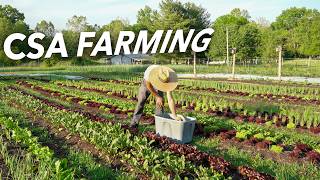
Uh Oh! Water Bankruptcy + Swiss Chard Deep Dive
Audio Brief
Show transcript
This episode covers practical strategies for growing and marketing Swiss chard alongside an analysis of the recent United Nations report on global water bankruptcy. There are three key takeaways from this discussion. First, cultivation must be strictly dictated by local market demands. Second, farmers must implement specific germination and disease prevention techniques. Third, the global water crisis is a structural failure demanding immediate collective action.
Expanding on the first takeaway, Swiss chard is a highly versatile but niche product due to its distinct flavor profile. Farmers must align their harvest stage and variety selection with local buyers rather than relying on standard farming practices. For example, planting density should be tailored to the customer, spacing plants tightly for small tender leaves, or widely for chefs who require giant leaves for wraps.
Moving to the second takeaway, overcoming the notoriously slow germination of Swiss chard requires soaking seeds overnight in room temperature compost extract before sowing them in warm soil. Once planted, farmers must combat the high susceptibility of seedlings to damping off. This is achieved by strictly managing greenhouse humidity, ensuring robust airflow, and avoiding overwatering in seedling trays.
Regarding the third takeaway, the United Nations report warns that society has fundamentally outpaced its available water resources and infrastructure. This water bankruptcy is not a temporary drought but a severe structural failure. The discussion highlights a dangerous societal complacency where many believe wealthy entities will eventually solve resource shortages, which directly hinders vital environmental policy and action.
Ultimately, whether managing greenhouse airflow or confronting global resource depletion, success requires proactive planning. Both small scale agriculture and global resource management demand a deep understanding of systemic structures and immediate action over complacency.
Episode Overview
- This episode serves as a deep dive into the practicalities of growing and marketing Swiss chard for small-scale commercial farmers.
- The host shifts focus in the middle segment to discuss a recent UN report on "Global Water Bankruptcy," exploring the structural failures in global water management.
- It is highly relevant for market gardeners looking to optimize their crop planning and sales strategies, as well as anyone concerned with systemic environmental and resource crises.
Key Concepts
- Market-Driven Crop Planning: Swiss chard is highly versatile and can be harvested at various stages (microgreen, baby, or giant leaf). However, because of its distinct flavor profile (due to oxalic acid), it is a niche product. Farmers must closely align their harvest stage and variety selection with specific local market demands, such as chefs needing giant leaves for wraps or CSA members preferring standard bunches.
- The Reality of Water Bankruptcy: The term "Water Bankruptcy" accurately describes the current global water crisis not merely as a temporary drought, but as a structural failure. It signifies that our societal demand for water has fundamentally outpaced the available resources and the infrastructure designed to provide them.
- The Fallacy of Wealth-Driven Solutions: There is a dangerous complacency among some populations who believe that critical resource shortages, like water scarcity, will eventually be solved by wealthy individuals or entities once the situation becomes dire enough. True mitigation requires immediate, collective policy action and a reprioritization of water above short-term economic growth.
Quotes
- At 2:26 - "When and how you harvest it will depend, and this is going to surprise long-time listeners, on your market." - This reinforces the foundational farming principle that crop production methods should always be dictated by the end consumer's needs.
- At 8:50 - "Basically, we ain't got the water that our society requires to function based on the infrastructure we already have established, hence bankruptcy." - This effectively translates the complex UN report into a stark, understandable reality about structural resource depletion.
- At 11:05 - "When I asked how they felt about the water concerns, they almost uniformly told me that they felt if it got bad enough, the wealthy people in the state would fix it." - This quote exposes a critical and dangerous societal apathy that hinders proactive environmental policy and action.
Takeaways
- To overcome the notoriously slow germination of Swiss chard, soak the seeds overnight in a compost extract at room temperature before sowing them into relatively warm soil.
- Combat the high susceptibility of chard (and beet) seedlings to damping-off by strictly managing greenhouse humidity, ensuring robust airflow, and strictly avoiding overwatering in seedling trays.
- Tailor your in-bed planting density to your market needs: plant tightly for smaller, tender leaves, or space plants 1 to 1.5 feet apart to allow for the massive leaf growth desired by some restaurant clients.