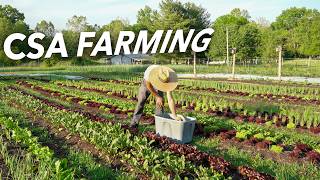
Farmer Jesse Live to Talk About Growing in April
Audio Brief
Show transcript
This episode covers the principles and practical applications of no-till farming for healthier and more productive land.
There are three key takeaways. First, implement cover crops to protect soil. Second, transition to no-till gradually. Third, focus on building organic matter continuously.
Soil is a living ecosystem that needs complex microorganisms to thrive. Traditional plowing disrupts this biology and destroys natural soil architecture. By avoiding tillage, farmers improve water infiltration and allow beneficial fungal networks to flourish.
To start, use cover crops to ensure the ground is never bare, preventing erosion and feeding soil biology year-round. Begin the transition on a small plot to manage the learning curve and adapt easily. Finally, leave crop residues on the surface as a natural mulch to retain moisture and suppress weeds.
Healing degraded soil is a long-term investment, but the ecological and agricultural results will compound over seasons.
Episode Overview
- This episode explores the principles and practical applications of no-till farming, focusing on how minimizing soil disturbance can lead to healthier, more productive land.
- The discussion moves from the fundamental philosophy of soil health to the specific biological mechanisms that make no-till systems effective, and finally to the long-term benefits for farmers.
- This content is highly relevant for agricultural professionals, home gardeners, and anyone interested in sustainable food production and ecological restoration.
Key Concepts
- The primary concept is that soil is a living ecosystem, not just a medium for holding plants. Understanding the intricate web of microorganisms, fungi, and soil life is crucial; when this ecosystem thrives, it naturally supports robust plant health without the need for intensive chemical inputs.
- Tillage fundamentally disrupts soil structure and biology. By avoiding plowing, farmers preserve the natural architecture of the soil, which improves water infiltration, reduces erosion, and allows beneficial fungal networks to flourish.
- The transition to a no-till system is a long-term investment. It requires a shift in mindset from short-term yield maximization to long-term ecological resilience, acknowledging that building healthy soil takes time but ultimately leads to a more stable and sustainable agricultural operation.
Quotes
- At 0:15 - "The foundation of everything we do starts with respecting the life beneath the surface; if you take care of the soil, the soil takes care of the crop." - This explains the core philosophy that drives sustainable agricultural practices.
- At 0:45 - "Every time you run a tiller through the ground, you're essentially hitting the reset button on a complex, thriving biological community." - This clarifies the often-overlooked destructive nature of traditional farming methods.
- At 1:10 - "You have to be patient with the process; the soil didn't degrade overnight, and it won't heal overnight, but the results compound over seasons." - This helps set realistic expectations for anyone attempting to adopt these practices.
Takeaways
- Implement cover cropping strategies immediately to ensure soil is never left bare, which protects it from erosion and feeds the soil biology year-round.
- Start your transition to no-till farming on a small, manageable plot rather than attempting to convert an entire operation at once, allowing you to learn and adapt to the new system.
- Focus on building organic matter continuously by leaving crop residues on the surface, using them as a natural mulch to retain moisture and suppress weeds.