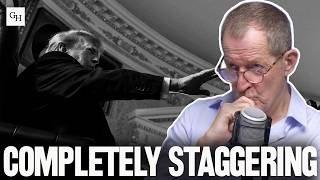
Trump Insults NATO Troops | Alastair and Anthony React
Audio Brief
Show transcript
This episode centers on a critical analysis of Donald Trump's recent disparagement of NATO allies, examining the factual realities of global military support versus political rhetoric.
There are three key takeaways from the discussion between Alastair Campbell and Anthony Scaramucci. First, factual data contradicts claims that allies abandoned the US after 9/11. Second, Trump's foreign policy is often driven by a psychological need for humiliation rituals rather than strategy. Third, strength is the only effective currency when engaging with this leadership style.
Regarding the historical record, Campbell refutes the claim that allies stayed back during the war in Afghanistan. He notes that NATO's Article 5 has only ever been invoked once in history, specifically to defend the United States. Nineteen countries lost soldiers alongside American troops, with nations like the UK, Denmark, and Georgia suffering significant casualties relative to their populations. This data directly counters the narrative that America stood alone.
The conversation then pivots to the psychology behind these attacks. Scaramucci argues that Trump's behavior cannot be viewed through a traditional geopolitical lens. Instead, it is driven by a narcissistic personality disorder that necessitates the humiliation of peers to mask personal insecurity. This creates a dangerous feedback loop where advisors and allies are forced into sycophancy, yet represent weakness to the leader the more they submit.
Finally, the hosts offer a strategic warning to world leaders and business figures. The consensus is that appeasement is a failed strategy. Scaramucci emphasizes that attempting to charm or normalize abnormal behavior only invites further aggression. The most effective diplomatic approach is to push back hard, as strength is the only language that garners respect in this specific dynamic.
To wrap up, understanding the psychological drivers of leadership is just as crucial as analyzing policy when navigating the current geopolitical landscape.
Episode Overview
- This episode centers on a heated reaction to Donald Trump's recent comments on Fox News, where he disparaged NATO allies and downplayed their military contributions in Afghanistan.
- Alastair Campbell and Anthony Scaramucci analyze the factual inaccuracies of Trump's claims, contrasting his rhetoric with the reality of Allied casualties and support after 9/11.
- The discussion moves beyond fact-checking into a psychological profile of Trump, exploring why he feels the need to humiliate allies and how his "insecurity" drives his foreign policy stance.
- Scaramucci offers a strategic warning to current world leaders, arguing that appeasing Trump is a failed strategy and that strength is the only language he respects.
Key Concepts
- The Revisionism of Article 5: Campbell highlights a critical historical fact: the only time NATO's Article 5 (an attack on one is an attack on all) has ever been invoked was by the United States after 9/11. Trump's claim that allies "stayed back" contradicts the reality that 19 countries lost soldiers in Afghanistan, with nations like the UK, Denmark, and Georgia suffering significant losses proportional to their populations.
- Narcissistic Personality Disorder in Geopolitics: Scaramucci argues that Trump’s foreign policy cannot be viewed through a traditional political lens. Instead, it is driven by a pathological need for "humiliation rituals." Trump attacks allies not for strategic gain, but because humiliating peers makes him feel less insecure about his own inadequacies.
- The Ecology of Sycophancy: The hosts discuss the danger of Trump's current entourage (referencing figures like Scott Bessent and Howard Lutnick). Campbell notes a paradox: Trump surrounds himself with people who bow to him, yet he despises them for their weakness. This creates a feedback loop where advisors must constantly degrade themselves to remain in orbit, removing any checks on the President's impulses.
- The Normalization Trap: A recurring theme is the failure of institutions (media and business leaders at Davos) to adequately push back against Trump's behavior. The hosts argue that treating Trump as a "normal" candidate who can be managed via traditional diplomacy is a dangerous error that ignores his intent to dismantle democratic norms and alliances.
Quotes
- At 1:25 - "Nineteen countries lost soldiers in that war. In our case, 457... Only America suffered a greater numerical loss... Georgia actually lost more per head of population than all of them." - Alastair Campbell detailing the specific data that refutes Trump's claims about allies staying "off the front lines."
- At 4:06 - "This is the act of a man who is violently inadequate. This is the act of a man who is violently insecure... and this is somebody... [who] needs to humiliate people." - Anthony Scaramucci explaining the psychological root cause of Trump's need to disparage allies.
- At 11:10 - "He surrounds himself with sycophants, yet no matter how low they bow, they must bow a little lower next time. Close up, it is a monstrous, hideous spectacle." - Alastair Campbell reading from his own writing to describe the toxic dynamic between Trump and his enablers.
- At 16:06 - "The tougher you are on Trump, the more responsive he is to you. The weaker you are on Trump, the more he will roll you." - Anthony Scaramucci providing the essential playbook for foreign leaders on how to successfully handle Trump.
Takeaways
- Adopt an Aggressive Stance with Bullies: When dealing with political figures who display narcissistic traits, do not attempt to appease or "charm" them. Effective negotiation requires demonstrating strength and pushing back hard, rather than biting your tongue for the sake of diplomacy.
- Counter Emotion with Specific Data: When combating revisionist history or emotional rhetoric, immediately pivot to hard statistics. Alastair’s use of specific casualty numbers serves as a model for dismantling vague, feeling-based political attacks.
- Reject Normalization in Professional Circles: Business and political leaders should refuse to treat abnormal behavior as standard politics. Acknowledging the "absurdity" of a situation is necessary to maintain institutional integrity, rather than engaging in "puke-making" sycophancy to secure short-term access.
More from The Rest Is Politics

The Greatest Threat Humans Just Can't Stomach | with Yuval Noah Harari
Sep 18, 2026
Could This Be Trump's Next Middle East Crisis?
Sep 17, 2026

“Nothing can justify what has happened” | Rory & Alastair discuss Israel-Palestine with Ed Miliband
Sep 15, 2026

"Our Generation Was Lied To": Two Gen Z Mps on Fixing Politics.
Sep 11, 2026