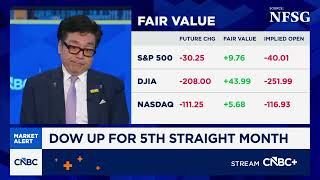
Tom Lee: The Market Misread the Fed
Audio Brief
Show transcript
In this conversation, Fundstrat Head of Research Tom Lee analyzes the market reaction to the latest Federal Reserve meeting. There are three key takeaways. First, the market is misinterpreting the Fed shift to real-time data as a hawkish pivot. Second, near-term equity conditions remain highly favorable. Third, an abrupt correction later this year will be driven by tech IPO lock-up expirations and exhausted speculative leverage.
While many view the removal of Fed forward guidance as hawkish, this transition to dynamic data is actually market-friendly. Investors should remain constructive in the near term rather than prematurely calling a market top. However, vigilance is required as massive stock float from major IPOs and peaking margin debt eventually trigger a sharp downturn.
Ultimately, navigating this landscape requires looking past surface-level headlines to monitor technical leverage and stock supply schedules.
Episode Overview
- This episode features Tom Lee, Managing Partner and Head of Research at Fundstrat Global Advisors, analyzing the market's reaction to the latest Federal Reserve meeting.
- The discussion contrasts the general consensus of a "hawkish pivot" with Lee's contrarian view that the Fed's transition to modern, real-time data monitoring is actually market-friendly.
- Lee outlines his thesis for the remainder of the year, predicting a delayed but abrupt market correction driven by specific structural catalysts, helping investors decide how to balance near-term optimism with upcoming risks.
Key Concepts
- Misinterpretation of Fed Communication: The market often misinterprets changes in Fed guidance. The removal of forward guidance and shifts in dot plots are not necessarily hawkish pivots, but rather a transition toward utilizing real-time, alternative data to guide policy dynamically.
- The Divergence of Short-Term and Long-Term Outlooks: Current market conditions remain highly favorable for equities due to strong IPO performance and positive corporate news flow, meaning investors should not prematurely call a market top despite anticipating a severe correction later in the year.
- Catalysts for Market Corrections: Abrupt changes in market regimes are typically driven by a combination of structural factors: testing a new Fed framework, the delayed unlocking of stock float from massive IPOs (such as SpaceX, Anthropic, and OpenAI), geopolitical supply chain disruptions (e.g., in the Straits of Hormuz), and the eventual exhaustion of speculative leverage.
Quotes
- At 0:25 - "I think the markets took the removal of that forward guidance and even looking at those dot plots as a hawkish pivot, but I think instead... it's actually a very market-friendly view." - Explaining why the general market consensus misinterpreted the Fed's shift toward modern data-gathering.
- At 1:26 - "We still believe later this year there is going to be an abrupt change of market conditions, one that feels very much like a bear market." - Defining his core macroeconomic expectation of a impending correction despite maintaining a bullish stance in the immediate term.
- At 3:09 - "I think the fourth catalyst is that speculative firepower runs out... when some things like margin debt experience levels that are associated with short-term corrections." - Explaining how technical leverage and investor exhaustion will serve as the final trigger for a market downturn.
Takeaways
- Look beyond surface-level Fed announcements; evaluate policy shifts as structural updates to data gathering rather than immediate signs of tightening or easing.
- Monitor the float schedules and lock-up expirations of major tech IPOs, as the phased release of these shares will introduce massive supply and potentially disrupt current market valuations.
- Track leverage metrics like margin debt levels to identify when speculative market participation is reaching exhaustion limits, signaling an opportune time to de-risk.