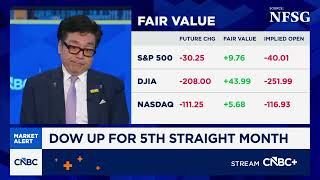
Tom Lee: Why August Is the Month the Market Recovers
Audio Brief
Show transcript
This episode covers strategist Tom Lee's August market outlook and his explanation for remaining bullish despite recent volatility.
There are three key takeaways. First, rising corporate earnings amid flat market performance create a coiled spring effect for a future rebound. Second, cooling housing and wage data represent the true structural drivers of falling inflation. Finally, highly leveraged, crowded trades remain the primary source of sudden global market disruptions.
Lee predicts a potential ten percent drawdown but maintains an optimistic year end target. While volatile energy prices capture headlines, structural disinflation in housing paving the way for interest rate cuts is the more critical trend. Investors should look past short term deleveraging panics and focus on these resilient underlying corporate fundamentals.
Ultimately, understanding these core drivers helps investors navigate summer volatility and position for long term growth.
Episode Overview
- This episode features market strategist Tom Lee sharing his August market outlook and explaining why he remains bullish despite recent market volatility.
- Lee details his prediction of a potential 10% drawdown in the S&P 500 while maintaining a year-end target of over 8,000.
- The discussion highlights key market drivers, including cooling inflation (specifically housing and wages) and the impact of global deleveraging events.
- This content is highly relevant for investors seeking to understand current market volatility, inflation trends, and long-term stock market projections.
Key Concepts
- The "Coiled Spring" Market: Despite flat performance in June and July, corporate earnings estimates have risen significantly. This mismatch creates a "coiled spring" effect, setting the stage for a strong market rebound once temporary selling pressures subside.
- Housing as the Key Inflation Catalyst: While oil prices and tariffs fluctuate, housing and wages are the primary structural drivers of long-term CPI inflation. With housing prices declining, a major inflationary weight is being lifted, paving the way for cooler overall inflation data.
- Deleveraging and Global Market Panic: Highly leveraged positions and subsequent unwinding can trigger localized market panics that temporarily disrupt global market stability, particularly in tech-heavy indices.
Quotes
- At 1:14 - "August is a month to recover what June and July have been... earnings estimates have gone up a lot. So the stock market's kind of a coiled spring." - Explaining why the underlying corporate fundamentals support a strong market rebound despite recent flat performance.
- At 2:40 - "The real driver of inflation historically has been housing and wages, and housing has really disinflated." - Clarifying that the core structural components of inflation are cooling down, which is more important for long-term monetary policy than temporary commodity price spikes.
- At 3:30 - "Not only was his leverage on his $45 billion... but there was a lot of money piggybacking on his trade." - Explaining how concentrated leverage and copycat investors amplify market panics during a forced liquidation or unwind.
Takeaways
- Look past short-term summer volatility by focusing on rising corporate earnings estimates, which often signal underlying market resilience.
- Monitor structural housing and wage data rather than volatile energy prices to get a more accurate forecast of future inflation and interest rate cuts.
- Avoid heavily crowded, highly leveraged trades, as unwinding events in these areas can cause rapid and severe market disruptions regardless of broader economic health.