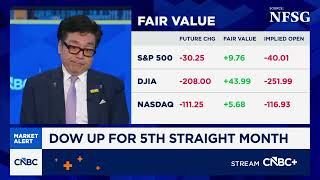
Tom Lee: Tech Pullback Is Normal + AI Boom Still Driving the Rally
Audio Brief
Show transcript
This episode discusses whether the tech bull market is ending or merely experiencing profit-taking.
There are three key takeaways from this conversation. First, the recent tech sell-off is likely profit-taking within a secular bull market, driven by ongoing AI productivity gains. Second, a market rotation could broaden the rally, with leadership shifting towards sectors like healthcare, financials, and energy. Third, a Federal Reserve rate cut could further boost interest-rate sensitive areas, including small caps and banks.
The underlying story of AI driving corporate productivity remains intact, supporting tech valuations despite periodic pullbacks. These pullbacks can present buying opportunities for long-term investors.
Paying attention to Fed signals is crucial, as a shift towards more dovish policy could significantly impact various market segments. A rate cut would particularly benefit interest-rate sensitive areas like housing and small caps.
Episode Overview
- The discussion centers on whether the long-running bull market in technology stocks is over following recent declines.
- Experts analyze the current market weakness as a likely period of profit-taking rather than the end of a secular trend, citing the ongoing AI productivity boom.
- The potential for a market rotation is explored, with leadership potentially shifting to other sectors like healthcare, financials, and energy.
- The role of the Federal Reserve is debated, particularly whether a rate cut is necessary to sustain the market rally and what factors are influencing their decisions.
Key Concepts
- Secular Bull Market in Tech: The episode questions the durability of the multi-year uptrend in technology stocks, especially those related to AI.
- Profit-Taking vs. Trend Reversal: The recent tech sell-off is framed as a healthy, periodic pullback for profit-taking in an overbought sector, not necessarily a fundamental end to the bull run.
- AI as a Productivity Driver: The underlying story of AI boosting corporate productivity is seen as a key tailwind that remains intact, supporting tech valuations.
- Market Rotation: The conversation highlights the possibility of a broadening rally, where investment flows from high-flying tech stocks into other, less-favored sectors such as financials, healthcare, energy, and small caps.
- Historical Precedent: The late 1990s dot-com era is used as a historical parallel, showing that significant, double-digit sell-offs can occur even within strong, technology-driven bull markets.
- Federal Reserve Policy: The debate touches on the probability and necessity of a Fed rate cut, considering factors like a healthy economy, cooling inflation, and pressure on interest-rate-sensitive sectors like housing.
Quotes
- At 00:30 - "The underlying story driving technology, which is the productivity miracle coming from AI, is still intact." - Tom Lee explains that despite short-term weakness, the fundamental driver for the tech sector's long-term growth remains strong.
- At 01:36 - "Double-digit sell-offs even in bull markets driven by new technologies and exciting new technologies are really common, and this one is just par for the course, I think, amid a broader bull market." - Ross Mayfield provides historical context, suggesting the current tech pullback is normal and not a cause for major concern.
- At 05:24 - "From a market's perspective and from the economy perspective, we know that high rates are actually causing pressure on the housing market. That is something that I think the Fed actually has some... can actually have some impact on. So I do think it makes sense for the Fed to cut." - Tom Lee argues that the negative impact of high rates on key economic areas like housing provides a rationale for the Federal Reserve to consider a rate cut.
Takeaways
- View pullbacks in leading sectors like technology as potential buying opportunities, provided the long-term fundamental drivers, such as the AI-driven productivity boom, remain in place.
- Diversify and look for opportunities in other market sectors like financials, healthcare, and energy, as a rotation could lead to a broadening of the market rally.
- Pay close attention to Federal Reserve signals, as a shift towards a more dovish policy or a rate cut could provide a significant boost to interest-rate-sensitive areas of the market, including small caps and banks.