Tom Lee: SpaceX Just Hit a $1.7 Trillion Valuation
Audio Brief
Show transcript
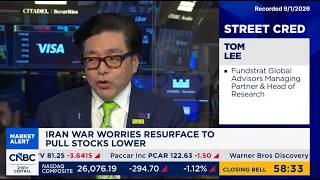
This episode covers the resilience of the US market amid rising yields and energy shocks. There are three key takeaways focusing on structural market drivers, a divergent consumer economy, and the ongoing artificial intelligence boom.
First, the United States remains uniquely positioned as a leading AI producer and an energy independent nation. Second, the economy is experiencing a K shaped reality. Lower income consumers face the pressure of higher food and gas prices, while wealthier consumers benefit from massive wealth creation. This wealth effect is driven by the monetization of private tech giants like SpaceX and OpenAI, acting as a powerful economic stimulus.
Finally, the AI trade continues to show strong momentum. Companies driving tangible productivity gains maintain robust demand, pointing to further market upside. Overall, investors should weigh these structural American advantages against divergent consumer trends when evaluating long term portfolio resilience.
Episode Overview
- The episode discusses the current state of the US market, analyzing its health and resilience amid higher oil prices and yields.
- It highlights the unique position of the US economy as an AI producer and energy-independent nation.
- The conversation touches on the "K-shaped" consumer economy, analyzing factors affecting both lower-income and wealthier consumers.
- The monetization of private companies like SpaceX and OpenAI is presented as a significant stimulus for the economy.
- The ongoing demand for AI, specifically focusing on companies like Nvidia, and its impact on productivity and the stock market are also key topics.
Key Concepts
- The US market's resilience is supported by structural drivers, notably its role as a major producer of AI and its relative energy independence, shielding it somewhat from global energy shocks.
- The concept of a "K-shaped" economy illustrates a divergence in consumer health. Lower-income consumers face pressures from higher prices for essentials like food and gasoline.
- Conversely, wealthier consumers benefit from significant wealth creation, particularly from the monetization of pre-IPO companies in sectors like space and AI. This wealth creation acts as a substantial economic stimulus.
- The AI trade is seen as having a strong ongoing trajectory. Despite massive growth, demand for companies like Nvidia remains robust, driven by tangible productivity gains (gain of function) experienced by users, which could lead to further market upside.
Quotes
- At 0:27 - "I also think the US is pretty unique because we do have a structural driver for the economy which is not only is the US the producer of AI but we are also relatively energy independent and that's been exposed by this war." - This quote highlights the structural advantages of the US economy that support market resilience.
- At 1:26 - "It is a K-shaped because if I had to say what are the things that are sort of balance the things moving the consumer, of course we know that it's higher gasoline, higher food..." - This explains the economic pressures facing lower-income consumers.
- At 1:40 - "...the wealth that's going to be created by the IPOs SpaceX, OpenAI etc. I mean that's several trillion dollars worth... there is like a marginal propensity to consume from the wealth effect." - This clarifies how wealth creation at the top end of the economy acts as a significant stimulus.
Takeaways
- Investors should consider the structural advantages of the US market, particularly in AI production and energy, when evaluating long-term market resilience.
- Pay attention to the "K-shaped" economic indicators, recognizing that consumer spending power is divergent, which can impact different sectors (e.g., essentials vs. luxury or tech).
- Monitor the ongoing developments in the AI sector, as companies demonstrating tangible productivity improvements are likely to sustain strong demand and market performance.