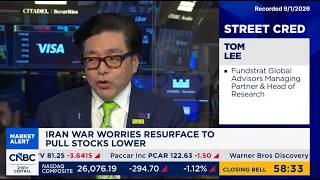
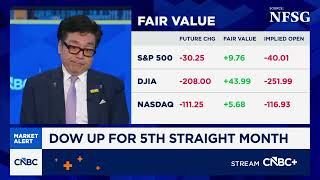
Tom Lee Reacts: Iran Peace Deal, Oil, and the Fed
Audio Brief
Show transcript
This episode covers the market reaction to a tentative peace deal between the United States and Iran that will reopen the critical Strait of Hormuz. There are three key takeaways. First, oil prices are dropping significantly as supply anxieties ease. Second, equity markets, especially tech stocks, are experiencing a strong relief rally. Third, declining energy costs provide critical relief for monetary policy.
With crude futures falling over five percent, forward curves suggest oil could settle in the sixty-dollar range. This relief from petroleum shortages has triggered a major surge for technology and semiconductor shares as risk appetite returns. Consequently, lower energy prices reduce inflation pressures, giving the Federal Reserve more breathing room to adopt a dovish stance.
Investors should closely monitor forward commodity curves and central bank statements to navigate this shifting macroeconomic landscape.
Episode Overview
- This episode covers the market reaction to a tentative peace deal between the United States and Iran, which is expected to reopen the critical Strait of Hormuz.
- The discussion highlights a significant drop in oil prices, with both WTI and Brent crude futures falling over 5%, and explores whether this downward trend will continue toward the $60 range.
- The speakers analyze the positive impact on equity markets, particularly tech and AI stocks, as risk appetite surges ahead of the Federal Reserve meeting.
- It provides valuable insights for investors trying to understand the intersection of geopolitical events, energy markets, and monetary policy.
Key Concepts
- Strait of Hormuz Reopening: The potential peace deal between the US and Iran is expected to reopen the Strait of Hormuz, relieving global supply anxiety. This is a critical development as it ensures the world economy will not suffer from severe petroleum shortages, which has triggered a rally in broader financial markets.
- WTI/Brent Crude Curve Contango: Both WTI and Brent crude are showing downward curves in their forward months. This suggests that the market was already in an oversupplied state before the conflict, and resolving the geopolitical tension will likely return oil prices to a lower, more stable range (potentially in the $60s).
- Relief for Monetary Policy: A sharp decline in energy prices dramatically changes the calculus for the Federal Reserve. Lower oil prices reduce overall inflation pressures, giving the Fed and its new chair more breathing room to adopt a more dovish stance rather than leaning hawk-ish.
Quotes
- At 0:33 - "Whether all parties are satisfied with the resolution is probably less important to markets... what's more important is that the world economy is not going to suffer from petroleum shortages." - Explaining that market stability relies heavily on the physical flow of goods rather than the political perfectness of a peace deal.
- At 1:10 - "The fact that we couldn't trade above 120 and we have fallen so precipitously... we could be looking at oil in the 60s range." - Pointing out the technical and fundamental weakness in oil prices despite significant geopolitical conflict.
- At 1:53 - "Friday was a Goldilocks day... it was like watching Brunson and the Knicks in Game 5." - Illustrating how the easing of market pressures created an ideal, high-performing environment for tech and semiconductor stocks.
Takeaways
- Monitor forward-month commodity curves (WTI/Brent) rather than just the spot price to get a more accurate picture of long-term supply and demand dynamics.
- Position investment portfolios toward tech and semiconductor stocks when geopolitical risk premiums subside, as these sectors tend to lead the market rally during "risk-on" shifts.
- Watch the Federal Reserve's upcoming statements for a potential dovish shift, as declining oil prices alleviate the immediate need for aggressive, inflation-fighting interest rate hikes.