The Greens that are Made for Winter
Audio Brief
Show transcript
This episode covers the essential infrastructure, cultural practices, and physiological management required to successfully grow winter-hardy salad greens and specialty crops in cooler climates.
There are three key takeaways from this discussion on cold-season agriculture. First, growers must utilize passive protective infrastructure to shield crops from freezing conditions. Second, managing winter-specific weed cycles requires targeted timing rather than conventional summer methods. Third, harvesting protocols must align with plant physiology to preserve crop quality and shelf life.
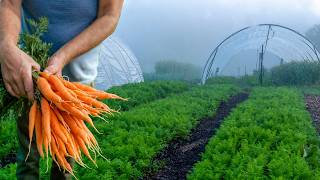
To survive in USDA Zone 8 and below, winter greens require protective microclimates created by high tunnels, cold frames, or low tunnels. Supporting floating row covers with wire hoops is critical, as preventing the fabric from directly touching wet crop leaves avoids localized frost burn. Proper crop spacing and active ventilation inside these structures are also necessary to reduce humidity and prevent devastating fungal outbreaks.
Winter weed management demands a shift in strategy because species like chickweed and purple deadnettle germinate only as daylight decreases and temperatures drop. Traditional summer tarping methods are ineffective against these species. Instead, growers should employ stale seedbeds in the autumn or transplant crops in clumps to give winter greens a competitive headstart.
Harvest timing must be carefully managed according to daily temperature fluctuations. Cutting greens while they are physically frozen damages plant cell walls, which ruins their flavor, texture, and storage potential. Delaying harvest until the afternoon when the sun has completely thawed the leaves preserves the cellular integrity of the crop.
By pairing protective infrastructure with precise harvesting schedules, growers can successfully maintain highly productive and high-quality winter crop yields.
Episode Overview
- This episode of Growers Daily focuses on selecting, planting, and managing winter-hardy salad greens and specialty crops.
- Host Farmer Jesse discusses the passive infrastructure needed—such as low tunnels, cold frames, and high tunnels—to successfully grow cool-season crops in USDA Zone 8 and below.
- The episode details essential cultural practices, including managing winter-specific weeds, optimal planting schedules, and crucial harvesting protocols to preserve crop quality.
- Jesse wraps up with a community Q&A segment reflecting on how classic music lyrics relate to modern agricultural and technological challenges.
Key Concepts
- Winter Crop Infrastructure Needs: Successfully growing cool-season greens in cooler climates requires protective microclimates. Low tunnels with row covers, high tunnels, or cold frames are necessary to shield tender plant tissues from freezing winds and heavy winter precipitation.
- Ventilation and Disease Prevention: Because tunnels trap humidity, poor airflow in winter structures can rapidly lead to devastating fungal outbreaks. Growers must actively vent greenhouses and space crops wider inside tunnels than they would in the open field to mitigate mold and rot.
- The Biology of Winter Weeds: Unlike summer weeds, winter weeds like chickweed and purple deadnettle germinate when daylight decreases and soil temperatures drop. Conventional stale seedbed tarping during the summer is ineffective against them, requiring target-specific planting and cultivation windows.
- Harvest Timing and Plant Physiology: Harvesting greens while they are physically frozen damages cell walls, ruining their flavor, texture, and storage life. Delaying harvest until the afternoon when the sun has completely thawed the leaves preserves crop cell integrity.
Quotes
- At 1:57 - "Good winter green growing takes some amount of infrastructure from pretty much Zone 8 and below." - Explaining why passive protection is essential for cold-season crop survival and commercial viability.
- At 3:49 - "Most years we can get away with sowing spinach in the field, harvesting until roughly December, and then coming back and getting a harvest or two in the spring." - Illustrating the resilience of extremely hardy greens like spinach and how they can offer dual-season yields.
- At 7:49 - "The challenge with these weeds is that they don't bother to germinate until the light levels start to dive and you are starting to get cold temperatures." - Describing the unique physiological triggers of winter weeds and why they bypass summer weed-control methods.
Takeaways
- Use a "stale seedbed" technique or transplant crops in clumps to give winter greens a competitive headstart over late-emerging cool-season weeds.
- Ensure floating row covers are supported by wire hoops so the fabric does not directly touch wet crop leaves, preventing localized frost burn on cold nights.
- Schedule winter harvests for the afternoon to ensure the plants have completely thawed before cutting, which preserves flavor and extends shelf life.