Good, Bad, Ugly: My Season in Review
Audio Brief
Show transcript
SUMMARY:
SUMMARY:
Why does Farmer Jesse believe that the pathways in your garden are actually wasted space, wasted work, and wasted materials? On this episode, Farmer Jesse reviews his season's biggest successes and failures. You will learn how to balance garden space between pathways and growing beds depending on whether the garden is for personal use or commercial production.
Rethinking the standard garden layout to boost your harvest.
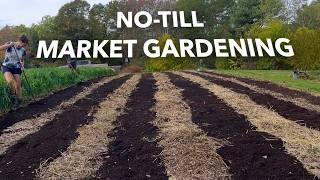
Many growers default to a standard thirty inch bed with eighteen inch pathways, but this setup actually wastes a massive amount of potential growing area. Farmer Jesse explains that while this standard layout works well with common tools and offers plenty of room to move, it sacrifices valuable soil. If you switch to forty eight inch beds with narrow fourteen inch paths, you squeeze much more food into the same footprint, even though your working space becomes tight. Select your garden bed dimensions by prioritizing your actual purpose, using wider beds to maximize food production, but sticking to standard thirty inch beds if easy movement and tool compatibility are your main goals.
Why pathways are the hidden drain on your garden resources.
Pathways are little more than waste in a garden, stealing your labor, your space, and your mulching materials. To make your small scale farm or garden highly efficient, you need to minimize this pathway footprint as much as possible while still keeping the space comfortable enough to work in. Try to actively reduce the number of paths in your next garden layout to reclaim wasted labor and mulch.
The unexpected dangers of rushing your crop decisions.
More often than not, crop failures are caused by a grower's own whimsical decisions rather than the plants themselves. Farmer Jesse saw great success interplanting diverse crops in a milpa patch, but he suffered major setbacks by grafting tomato plants when they were still too small. Rushing this process led to high mortality rates and delayed his seasonal fruit production, showing how crucial timing is in sustainable farming. Avoid grafting tomato plants when they are too small, and always stake your pepper plants in high fertility soils to prevent them from falling over and complicating your weeding and harvesting.
Boost your garden's output by choosing bed sizes based on your actual goals rather than default standards. Keep in mind that pathways are little more than waste in a garden, wasted work, wasted materials.
Episode Overview
- Farmer Jesse reviews the season's successes and failures while discussing optimal bed and path sizing for small-scale vegetable gardens.
- The episode addresses how to balance garden space between pathways and growing beds depending on whether the garden is for personal use or commercial production.
- It provides a candid look at real-world trials on a no-till farm, highlighting both successful plant combinations and management setbacks.
Key Concepts
- Bed and Path Sizing Dynamics: Sizing decisions depend heavily on the garden's primary purpose. A standard 30-inch bed with 18-inch pathways is highly accessible and compatible with common tools but wastes space. Conversely, a 48-inch bed with 14-inch pathways maximizes growing area but leaves very little room to work.
- The Cost of Pathways: In small-scale farming, pathways represent wasted resources, including lost growing space, extra labor, and unused mulching materials. Minimizing the pathway footprint while maintaining ergonomic accessibility is a critical efficiency goal.
- Trial and Error in Ecological Agriculture: Sustainable farming relies on constant experimentation. Successes like interplanting diverse crops (such as the Milpa patch) must be weighed against failures like grafting tomatoes too early or poorly managing cover crops before planting.
Quotes
- At 10:35 - "That's not the best use of the space, but it allows for a lot of working room, good space between beds, and most of the garden tools... are built around that size." - Explaining the trade-offs of the standard 30-inch bed and 18-inch path setup.
- At 12:44 - "Pathways are little more than waste in a garden: wasted work, wasted materials, etc. So for me, I like to limit the number of pathways that I have." - Clarifying why maximizing bed space over pathway space is crucial for efficiency.
- At 13:31 - "More often than not, it is me failing the crop with some whimsical decision... then the crop actually failing." - Showing the host's perspective on human error versus crop viability in agricultural trials.
Takeaways
- Select your garden bed dimensions by prioritizing purpose over defaults: use wider beds (such as 48 inches) with narrow paths (14 inches) to maximize food production, but stick to standard 30-inch beds if ease of movement and tool compatibility are your primary concerns.
- Avoid grafting tomato plants when they are too small, as this significantly increases mortality rates and delays seasonal fruit production.
- Always stake pepper plants in high-fertility soils to prevent them from falling over, which complicates weeding, harvesting, and general maintenance.