The Art of Fall Planting
Audio Brief
Show transcript
This episode covers practical strategies for managing fall-planted cash crops and cover crops to maximize limited farm space during shifting seasonal transitions.
There are three key takeaways from this discussion. First, strategic interplanting of quick-maturing crops within slow-growing brassicas optimizes early yields. Second, successful under-seeding of cover crops requires precise timing to prevent resource competition. Third, growers must navigate the sunlight-temperature paradox as warming autumns fail to offset declining day length.
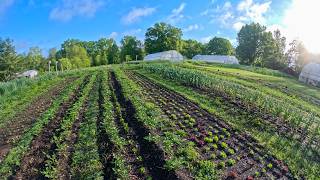
Maximizing early-season yields relies on strategic fall interplanting. Large, slow-maturing brassicas like broccoli leave significant underutilized space in their early stages. Planting rapid crops like radishes in these gaps captures extra revenue without hindering the primary crop.
Integrating cover crops requires careful timing and a clear termination strategy to avoid weed problems. Growers should wait until main crops have at least five true leaves before broadcasting crimson clover. This allows the cover crop to establish early and seamlessly protect the soil immediately after the primary harvest.
Climate adaptation requires understanding that warming autumn temperatures cannot replace vital solar energy. Even during unusually warm fall seasons, declining day length limits plant development and leads to spindly growth. Growers must adjust fall projections, as crop growth will still stall as winter approaches.
Optimizing fall space through precise interplanting and realistic climate adaptation remains essential for sustaining high-yield, small-scale farming.
Episode Overview
- This episode of "Growers Daily" provides practical insights on managing fall-planted cash crops and cover crops, with a specific focus on maximizing limited farm space.
- The narrative transitions from a discussion on fall interplanting strategies to guidelines for establishing fall cover crops, culminating in a reflection on how changing climate patterns are shifting traditional planting schedules.
- This content is highly relevant to market gardeners, small-scale farmers, and ecological growers seeking to optimize their autumn farm layout, integrate cover crops efficiently, and adapt to warmer shoulder seasons.
Key Concepts
- Strategic Fall Interplanting: Space-intensive crops like broccoli or Brussels sprouts, which take a long time to mature, leave significant underutilized space in the bed during their early growth. Planting quick-maturing crops like radishes or small head lettuce between them maximizes early-season yields without interfering with the primary crop's long-term growth.
- Under-seeding Cover Crops: Broadcast-seeding small-seeded cover crops like crimson clover directly underneath established cash crops (once they have several true leaves) allows the cover crop to establish early. When the main cash crop is harvested, the cover crop immediately takes over the bed, protecting and nourishing the soil through the winter.
- The Sunlight-Temperature Paradox: While warming autumn temperatures might tempt farmers to push planting and seeding dates later into the fall, crop growth is still heavily limited by declining day length. Warming weather cannot compensate for a lack of solar energy, meaning late-planted fruiting and foliage crops will still stall out as winter approaches.
Quotes
- At 3:00 - "The spacing is such that a quick round of radishes down the middle or even some smaller head lettuce can sneak their way in between them." - Explaining how to maximize early-season yields by interplanting quick crops within slow-growing brassicas.
- At 7:02 - "Cover crops done wrong are just weeds done right." - Highlighting the critical importance of having a clear termination plan before planting any cover crop to prevent it from becoming a persistent weed problem.
- At 14:44 - "As our years and winters get warmer, we don't get an equal increase in sunlight... plants need warmth, but they also need sunlight." - Clarifying a common misconception about extending the growing season solely based on rising autumn temperatures.
Takeaways
- Time the Under-Seeding Carefully: When broadcasting crimson clover under brassicas, wait until the main crop has at least five true leaves. Planting the cover crop too early can cause it to outgrow and compete with the cash crop, making harvesting difficult.
- Match Cover Crops to Your Zone's Freeze Dates: Plant winter-killed cover crops (like peas) early enough in the autumn to allow them to put on significant biomass, but late enough that they do not flower and set mature seed before the first hard freeze.
- Adjust Fall Projections for Spindly Growth: In unusually warm autumns, be prepared for foliage cover crops to grow tall, thin, and leggy rather than stout and bulky. Consider slightly delaying seeding dates in subsequent warm years to prevent the crop from collapsing into farm pathways.