The Answer is Ecology (doesn’t really matter the question)
Audio Brief
Show transcript
This episode covers practical agricultural strategies for growers alongside the ecological connections between biodiversity and public health.
There are three key takeaways. First, growers must understand the precise temperature thresholds of frost and freeze to successfully overwinter root crops. Second, while living mulches sound ideal in ecological theory, they often create practical weed and nutrient competition in commercial gardens. Third, restoring diverse habitats and natural predators is the most effective long-term solution to rising tick-borne illnesses.
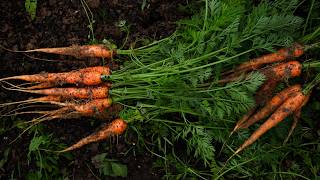
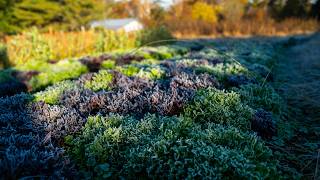
Understanding temperature dynamics is critical for late-season crop survival. A simple frost can occur around thirty-eight degrees Fahrenheit as water vapor freezes in low-lying pockets, while a true hard freeze occurs at twenty-eight degrees or lower, freezing both soil and plant tissue. To protect overwintered carrots, growers must apply a thick layer of mulch before this first hard freeze. Missing this narrow window leads to frozen soil and soft, inedible roots once the ground eventually thaws.
While living mulches like purslane are highly appealing in theory, they present significant challenges in commercial vegetable production. In practice, these living covers often compete with primary crops for water and nutrients, while simultaneously increasing overall weed pressure. If growers choose to experiment with living mulches, they should only do so around robust, established transplants rather than direct-seeded crops to prevent emerging seedlings from being choked out.
On a broader scale, human health remains deeply connected to local ecological health. Outbreaks of tick-borne illnesses are closely tied to habitat fragmentation and the loss of natural predators like grassland birds and small carnivores. Rebuilding robust ecosystems with managed grasslands and forests is a highly effective, sustainable way to naturally mitigate disease vectors.
Ultimately, successful growing requires balancing ecological theory with hands-on, practical field management.
Episode Overview
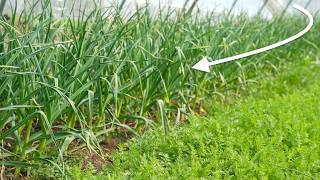
- This episode of Growers Daily features a "Feedback Friday" format, addressing practical community questions about winter carrot storage, wind protection in high tunnels, frost vs. freeze temperatures, and market gardening research.
- The episode features a deep-dive segment exploring why restoring robust ecological diversity (such as grassland birds, small predators, and healthy forests) is the most sustainable solution to rising tick-borne illnesses like Lyme disease and alpha-gal syndrome.
- The host evaluates a Patreon listener's experiment using purslane as an intentional living mulch to protect squash plants from fungal diseases, comparing the theory of living mulches with practical weed management.
Key Concepts
- Frost vs. Freeze Dynamics: A simple frost occurs around 38°F (3°C) as water molecules slow down and freeze in low-lying pockets. A standard freeze occurs at 32°F (0°C), while a "true freeze" or hard freeze occurs around 28°F (-2°C) or lower, freezing the internal water of plants and the soil surface. Cloud cover acts as an insulating blanket, often preventing frost even at lower temperatures.
- Ecology as Public Health: Outbreaks of tick-borne illnesses are closely tied to habitat fragmentation and the loss of natural predators. Urban sprawl has eliminated predators of mice and deer (the primary vectors for ticks), while grassland bird populations—which consume massive quantities of ticks—have severely declined. Restoring biodiversity is presented as a more effective long-term solution than chemical or genetic quick-fixes.
- The Reality of Living Mulches: While the concept of a living mulch (using low-growing, non-competitive plants to cover bare soil) is highly appealing in ecological theory, in practice it often competes with primary crops for water and nutrients, increases overall weed pressure, and can complicate direct-seeding.
Quotes
- At 3:34 - "What is the difference between a frost and a freeze? ... At 38, there will be enough water molecules that slow down enough in lower-lying areas especially to freeze, but not everywhere. At 32, pretty much all the water is just freezing." - Explaining the temperature thresholds and physical behavior of water vapor during various cold-weather events.
- At 9:45 - "With more trees, better managed grasslands, and waterways, we can have a tangible mitigating effect on extreme weather... along with the ecology and wildlife, and ultimately tick and mosquito born disease." - Connecting forest and land conservation directly to public health outcomes and disease vector control.
- At 15:56 - "In general, I think the idea of a living mulch is nice in theory, but I've just personally never had any sort of luck with it... It just winds up being kind of weedy and unproductive and kind of a headache." - Clarifying the gap between academic ideals of living mulches and the day-to-day realities of commercial vegetable production.
Takeaways
- If experimenting with living mulches like purslane, only do so with robust, established transplants rather than direct-seeded crops to prevent the ground cover from choking out emerging seedlings.
- Protect overwintered carrots in Zone 6 by applying a thick layer of mulch before the first hard freeze hits, as missing this window leads to soft, inedible roots once the ground thaws.
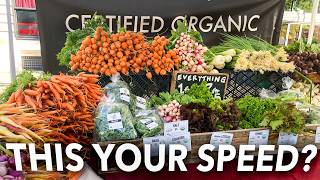
- Approach market garden research by physically visiting local farmers' markets weekly to record exactly what crops are available, when they peak, what gaps exist in the market, and what customers are actually carrying in their bags.