The 5AM Premarket Routine That Made Me $1Million In Trading

Audio Brief
Show transcript
This episode details a verified day trader's 3-step pre-market preparation routine, crucial for achieving a high win rate.
Three key takeaways emerge from this discussion. First, develop a structured and repeatable pre-market routine. Second, avoid trading "nano-float" stocks. Third, create your own trade thesis based on fundamental analysis, not just chart patterns.
A successful trade begins before the market opens with a disciplined pre-market routine. This involves scanning for suitable stocks, conducting in-depth fundamental and technical research, and creating a detailed trade plan including key levels and sizing strategies. Moving away from social media hype and developing a research-driven approach is critical.
A core warning emphasizes avoiding nano-float stocks, defined as those with less than 2 million shares in their float. These stocks are highly unpredictable, easily manipulated, and can lead to significant losses due to extreme volatility. Traders are advised to completely avoid them.
Developing a trade thesis requires thorough due diligence, examining SEC filings, press releases, corporate events, and cash positions. Understanding fundamental catalysts, such as a history of reverse splits, shareholder dilution, or poor cash positions, can be powerful for identifying potential price movements, especially for short-selling strategies.
Ultimately, consistent trading profitability comes from disciplined, rigorous effort and independent research, rather than chasing easy money or crowd sentiment.
Episode Overview
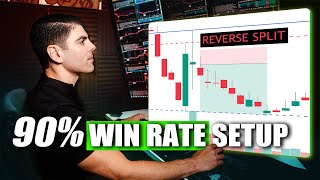
- Verified millionaire day trader David Capablanca shares the detailed 3-step pre-market preparation routine that fuels his 90%+ win rate.
- He emphasizes the importance of moving away from social media hype and developing a disciplined, research-driven approach to trading.
- The video provides a practical walkthrough of his scanning criteria, fundamental analysis (due diligence), and trade planning process.
- He explains key concepts like float, dilution, and institutional ownership, using real-world stock examples ($MULN, $GNPTX, $KSCP) to illustrate his points.
Key Concepts
- 3-Step Pre-Market Routine: David's morning routine consists of three core steps: (1) Finding suitable stocks through scanning, (2) conducting in-depth fundamental and technical research (due diligence), and (3) creating a detailed trade plan with a watchlist and potential entry/exit strategies.
- Due Diligence: This is the process of researching a company's fundamentals by examining SEC filings, press releases, corporate events, and cash positions to build a "thesis" or story for a potential trade.
- Scanning Criteria: To filter for opportunities, he uses specific scanner settings based on four key data points: trading volume, float (the number of shares available to trade), market cap, and institutional ownership.
- Float vs. Volume Dynamics: He explains that the float represents the supply of a stock, while the volume represents the demand. When demand (volume) exceeds supply (float), it creates high volatility and the potential for a short squeeze.
- Nano-Float Stocks: David strongly warns against trading stocks with a float below 2 million shares (and especially below 1 million), as they are highly unpredictable, easily manipulated, and can cause significant losses.
- Fundamental Catalysts: The video highlights that negative fundamental factors, such as a history of reverse splits, shareholder dilution, and a poor cash position, can serve as powerful catalysts for a successful short-selling strategy.
Quotes
- At 01:21 - "The key turning point for me was when I stopped following what everyone's talking about in the forums." - David explains that his success came after he stopped relying on crowd sentiment and started conducting his own independent research and creating original trade ideas.
- At 01:57 - "The reality is, trading is a career that requires a lot of hard work and resilience." - He dispels the popular myth of easy money in trading, emphasizing that consistent profitability comes from disciplined, rigorous effort, not just clicking buttons.
- At 03:03 - "If the volume of a stock is above its float during the pre-market, it means that there's a lot of demand for the stock and there's a higher probability that there will be a squeeze at the open." - He provides a simple rule for identifying stocks with high demand relative to their supply, which is a key indicator for potential volatility.
- At 04:41 - "If the stock has a float below 2 million, it's untradeable. It's basically not tradeable." - David gives a direct and critical risk management rule, advising all traders to completely avoid these highly dangerous "nano-float" stocks.
Takeaways
- Develop a structured and repeatable pre-market routine. The majority of work for a successful trade is done before the market opens through scanning, fundamental research, and creating a detailed plan with key levels and sizing strategies.
- Avoid trading "nano-float" stocks with less than 2 million shares in their float. These stocks are extremely volatile and prone to manipulation, making them a high-risk, low-probability setup for most traders.
- Create your own trade thesis based on fundamentals, not just chart patterns. Understand the company's financial health, history of dilution, and recent news to build a strong, logical reason for why a stock's price might move in a particular direction.
More from The Friendly Bear - Verified Trader

Tom Hougaard & David Capablanca: Mindset for 900% Gains in 1 Year (Must Watch)
Oct 03, 2025

Tom Hougaard & David Capablanca: How to be the Top 1% Trader (Must Watch)
Aug 30, 2025

Verified Trader Reacts to ICT Concepts Explained in 12 Minutes
Mar 07, 2025
Best Trading Strategy Revealed by 90% Win Rate Trader (Verified)
Feb 08, 2025