Tom Hougaard & David Capablanca: How to be the Top 1% Trader (Must Watch)

Audio Brief
Show transcript
This episode features veteran traders Tom Hougaard and David Capablanca discussing the paramount importance of psychology, mindset, and risk management in achieving trading success.
There are four key takeaways from their conversation. First, mastering one's psychology is more critical than market knowledge. Second, elite trading performance demands an intense, often costly, mindset. Third, trading acts as a mirror, reflecting personal discipline and emotional state. Finally, successful strategies require constant adaptation to evolving market dynamics.
The primary barrier to trading success is not a lack of information, but the psychological inability to consistently act on existing knowledge. Traders must confront internal obstacles and develop the mental fortitude to execute their plans effectively. This internal battle is far more challenging than technical analysis alone.
Achieving the highest levels of trading success necessitates a ruthless, hyper-focused mindset and significant personal sacrifice. Such an intense dedication can negatively impact personal relationships and overall well-being. Elite performers often cultivate a highly compartmentalized approach, balancing aggressive trading personas with other aspects of their lives.
The market directly reflects a trader's personal habits, discipline, and emotional state. Poor trading results often highlight unresolved personal flaws or inconsistent behavior. Engaging with the market therefore becomes a powerful diagnostic tool for self-improvement, compelling traders to address internal issues to enhance their performance.
Market strategies are not static and demand continuous adaptation. The niche of short-selling small-cap stocks, for instance, has transformed into a highly competitive and expensive endeavor. This evolution is driven by increased institutional participation, new regulations, and more frequent short squeezes, necessitating ongoing strategic adjustments.
Ultimately, sustained trading success hinges on profound self-mastery and relentless adaptation to the market's ever-changing landscape.
Episode Overview
- Veteran traders Tom Hougaard and David Capablanca discuss the critical importance of psychology, mindset, and risk management in achieving trading success.
- The conversation explores the "killer instinct" necessary for elite performance, drawing parallels to top athletes and acknowledging the significant personal sacrifices required.
- Trading is framed as a mirror that reflects a person's life, discipline, and unresolved issues, making self-improvement a prerequisite for market success.
- The speakers analyze the evolution of short-selling, highlighting how the strategy has become more crowded, competitive, and difficult due to institutional involvement and regulatory changes.
Key Concepts
- The Psychological Barrier: The primary obstacle to trading success is not a lack of knowledge, but the psychological inability to act on that knowledge consistently.
- The Price of Elite Performance: Achieving the highest levels of success demands a ruthless, focused mindset and significant personal sacrifice, which can negatively impact relationships and personal well-being.
- Trading as a Mirror for Self-Improvement: The market directly reflects a trader's personal habits, discipline, and emotional state, forcing them to confront and resolve personal flaws to improve their performance.
- Evolution of Short-Selling: The niche of short-selling small-cap stocks has transformed into a highly competitive and expensive endeavor due to increased institutional participation, new regulations, and more frequent short squeezes.
Quotes
- At 0:22 - "inavailability to act upon the knowledge that they do have" - Tom Hougaard gives his primary reason for why most people fail to achieve success.
- At 22:46 - "They aren't overly nice people." - Tom makes a controversial point about the personalities of elite performers like Michael Jordan and Kobe Bryant, suggesting a certain ruthlessness is necessary to succeed at the highest levels.
- At 24:16 - "...an antidote to that person that I need to be when I am trading." - Tom explains that his extensive charity work serves as a necessary balance to the aggressive persona he must adopt to trade effectively.
- At 24:50 - "I would leave the balanced life to the losers." - Tom describes his former mentality of over-focusing on his craft, which he now recognizes came at a significant personal cost to friendships and relationships.
- At 40:47 - "That's cheap. That's a bargain." - Tom explains the common "supermarket mentality" of retail traders who see a falling stock price and wrongly perceive it as a value opportunity, rather than a sign of weakness.
Takeaways
- Master your psychology before you master the market; the biggest barrier to success is internal, not a lack of information.
- Acknowledge that elite performance often requires an intense, compartmentalized mindset that may come at a significant personal cost.
- Use your trading results as a diagnostic tool for self-improvement, as your performance is a direct reflection of your personal discipline and habits.
- Recognize that market strategies are not static; constantly adapt to evolving market dynamics to maintain a competitive edge.
More from The Friendly Bear - Verified Trader
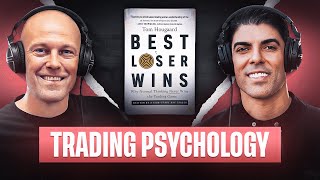
Tom Hougaard & David Capablanca: Mindset for 900% Gains in 1 Year (Must Watch)
Oct 03, 2025
Verified Trader Reacts to ICT Concepts Explained in 12 Minutes
Mar 07, 2025
Best Trading Strategy Revealed by 90% Win Rate Trader (Verified)
Feb 08, 2025

Best Profitable Trading Strategy explained by Verified Millionaire Trader | David Capablanca
Nov 30, 2024