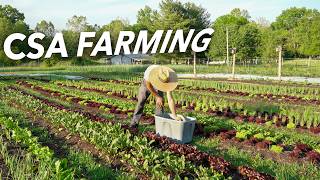
Speeding up Onion Planting + Crop Planning for Successions
Audio Brief
Show transcript
This episode covers practical advice for small scale organic vegetable farming focusing on crop management and farm efficiency. There are three key takeaways to improve operations starting with optimizing onion planting efficiency managing common garden pests and adopting a market driven approach to crop planning.
First when planting a large quantity of onions direct seeding by hand is highly inefficient. Farmers should invest in a basic push seeder or start onions in trays for rapid transplanting. To maximize transplanting speed focus heavily on improving soil tilth with compost or light surface cultivation. Loose and pliable soil allows farmers to push transplants directly into the ground without needing extra hand tools which dramatically increases planting efficiency.
Second managing pests and diseases requires modifying the immediate plant environment. Pill bugs are normally beneficial decomposers but become destructive when damp mulch is piled too close to crop bases. Farmers can protect plants by pulling mulch away from the stems and using cardboard traps to relocate the bugs to compost piles. Similarly preventing celery leaf curl requires adequate plant spacing to ensure proper airflow which stops fungal diseases from thriving in dense canopies.
Third crop planning should always begin with market demand rather than the physical garden layout. Growers must determine exactly what crops are needed for their customers and in what weekly quantities then work backward to calculate the necessary bed space. This reverse engineering strategy simplifies the entire planning process and eliminates the need to meticulously map out a rigid complex spreadsheet for the whole season upfront.
By focusing on soil conditions environmental management and reverse crop planning market gardeners can significantly improve their overall farm efficiency.
Episode Overview
- In this episode of Growers Daily, Farmer Jesse answers Patreon listener questions about organic vegetable farming.
- He discusses how to efficiently plant a large quantity of onions, manage pill bugs (rolly pollies) and celery leaf curl, and organize crop planning and succession planting on a market farm.
- This episode is practical for small-scale and market gardeners looking for actionable advice on managing specific crops and pests, and improving farm efficiency.
Key Concepts
- Efficient Onion Planting: Direct seeding onions in the soil is slow and inefficient. For direct seeding, a seeder like an Earthway makes a huge difference. However, for best results and efficiency, start onions in trays and transplant them. The speed of transplanting depends heavily on soil condition (tilth). Tools like a paper pot transplanter are great for larger scales, but for small scales, ensuring loose, pliable soil allows for quick, hand-transplanting without tools.
- Managing Pill Bugs (Rolly Pollies): Pill bugs shred organic matter and are generally beneficial for decomposition. They become pests when they have access to damp, mulchy environments near crops (like deep compost or wood chips) and lack other food sources. Management involves pulling mulch away from plant bases, trapping them under cardboard, and relocating them to compost piles.
- Celery Leaf Curl Causes: Celery leaf curl can be caused by herbicide contamination in compost, fungal diseases spread by poor air circulation (often exacerbated by dense planting or too much mulch retaining moisture), or nutrient deficiencies (especially nitrogen or phosphorus).
- Market-Driven Crop Planning: Crop planning should start with market demand, not the garden itself. Determine what crops are needed, in what quantities, and when, based on customer or CSA needs. Then, work backward to calculate how many beds and successions are required to meet that demand. This approach simplifies the planning process compared to trying to meticulously map out every bed in advance.
Quotes
- At 2:40 - "If you are directly seeding onions however, or directly seeding anything really, a seeder is going to make all the difference in the world in terms of efficiency, just all the difference." - Highlighting the importance of appropriate tools for direct seeding.
- At 3:41 - "First, the tilth and condition of your soil will make a big difference in efficiency just in general. If your soil is firm and difficult to get into... that's going to be super tough and slow you down tremendously." - Emphasizing that soil preparation is the foundation of efficient transplanting.
- At 8:24 - "The reason I'm separating these is because rolly pollies, pill bugs, and other shredders like that will terrorize many different crops, and it has mostly to do with the conditions of your soil or specifically, you know, the mulchiness of your soil." - Explaining that pest issues are often symptoms of environmental conditions.
- At 12:30 - "For me, crop rotations are not about the garden. They're about your market. What I mean is that I like to start at the market, like just examining what I need and what crops I want and when, and then work my way backward." - Framing the philosophy of market-driven crop planning.
Takeaways
- Invest in a basic push seeder (like an Earthway) if you direct seed frequently; it dramatically improves efficiency over hand-seeding.
- To speed up hand transplanting, focus on improving soil tilth (e.g., via compost or light surface cultivation) so you can push transplants directly into the soil without needing a trowel or dibbler.
- If pill bugs are damaging crops, pull mulch away from the base of the plants to reduce their preferred habitat and trap them under cardboard to relocate them.
- Ensure celery has adequate spacing and air flow to prevent fungal diseases that cause leaf curl.
- Simplify your crop planning by determining your weekly market needs first, calculating the required bed space, and planting accordingly, rather than trying to create a rigid, complex spreadsheet for the entire season upfront.