"Sell the alpha, not the feature": The enterprise sales playbook for $1M to $10M ARR | Jen Abel
Audio Brief
Show transcript
This episode explores enterprise sales as a creative art of "deal crafting," offering a tactical guide for early-stage startups on go-to-market strategy and hiring their first sales professional.
There are four key insights from this discussion. First, anchor initial enterprise contracts between 75,000 and 150,000 dollars to establish proper value and avoid future pricing conflicts. Second, hire your first salesperson around one million dollars in Annual Recurring Revenue, seeking a "founder cosplayer" profile who can sell vision. Third, shift sales pitches from problem-solving to "vision casting" a future opportunity, especially relevant for AI-related products. Fourth, differentiate your market approach by being fundamentally unique, not just incrementally better, and through creative, manual outreach.
Initial enterprise deals should target the 75,000 to 150,000 dollar range. This establishes appropriate value, crucial for avoiding the "pricing anchor trap" where a low starting price hinders future contract expansion. Mixing small business pricing with enterprise accounts can severely limit long-term revenue potential.
A startup's first sales hire should occur around one million dollars in Annual Recurring Revenue. The ideal candidate is a "founder cosplayer" who sells the company vision with passion and creativity, distinct from traditional salespersons. Given the high failure rate in early sales hires, founders should consider hiring two candidates.
Effective sales now demand "vision casting," focusing on selling a future opportunity or addressing an emerging market gap. This strategy is vital in the current AI landscape, where companies are still defining their long-term strategies. Prioritize securing one strategic, high-value contract over multiple small, discounted deals, which offers a truer signal of product-market fit.
Market success comes from being fundamentally different, not just incrementally better, which is key to avoiding commoditization. Leverage creative, manual outreach methods to connect with prospects, distinguishing your approach from prevalent commoditized AI sales tools. Embracing direct qualifying questions and even a clear "no" provides valuable data, proving more productive than prolonged 'maybes'.
These strategic insights offer a robust framework for early-stage startups navigating complex enterprise sales and market differentiation.
Episode Overview
- The podcast reframes enterprise sales from a transactional process into a creative art of "deal crafting," emphasizing the importance of selling a future vision rather than just solving a present-day problem.
- It provides a tactical guide for early-stage startups on go-to-market strategy, covering critical mistakes in enterprise pricing, the strategic use of design partners, and how to avoid the "pricing anchor trap."
- The discussion outlines a clear playbook for hiring a startup's first salesperson, detailing when to hire (around $1M ARR), the ideal "founder cosplayer" profile to look for, and who to avoid.
- A core theme is the power of differentiation and a contrarian approach, advocating for manual outreach over commoditized tools and focusing on being different rather than just incrementally better.
Key Concepts
- Vision-Based Selling: The core sales philosophy of selling to a future "gap" or opportunity, rather than a current pain point. This is especially critical in the age of AI, where companies are still defining their strategies.
- The Pricing Anchor Trap: Setting an initial price too low for an enterprise client makes it nearly impossible to expand the contract value significantly later, as the account becomes anchored to a small-business price point.
- Strategic Enterprise "Land" Deals: The sweet spot for an initial enterprise software contract is between $75,000 and $150,000. This range establishes proper value and sets the stage for future expansion without requiring massive, unjustifiable price leaps.
- Deal Crafting vs. Transactional Sales: Viewing enterprise sales as a creative, relationship-driven art rather than a formulaic, transactional process that relies on standard playbooks.
- The "Founder Cosplayer" Sales Hire: The ideal first salesperson for a startup is someone who can sell the vision with the passion and creativity of a founder, not a traditional salesperson with experience only at large, established companies.
- Strategic Use of Design Partners: Design partners provide invaluable product feedback but are often the most difficult customers to convert to large, full-priced contracts. The relationship must be framed with clear future pricing expectations from the start.
- Differentiation over Incremental Improvement: Success in a crowded market comes from being fundamentally different, not just marginally better. This is the key to avoiding commoditization in the sales process.
- The Value of "No": Being direct and asking hard qualifying questions builds trust. Receiving a clear "no" is valuable data that provides clarity and helps refine the sales process, making it more productive than a prolonged "maybe."
Quotes
- At 0:00 - "You need to vision cast. You need to sell to a gap, don't sell to a problem." - This quote establishes a core theme: selling a future opportunity rather than just solving a current pain point.
- At 0:12 - "Most founders would rather get ten 10K deals than lose nine and get one 100K deal." - This quote points out a common psychological trap for founders who prefer the validation of multiple small wins.
- At 0:36 - "As soon as you become a comparison, as soon as you become one of three that they're testing out, you've already sort of lost." - This emphasizes the critical importance of differentiation to avoid being treated as a commodity in the sales process.
- At 0:52 - "It's more of an art. It's all about deal crafting. It is a relationship you're building with someone." - This quote reframes enterprise sales as a creative and relational process, moving beyond simple transactions.
- At 22:31 - "You've just ruined your enterprise game because you're anchoring to a small business price." - On the danger of mixing go-to-market strategies by applying SMB pricing to a large enterprise account.
- At 23:09 - "Enterprise companies are very used to a land, when I say like the first initial contract, to somewhere between $75k and $150k." - Identifying the standard price range for initial enterprise software deals.
- At 25:25 - "Design partners are incredible. They are the hardest logos to upsell." - Highlighting the dual nature of design partners: great for product development but challenging for revenue growth.
- At 29:38 - "Here's where we are today, here's what we cannot do, which is just as important, it builds trust... Do you want to be on this journey with us? And it's really ugly right now." - On the importance of being transparent with early customers about the product's limitations to build trust.
- At 49:20 - "Especially in the age of AI...it's all about solving for a gap...people are trying to figure out, 'What's our AI strategy? Where are we going to go with this?'" - On why vision-casting and opportunity-based selling are critical in the current market.
- At 51:41 - "You need people that can cosplay a founder. Right? Which is like selling the vision, getting them excited, running through a wall to get the deal done." - Jen Abel describes the ideal profile for a startup's first salesperson.
- At 59:43 - "Even a taller order, go find two people that are good...because of the 50% failure rate." - Practical advice to hire two salespeople at once, given the high probability that one of them won't work out.
- At 66:33 - "No is the best answer to get to yes, because no is data that you can use." - This highlights that getting a clear "no" is more valuable than a prolonged "maybe" because it provides actionable feedback.
- At 75:39 - "Don't be better, be different." - The core philosophy for standing out in a crowded market, emphasizing that a unique approach is more powerful than an incrementally better one.
Takeaways
- When engaging your first enterprise clients, anchor the initial contract in the $75k-$150k range to establish proper value and avoid future pricing conflicts.
- Make your first sales hire around the $1M ARR mark and prioritize candidates who can sell a vision, not just follow a script. Consider hiring two candidates due to the high failure rate.
- Shift your sales pitch from solving an immediate pain to "vision casting" a future opportunity, especially for AI-related products where customers are still defining their long-term strategy.
- Resist the temptation to close many small, discounted deals for the sake of validation. Focus on landing one strategic, high-value contract as a truer signal of product-market fit.
- When working with design partners, be transparent about product limitations and explicitly set expectations for future, full-priced contracts to avoid difficult upsell conversations.
- Be direct and ask the tough qualifying questions early in the sales process. Getting a quick "no" provides valuable data and is more productive than a long "maybe."
- Differentiate your outreach by finding creative, manual ways to connect with prospects who are not being targeted by the same commoditized AI sales tools as everyone else.
- Build your market position around being fundamentally different from your competitors, not just incrementally better, as a unique value proposition is the strongest defense against commoditization.
More from Lenny's Podcast

How we built Grok Bot in a month | Roman Ugarte (SpaceXAI)
Sep 08, 2026
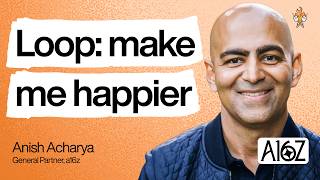
Why companies are becoming a series of loops | Anish Acharya (a16z)
Sep 06, 2026
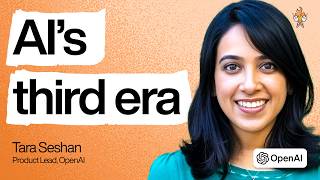
AI’s third era: the rise of persistent AI coworkers | Tara Seshan (OpenAI’s product lead)
Aug 30, 2026
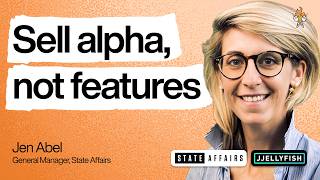
How to close $100K+ enterprise deals, step by step | Jen Abel
Aug 23, 2026