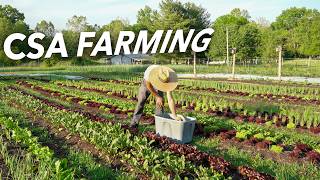
Pigweed Uh Oh + Simple Onion Curing Set Up
Audio Brief
Show transcript
This episode covers practical market gardening strategies, focusing on conservative soil management, aggressive pigweed control, and wet-climate onion curing.
There are three key takeaways from this discussion. First, soil fertility requires proactive, conservative care rather than continuous cropping. Second, controlling pigweed demands a strategic stale seedbed approach based on the plant's prolific seeding biology. Third, successful onion curing in humid climates relies on elevated airflow and strict sorting before storage.
Managing soil health is similar to financial management, meaning growers should be conservative when things are going well. Planting a clover cover crop provides a necessary break for the soil rather than pushing it to its limits. Additionally, while materials like burlap help with seed germination, they do not block weeds effectively because light still penetrates the damp fibers.
A single pigweed plant can produce up to one hundred thousand seeds, making it a highly persistent threat. Because these seeds germinate shallowly, standard cultivation often brings new seeds to the surface and triggers a fresh weed flush. To combat this, farmers should use a stale seedbed technique by shallowly cultivating to trigger germination, killing the young weeds, and then applying a tarp.
In humid climates, onions cannot be left in the field to cure due to excess moisture. Instead, growers should cure them on elevated mesh tables to ensure continuous airflow above and below the bulbs. Leaving the papery outer skins intact protects the crop, while rigorously sorting out any soft bulbs prevents rot from spreading during winter storage.
By combining biological understanding with disciplined field management, growers can protect both their soil health and their harvest yields.
Episode Overview
- Weekly Feedback Roundup: Host Farmer Jesse reviews audience comments on topics such as farmer health, rabbit pest management, the utility of burlap for weed control, and winter squash growing methods.
- Audience Spotlight: Features a 20-second farm tour from a viewer in Wisconsin, demonstrating the community-building aspect of the podcast.
- Managing Pigweed: Offers detailed strategies for handling persistent pigweed infestations, highlighting the plant's history and its biology of high seed production.
- Onion Curing Tutorial: Provides a practical, step-by-step look at how the host cures and stores onions in wet climates like Kentucky to ensure long-term preservation.
Key Concepts
- Soil Fertility Investment: Treating soil fertility like financial management suggests that when things are going well, it is best to be conservative. Rather than pushing soil with continuous cropping, giving it a "treat" like a clover cover crop helps maintain long-term health.
- The Challenge of Burlap: While burlap can assist with seed germination (such as carrots), it is not a complete weed barrier. Light still penetrates, creating ideal, moist germination conditions underneath, which can lead to large weeds growing through the material.
- The Biology of Pigweed: Pigweed (Amaranth) is a highly successful survivor that can produce between 25,000 and 100,000 seeds per plant. Because it is a shallow germinator, any soil disturbance brings new seeds to the surface, making standard cultivation a double-edged sword that can trigger new flushes of weeds.
- Onion Curing in Wet Climates: In humid regions, onions cannot simply be left in the field to cure because the air remains too damp. Elevating onions on mesh trays under cover ensures proper airflow above and below the bulbs, preventing rot and allowing the neck to dry completely before storage.
Quotes
- At 1:19 - "While things are going well with the soil, why push it? Give it a little treat, a little thank you, like some clover." - Explains the philosophy of proactive soil care and conservation.
- At 10:59 - "The seed heads can contain 25,000 to 100,000 seeds per plant... so whatever you do, do not let it go to seed." - Emphasizes the critical biological factor that makes pigweed such a difficult pest to manage.
- At 15:39 - "We don't leave them in the field... in Kentucky, it's just too wet. So for us, what we do is we put them on this table... and we want air underneath and above them." - Illustrates how local climate dictates post-harvest handling and curing practices.
Takeaways
- Implement a Stale Seedbed Technique for Pigweed: To eradicate a heavy pigweed infestation, mow the weed low, shallowly cultivate the top few inches of soil to trigger germination of the top seed layer, water it, let those seeds sprout, cultivate again to kill them, and then apply a tarp.
- Keep Onion Skins Intact for Storage: When curing onions, leave some of the dry papery outer skin on the bulb. This paper acts as a protective barrier in storage and helps moderate moisture levels around the onion.
- Sort and Isolate Rotting Crop Elements: During the final stages of onion curing, feel each bulb for squishiness. Any onions showing signs of rot should be used immediately rather than placed in the storage bin, as a single rotting onion can quickly spoil the entire batch.