Not satisfied in your career? She rebooted her career at 28 in Networking! Ep 62 - Tracket Pacer

Audio Brief
Show transcript
This episode explores a successful mid career transition into network engineering, focusing on overcoming imposter syndrome and the pivotal role of community support.
Three key takeaways emerge from this insightful conversation.
First, a career change into network engineering is attainable at any age. Many experience shame or feelings of failure when leaving an established profession, but these emotions should not deter pursuing a more fulfilling path. Decisive action and embracing new opportunities are crucial for success.
Second, imposter syndrome is a common challenge for those entering tech from non-traditional backgrounds. The belief one must start young or have a computer science degree can be a barrier. However, diverse backgrounds offer unique strengths. Relatable mentors and strong representation are vital for building confidence and showing that a fulfilling tech career is possible for anyone.
Third, active community engagement and strategic entry points accelerate career growth. Finding learning environments with relatable instructors fosters confidence. A Network Operations Center, or NOC, offers an ideal practical starting role to gain hands on experience. Continuous skill development, including automation and multi vendor knowledge, is essential for long term progression.
Ultimately, fostering an inclusive and encouraging environment is vital for empowering all individuals in network engineering, especially women and underrepresented groups.
Episode Overview
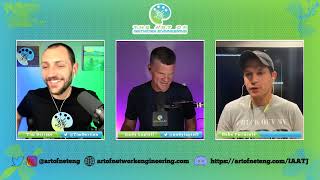
- The episode features an in-depth interview with Lexie (@TrackItPacer), who shares her inspiring journey of making a mid-career transition into network engineering from a non-technical field.
- Key themes include overcoming imposter syndrome, the shame associated with starting over, and the pivotal role that representation and community support played in her success.
- Lexie discusses the practical steps she took, from a life-changing community college course to landing her first job in a Network Operations Center (NOC) without a CCNA.
- The conversation culminates in a passionate discussion about the challenges women face in tech and a call to action for creating a more inclusive and encouraging environment in network engineering.
Key Concepts
- Career Transition: The emotional and psychological challenges of leaving an established career after many years, including feelings of failure and the fear of starting from scratch.
- Imposter Syndrome: The common belief among career-changers that they are not qualified for tech roles because they didn't start at a young age or come from a traditional computer science background.
- The Power of Representation: The significant impact of having relatable instructors and mentors, particularly for women and individuals from non-STEM fields, in building confidence.
- Foundational Learning: The "magic" of discovering the fundamentals of how the internet works in an introductory networking course, which can ignite a passion for the field.
- Community and Normalizing Failure: The importance of sharing struggles and learning from mistakes openly, which makes the field more accessible and less intimidating for newcomers.
- NOC as a Starting Point: The value of a Network Operations Center (NOC) as an ideal environment for gaining hands-on, practical experience and launching a network engineering career.
- Career Progression: Moving from a "break-fix" NOC role to a Network Engineer 2 position, with future goals focused on diversification (Juniper) and automation skills (Python) over pursuing a CCIE.
- Inclusivity in Tech: A strong advocacy for actively supporting and encouraging women in network engineering, addressing biases, and ensuring their voices are heard and respected.
Quotes
- At 1:47 - "This isn't a science. It's an art. The art. And that art is network engineering." - The monologue concludes by tying the detective story back into the podcast's central theme and title.
- At 9:39 - "I am super excited for our guest this evening. You probably know her on Twitter as @TrackItPacer. Please welcome Lexie." - AJ Murray officially introduces the guest for the episode.
- At 24:33 - "Because it felt like a huge failure." - Lexie explains the initial feeling of shame she had about leaving her previous career after 6-7 years to start over.
- At 28:38 - "I just always assumed that because I didn't start early on it... I wouldn't be able to have a career in it." - Lexie articulates a common fear for career-changers in tech: the belief that not starting at a young age is an insurmountable barrier.
- At 29:00 - "Once I took away that sort of like weird, miserable safety net... the world opened up strangely." - Lexie reflects on how completely committing to a career change, without the option of going back, freed her to explore new possibilities.
- At 30:51 - "That turned out to be the class that... it changed my life." - Lexie identifies her introductory networking course as the pivotal moment that set her on her current career path.
- At 31:37 - "Representation is important... being taught in a class by someone who was close to my age, also a woman... who had a very similar story to me... it made such a huge impression on me. Like, 'Hell yeah, I can do this.'" - Lexie stresses the powerful impact of having a relatable instructor who had also made a career change into tech.
- At 32:03 - "Oh my god, this is how the internet works? It was like, my mind was just blown." - She describes her profound excitement and fascination upon learning the fundamentals of networking for the first time.
- At 55:14 - "My first network engineer job was in a NOC... awesome, great place to learn." - Host Andy Lapteff validates the NOC as a great entry point into the networking field.
- At 56:07 - "I think you have a great mind for network engineering." - Lexie recalls the crucial endorsement from her instructor that helped her secure the NOC position.
- At 58:41 - "You took a lot of action in your life to get to that point. It's not like you were at that, you know, lawyer job and this job dropped out of the sky." - Host Andy Lapteff reframes Lexie's "luck" as the result of her proactive decisions and hard work.
- At 59:18 - "Are you still in the NOC?" "So the position is... my title is a network engineer and I do configurations and things like that in order to fix stuff... it's a break-fix role." - Lexie clarifies that her role has evolved beyond simple monitoring to hands-on engineering tasks.
- At 1:02:22 - "We need more women in network engineering... if you have a woman in your life who is in a tech-related field... make sure you're encouraging her and... don't speak over her in meetings, please." - Lexie makes a passionate plea for creating a more supportive and inclusive environment for women in tech.
- At 1:03:48 - "When the woman who's strong enough to say, 'Yo, dude, I'm here,' he goes, 'Oh, I'm sorry, I thought you were so-and-so's wife.'" - Andy Lapteff shares an anecdote illustrating the subtle and overt biases women often face at industry events.
- At 1:04:49 - "It's never too late. You don't have to be a computer science major and get that first gig at 22." - Andy Lapteff emphasizes that there are many paths into tech and it's never too late to make a career change.
Takeaways
- It is never too late to change careers; you can successfully transition into network engineering at any age or stage of life.
- Acknowledge feelings of failure or shame when starting over, but don't let them prevent you from pursuing a more fulfilling path.
- Overcome imposter syndrome by recognizing that a non-traditional background can be a strength, not a weakness.
- Seek out learning environments with instructors and mentors you can relate to, as representation can be a powerful motivator.
- Target a Network Operations Center (NOC) for your first role to gain invaluable hands-on experience in a real-world setting.
- Understand that "luck" in your career is often the result of your own proactive decisions, hard work, and preparation.
- Plan your long-term skill development beyond initial certifications to include automation (like Python) and multi-vendor knowledge.
- Actively participate in making the tech community more inclusive by encouraging, listening to, and amplifying the voices of women and underrepresented groups.
- Engage with the tech community and be open about your learning journey to help normalize struggles and make the field more welcoming for others.
More from The Art of Network Engineering

We tour the world's fastest super computer at Oak Ridge National Laboratory!
Apr 18, 2024

Exploring Tech Certification Challenges with Brent Morris
Sep 26, 2023

Navigating the CCIE Landscape with help from 3 CCIEs!
Sep 12, 2023
This week we interview a 3x CCIE and discuss Data Center Network Design! Ep 106 of AONE
Nov 22, 2022