This week we interview a 3x CCIE and discuss Data Center Network Design! Ep 106 of AONE

Audio Brief
Show transcript
This episode explores modern enterprise data center design, moving beyond traditional Layer 2 limitations to embrace scalable, flexible architectures.
The discussion highlights several critical considerations for current data center strategies, including essential architectural shifts, control plane advancements, application flexibility, and strong business alignment.
A key takeaway emphasizes prioritizing a Layer 3 underlay with a VXLAN overlay for new data center designs. Traditional Layer 2 spine-leaf architectures face significant horizontal scaling limitations, making a Layer 3 underlay combined with a VXLAN EVPN overlay a superior choice for long-term scalability and multi-tenant flexibility. This modern design allows for efficient Layer 2 extension over a routed fabric.
Embrace BGP EVPN as the modern control plane for data center fabrics. This technology efficiently advertises MAC address reachability between switches, replacing inefficient flood-and-learn mechanisms. BGP EVPN dramatically improves network stability and performance by ensuring leaf switches only learn locally attached MAC addresses, keeping forwarding tables small.
Organizations should challenge legacy application constraints that "require" stretched Layer 2. The episode encourages investigating whether these applications can be modernized or re-IP'd. This approach mirrors the flexibility often accepted when migrating applications to the public cloud, unlocking greater design freedom for on-premises infrastructure.
Finally, base your data center strategy on a thorough analysis of business goals, financial models, and your team's existing skill sets. Whether choosing on-prem, cloud, or hybrid models, decisions must align with application requirements and CapEx versus OpEx preferences. It is also crucial to clearly define true disaster recovery needs, distinguishing them from costly active-active designs intended for continuous operation.
This conversation provides essential guidance for designing future-proof, business-aligned data center infrastructures.
Episode Overview
- The episode provides a comprehensive guide to modern Enterprise Data Center Design, using a light-hearted Bob Ross analogy to make the complex topic approachable.
- Guest expert Gabe Patiacote explains the limitations of traditional Layer 2 spine-leaf architectures and introduces the benefits of a Layer 3 underlay with a VXLAN EVPN overlay.
- The discussion covers the technical mechanics of VXLAN, including how BGP is used as a control plane to advertise MAC address reachability, dramatically improving scalability.
- Practical considerations are explored, such as different models for disaster recovery (DR) and the business drivers (CapEx vs. OpEx, skill sets) that influence the choice between on-prem, cloud, and hybrid data center strategies.
Key Concepts
- Enterprise Data Center Design: The core topic, framed as a follow-up to a previous episode on campus design, focusing on modern spine-leaf architectures.
- Layer 2 vs. Layer 3 Underlay: A central theme is the comparison between traditional Layer 2 designs, which face horizontal scaling limitations, and modern Layer 3 routed fabrics.
- VXLAN Overlay: Presented as the solution for Layer 2 extension over a Layer 3 underlay, allowing for flexible, scalable, and multi-tenant network segments.
- BGP EVPN Control Plane: BGP is used as the control plane in VXLAN fabrics to exchange host MAC and IP reachability information between switches (VTEPs), replacing traditional flood-and-learn mechanisms.
- Scalability Benefits: VXLAN EVPN fabrics enhance scalability by ensuring that leaf switches only need to learn the MAC addresses of locally attached devices, which keeps MAC tables small and the network stable.
- Disaster Recovery (DR) Models: The conversation contrasts active-standby DR, which requires manual intervention after a disaster, with active-active designs that offer more seamless failover.
- Business-Driven Architecture: The decision to use on-prem, cloud, or hybrid models is ultimately driven by business factors, including application requirements, CapEx vs. OpEx preferences, and available in-house expertise.
Quotes
- At 0:50 - "This time, let's see how creative we can get with a nice motif of an enterprise data center." - Tim Bertino (as Bob Ross) formally introduces the main topic of the episode, using artistic language to describe network design.
- At 1:25 - "Are we gonna see an appearance of the spanning-tree bear this time around?" - In the Bob Ross persona, Tim humorously alludes to the technical debate surrounding Spanning Tree Protocol's role in modern data center networks.
- At 3:30 - "We decided to invite Gabe Patiacote, a Principal Solutions Architect for CDW." - Tim begins the formal introduction of the episode's guest expert, transitioning the conversation toward the technical topic.
- At 23:26 - "The limitation that we find when we kind of build a spine-leaf architecture on a Layer 2 perspective is that we're going to be limited when we try to scale horizontally speaking." - Gabe explains the primary drawback of using traditional Layer 2 in a spine-leaf topology.
- At 25:22 - "We use BGP to exchange information. 'Hey, I have this MAC address. If you want to reach out to this MAC address, just build a VXLAN tunnel to me,' right? As simple as that." - Gabe simplifies the fundamental role of the BGP EVPN control plane in a VXLAN fabric.
- At 25:36 - "I just learned recently that BGP can advertise MAC addresses and my brain exploded." - Andy shares his "aha" moment, highlighting a common conceptual leap for network engineers transitioning to modern data center fabrics.
- At 30:31 - "That switch only holds the MAC addresses that are connected directly to that switch." - Gabe explains a major scalability benefit of VXLAN EVPN, where leaf switches no longer need to learn every MAC address in the entire domain.
- At 42:37 - "Why are they able to move it to the public cloud and change the IP, and why they cannot do it when they're staying on-prem?" - Gabe questions the common double standard where organizations are willing to re-IP applications for the cloud but resist it on-premises.
- At 45:57 - "If we're talking truly about DR, you mentioned the key word there: Disaster Recovery. A disaster happened, and we have to do something to recover." - Gabe distinguishes between a true disaster recovery scenario and an active-active design built for seamless failover.
Takeaways
- Prioritize a Layer 3 underlay with a VXLAN overlay for new data center designs to ensure long-term horizontal scalability and avoid the limitations of traditional Layer 2.
- Embrace BGP EVPN as the modern control plane for data center fabrics to reduce network flooding and simplify the management of host reachability information.
- Challenge legacy application constraints; investigate whether applications that "require" stretched Layer 2 can be modernized or re-IP'd, just as they would be for a cloud migration.
- Clearly define business requirements for availability to distinguish between the need for true Disaster Recovery (accepting some downtime) and a more complex, costly active-active architecture.
- Base your data center strategy (on-prem, cloud, or hybrid) on a thorough analysis of business goals, financial models (OpEx vs. CapEx), and your team's existing skill sets.
More from The Art of Network Engineering
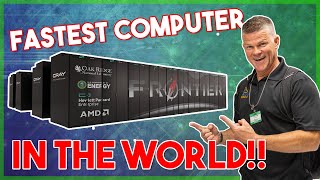
We tour the world's fastest super computer at Oak Ridge National Laboratory!
Apr 18, 2024

Exploring Tech Certification Challenges with Brent Morris
Sep 26, 2023

Navigating the CCIE Landscape with help from 3 CCIEs!
Sep 12, 2023

Everything you've ever wanted to know about the Cisco Certification program, and more! Ep 94
Jun 07, 2022