Mindscape Ask Me Anything, Sean Carroll | March 2023

Audio Brief
Show transcript
This episode covers fundamental physics from quantum mechanics to black holes, the philosophy of rationality, consciousness, and the societal conflict between science and religion.
There are four key takeaways from this wide-ranging discussion.
First, black hole properties challenge our understanding of space and information. Their maximum entropy scales with surface area, not volume, suggesting our three-dimensional universe might be a holographic projection. This hints at profound implications for the nature of spacetime.
Second, rationality serves as a procedure for achieving goals; it does not define what those goals should be. Behaviors like professional sports teams intentionally losing can be perfectly rational strategies within a system with flawed rules and incentives. Changing the rules is often more effective than condemning the behavior.
Third, in the Many-Worlds Interpretation of quantum mechanics, the wave function is not just a probability wave but the physical reality itself. This perspective resolves issues like energy conservation by treating all possible outcomes as real in separate, branching universes.
Fourth, the primary conflict between science and religion is ontological, stemming from their incompatible claims about the fundamental nature of the universe. While science can study religion as a human phenomenon, their core assertions about reality cannot both be correct.
This episode illuminates how scientific and logical frameworks apply across the cosmos and to our daily lives, from astrophysics to human behavior.
Episode Overview
- This "Ask Me Anything" episode covers a vast range of topics, from fundamental physics like quantum mechanics and black hole thermodynamics to the philosophy of rationality, consciousness, and the conflict between science and religion.
- Sean Carroll applies scientific and logical frameworks to analyze real-world issues, including the tangible experience of climate change, the threat of Christian Nationalism, and the game theory behind "tanking" in professional sports.
- The conversation delves into the nature of scientific knowledge, exploring the most significant physics discoveries of the last century and clarifying common misconceptions about gravity, quantum mechanics, and entropy.
- Carroll also shares personal philosophies on life, career evolution, and the intellectual goals of his podcast, aiming to make complex ideas understandable to an engaged audience.
Key Concepts
- Black Hole Physics: Black holes do not "suck" things in; their gravity is equivalent to any other object of the same mass from a distance. Their entropy is proportional to their surface area, not their volume, which is a profound puzzle suggesting spacetime may be holographic. Black holes quickly radiate away any irregularities ("no-hair theorem") to become smooth, and when they merge, the total surface area (and thus information) is conserved.
- Rationality and Game Theory: Rationality is a procedure for achieving goals; it does not define what those goals should be. Behaviors that seem irrational, like a sports team intentionally losing ("tanking"), can be a perfectly rational strategy within a system with flawed rules and incentives.
- Quantum Mechanics: Complex numbers are essential in quantum mechanics for describing interference while conserving probability. In the Many-Worlds Interpretation, the wave function is not just a probability wave but is the physical reality itself, which resolves issues like energy conservation when the universe branches. The "environment" is a practical concept referring to untracked degrees of freedom, not a fundamental boundary.
- Science vs. Religion: The primary conflict between science and religion is ontological; they offer incompatible claims about the fundamental nature of the universe. While science can descriptively study religion as a human phenomenon, their core claims about reality cannot both be correct.
- Gravitoelectromagnetism: This is a literal analogy where a moving mass creates a "gravito-magnetic" field (frame-dragging), similar to how a moving charge creates a magnetic field. However, unlike electromagnetism, gravity's source (mass-energy) is only positive, which prevents the creation of technologies like "gravity generators."
- Climate Change and Personal Experience: Visceral, personal experiences with unusual weather are becoming more common and can be more powerful than abstract data in convincing people of the reality of climate change.
Quotes
- At 1:47 - "We're moving into the phase of global climate change where people are going to start to notice. It's going to be harder and harder for people to stick their heads in the sand and pretend that nothing is happening." - He comments on the increasing difficulty of denying climate change as its effects become more apparent.
- At 59:51 - "A black hole is a maximum entropy state, but it still has an entropy proportional to area, not to volume." - Highlighting the central puzzle of black hole thermodynamics that points toward the holographic principle.
- At 96:57 - "You know that can't be true because we have counterexamples, namely the many-worlds interpretation of quantum mechanics where the quantum wave is not a probability wave, but is actually the physical universe." - He uses the Many-Worlds Interpretation to explain that the wave function is real and its energy is conserved.
- At 118:18 - "If you don't like that behavior, change the rules." - Carroll's advice regarding the controversy of "tanking" in sports, arguing it's a rational response to the existing incentive structure.
- At 147:34 - "Rationality only helps us achieve our goals. It doesn't tell us what our goals are." - Distinguishing between the process of rational thought and the underlying motivations for human behavior.
Takeaways
- The properties of black holes challenge our understanding of space and information; the fact that their maximum entropy scales with their surface area suggests that our 3D universe could be a holographic projection.
- Rationality is a tool for achieving goals, not a moral compass for choosing them. To change undesirable behavior in a system (like sports or economics), it is more effective to change the rules and incentives than to condemn the actors for playing logically.
- In the Many-Worlds view of quantum mechanics, the wave function is the fundamental reality. This perspective resolves paradoxes by treating all possible outcomes as real in separate, branching universes.
- The deepest conflict between science and religion stems from their mutually exclusive claims about the fundamental workings of the universe.
More from Sean Carroll

Mindscape 331 | Solo: Fine-Tuning, God, and the Multiverse

Mindscape Ask Me Anything, Sean Carroll | September 2026
Sep 14, 2026
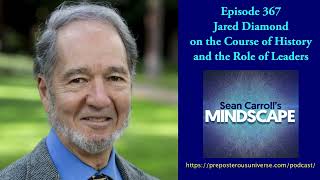
Jared Diamond on the Course of History and the Role of Leaders | Mindscape 367
Sep 07, 2026
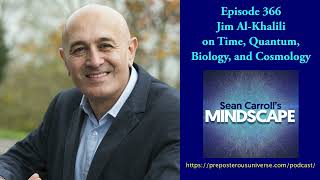
Jim Al-Khalili on Time, Quantum, Biology, and Cosmology | Mindscape 366
Aug 31, 2026