Mindscape 335 | Andrew Jaffe on Models, Probability, and the Universe
Audio Brief
Show transcript
This episode covers the nature of scientific knowledge, arguing it is fundamentally probabilistic and model-based, rather than a quest for absolute truth.
There are three key takeaways from this discussion.
First, scientific knowledge is provisional, constantly evolving through model refinement, not by seeking immutable facts. Science constructs simplified models of reality, continually updating them with new data to achieve the best fit, moving beyond a search for absolute certainty.
Second, scientific conclusions are probabilistic; evidence increases or decreases a theory's likelihood, rather than proving it. The confirmation of Einstein's general relativity illustrated this, showing observations made his theory vastly more likely than Newton's, acknowledging inherent measurement uncertainty. Scientific findings are therefore statements of probability.
Third, understanding probability, especially Bayesian reasoning, is critical for modern physics. Bayesian probability allows assigning likelihoods to unique events, which is crucial for cosmology and complex questions like the multiverse. The integration of probability, from statistical mechanics to quantum mechanics, signals a shift from a deterministic universe to one accepting fundamental randomness.
This probabilistic framework is essential for advancing our understanding at the frontiers of cosmology and quantum mechanics.
Episode Overview
- The episode deconstructs the nature of scientific knowledge, arguing it is fundamentally probabilistic and model-based rather than a quest for absolute, certain truth.
- It uses the historical confirmation of Einstein's theory of general relativity as a prime example of how scientists compare competing models and update their belief based on evidence, concluding one is "vastly more likely" to be correct.
- The discussion explores the philosophical underpinnings of this approach, contrasting the Bayesian and Frequentist interpretations of probability and their roles in physics.
- It connects these concepts to modern frontiers in cosmology and quantum mechanics, where understanding probability is central to tackling unresolved questions like the Hubble tension, the multiverse, and the nature of quantum reality.
Key Concepts
- Provisional Nature of Science: Scientific knowledge is not about achieving 100% certainty. It is an ongoing process of building provisional models that are constantly updated and refined as new data becomes available.
- Model-Based Reasoning: Science operates by creating simplified representations (models or theories) of the world and comparing their predictions against observational data to determine which provides the best fit. This cognitive tool is a fundamental human trait, not exclusive to scientists.
- Probabilistic Conclusions: Scientific evidence doesn't "prove" a theory but rather increases or decreases its probability of being correct relative to competing theories. For example, observations of gravitational lensing made Einstein's theory far more probable than Newton's.
- Bayesian vs. Frequentist Probability: The conversation highlights the two major interpretations of probability. The Bayesian view allows assigning probabilities to singular, unique events (like the fate of the universe), which is essential in cosmology. In contrast, the Frequentist view defines probability based on the frequency of outcomes over many repeated trials.
- Probability in Physics: The introduction of probability into physics occurred in two major, controversial waves: first with 19th-century statistical mechanics to manage the complexity of large systems, and second with 20th-century quantum mechanics, which suggested that randomness is a fundamental aspect of reality.
- Modern Physics Frontiers: These foundational ideas about probability and knowledge are crucial for tackling current challenges, including interpreting quantum mechanics (e.g., Many-Worlds vs. QBism) and defining probabilities within the context of a cosmological multiverse.
Quotes
- At 0:31 - "It turns out that scientific knowledge, empirical knowledge about the actual world in which we live, is not like that. That's not achievable in the world of the scientific exploration of the world." - Sean Carroll explaining that the scientific method does not yield absolute certainty.
- At 1:12 - "We call these theories, if you want to be a little bit less grandiose about it, models of the world." - Sean Carroll offering a practical definition for the scientific theories that are proposed and tested.
- At 1:43 - "The fact that scientific knowledge is provisional and probabilistic, rather than certain and foundational, means that we can update our way of thinking about it." - Sean Carroll pointing out that the lack of certainty allows for scientific progress.
- At 3:20 - "...the idea of a deterministic universe, right? A clockwork, predictable universe. And again, the reality doesn't quite work out that way. Quantum mechanics gets in the way..." - Sean Carroll on how modern physics replaced the deterministic view of the universe with a random one.
- At 21:15 - "One of the... huge coincidences that make life wonderful for us here on Earth is that we have eclipses because the size of the sun and the size of the moon are almost identical." - Highlighting the astronomical alignment that made it possible to test general relativity.
- At 22:48 - "It wasn't like we made this measurement with zero error and it was spot on Einstein's number." - Emphasizing that scientific conclusions are drawn from data that includes uncertainty.
- At 23:06 - "Again, it's a probabilistic statement. It was just vastly more likely that Einstein's theory was right." - Reinforcing that scientific evidence updates the degree of belief in a theory rather than providing absolute proof.
- At 47:49 - "you have the right as a Bayesian to talk about the probability of events that will only happen once, like who will win the World Cup or who will win an election or something. Whereas for a frequentist, that almost doesn't make sense." - Sean Carroll highlighting a key difference between Bayesian and Frequentist probability.
- At 48:06 - "I think most frequentists are actually Bayesians in some sense. They just don't want to be... because Bayesian probability is a mathematical theory and there's nothing mathematically incorrect about what we're doing." - Andrew Jaffe arguing that many scientists are functionally Bayesian in their work.
- At 50:23 - "there were two big things going on... in the 19th century, we invented statistical mechanics, and some people were scandalized that probabilities were coming into our best way of describing the world. Then in the 20th century, we invented quantum mechanics..." - Sean Carroll providing historical context for the resistance to probability in physics.
- At 51:36 - "It turns out that because at some level, because there are so many of them [particles in a gas], that the amount of information you usually need to know to describe it decreases ridiculously." - Andrew Jaffe explaining how statistical mechanics uses probability to simplify complex systems.
- At 1:00:41 - "the quantum uncertainties... are about what individuals know about the universe." - Andrew Jaffe explaining the core idea of Quantum Bayesianism (QBism), where quantum probabilities are treated as subjective degrees of belief.
Takeaways
- Embrace provisional knowledge; view scientific understanding as a constantly evolving map, not a final, absolute truth.
- Frame problems by building and comparing simplified models of reality, which is a more effective approach than searching for a single, perfect theory from the outset.
- Adopt a probabilistic mindset by using evidence to update your degree of belief in an idea, rather than seeking to definitively "prove" or "disprove" it.
- Apply Bayesian reasoning when dealing with unique, one-off events, as it provides a formal framework for making predictions based on limited evidence.
- Accept that uncertainty and error are inherent and unavoidable features of measurement and data collection, not signs of failure.
- Recognize that randomness is not just a measure of our ignorance but may be a fundamental and irreducible feature of the physical world.
- Understand that deep philosophical questions about the nature of knowledge and probability directly shape scientific progress at the frontiers of cosmology and quantum physics.
More from Sean Carroll

Mindscape 331 | Solo: Fine-Tuning, God, and the Multiverse

Mindscape Ask Me Anything, Sean Carroll | September 2026
Sep 14, 2026
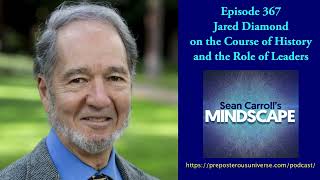
Jared Diamond on the Course of History and the Role of Leaders | Mindscape 367
Sep 07, 2026
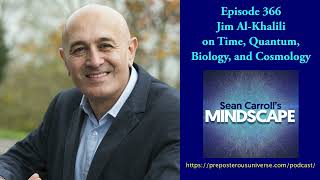
Jim Al-Khalili on Time, Quantum, Biology, and Cosmology | Mindscape 366
Aug 31, 2026