Know Your Frost Protection
Audio Brief
Show transcript
In this conversation, Growers Daily explores critical frost protection strategies for gardens and market farms transitioning into cooler temperatures.
There are three key takeaways. First, growers must select the right weight of row cover to balance thermal protection with light transmission. Second, physical contact between covers and crop foliage must be prevented to avoid severe frost damage. Third, alternative non-plastic methods and precise harvest timing are essential for minimizing waste and crop spoilage.
Choosing the right row cover weight requires balancing insulation against light availability. While heavier covers provide robust defense during deep freezes, they also block vital sunlight and can stall plant growth. Investing in durable, high-quality materials is more cost-effective than using cheap, lightweight plastics that degrade quickly and contaminate the soil.
Proper physical setup is critical to prevent crop damage under cover. Covers must be sized generously, utilizing hoops to keep the material from touching the foliage. Any direct contact between the plant leaves and the freezing cover causes frost burn, which can kill the main growth points of the crop.
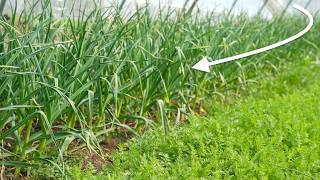
Growers can also look to history for sustainable, non-plastic solutions like glass cloches and straw mats. Additionally, proper harvest management remains crucial, particularly for garlic. Harvesting garlic too late causes the protective papery skin to dissolve, which drastically reduces shelf life and requires immediate consumption or preservation.
Optimizing frost protection through high-quality materials, correct physical setups, and timely harvesting ensures a highly resilient and productive cold-season harvest.
Episode Overview
- This episode of "Growers Daily" focus on the critical topic of frost protection for gardens and market farms as the season transition into cooler temperatures.
- Host Jesse Frost explores various materials and methods for shielding crops, comparing synthetic options like row covers and insect netting to more natural, historical techniques.
- The discussion includes a practical segment on how to properly calculate row cover sizes and manage them to avoid crop damage.
- The episode concludes with a listener question addressing the challenges of harvesting garlic too late, specifically dealing with bulbs that have lost their protective papery skins.
Key Concepts
- Understanding Row Cover Weights: Row covers come in different weights, which determine their level of frost protection and light transmission. Lighter covers, like AG-19, are suitable for mild spring frosts but degrade quickly, while heavier covers, like AG-30 (0.9 oz) or AG-50 (1.5 oz), provide robust protection for colder temperatures but significantly reduce light, which slows plant growth.
- The Pitfalls of Lightweight Netting: While lightweight insect netting is often marketed as a cheap solution, it lacks durability and rarely lasts more than one season. Investing in higher-quality materials like ProtecNet, though more expensive upfront, saves money and reduces waste over time because it resists tearing and doesn't trap excessive heat during late summer.
- Historical vs. Modern Frost Protection: Long before the invention of plastic, farmers successfully protected crops using glass cloches, straw mats, and cold frames. Understanding these traditional methods provides valuable inspiration for modern growers looking to reduce their reliance on plastic materials.
- The Role of Garlic Husk: The papery skin or husk of a garlic bulb is vital for regulating moisture and oxygen, preventing disease, and delaying resprouting during storage. Harvesting garlic too late causes this protective layer to dissolve, greatly reducing the bulb's shelf life and making it susceptible to spoilage.
Quotes
- At 2:41 - "cheap IS always cheap..." - emphasizing that choosing low-grade row covers often leads to shredded material contaminating the soil, meaning higher-quality investments are more cost-effective in the long run.
- At 3:54 - "In reality though, people successfully protected crops from frost long before plastic was ever invented..." - reminding growers that sustainable, non-plastic solutions have a rich history and remain viable alternatives today.
- At 8:08 - "...the heavier the row cover, the more light transmission you lose. So growth, if you're looking for growth, will slow down tremendously." - explaining the critical trade-off between providing maximum thermal protection and maintaining the light levels necessary for crop development.
Takeaways
- Size Row Covers Generously: Always purchase row covers that are several feet wider and longer than your garden beds. If you are using hoops, use established greenhouse plastic formulas to calculate the necessary width based on hoop height to ensure complete coverage.
- Prevent Row Cover Contact: Avoid letting row covers directly touch the foliage of your crops. Any contact point can cause the cover to freeze to the leaves, resulting in "frost burn" that damages or kills the growth points of the plants.
- Salvage "Naked" Garlic: If you harvest garlic too late and the bulbs lose their papery skins, designate them as "kitchen garlic." Consume them quickly, freeze the peeled cloves, or preserve them through pickling or dehydrating rather than attempting long-term curing.