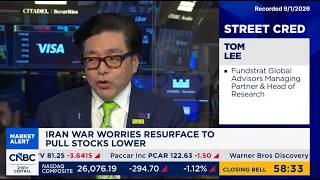
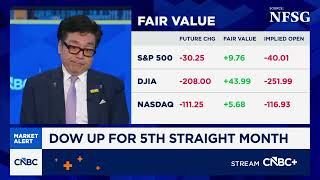
Is the SpaceX IPO a Market Top? Tom Lee Weighs In
Audio Brief
Show transcript
This episode analyzes current stock market volatility and the technology sell-off with Fundstrat Head of Research Tom Lee. There are three key takeaways. First, the upcoming seventy-five billion dollar SpaceX IPO is forcing institutional capital reallocation. Second, the resulting semiconductor pullback represents healthy consolidation rather than a structural breakdown. Third, investors should prepare for a three-phase market year with potential drawdowns later on.
Institutional funds are preemptively selling recent tech winners to raise cash for the massive SpaceX Nasdaq launch. This short-term gut punch creates noise but leaves sector fundamentals and long-term uptrends fully intact. Looking ahead, risk managers must watch for later-stage drawdowns triggered by Federal Reserve policy, lockup expirations, and energy metrics.
Ultimately, localized tech dips present strategic opportunities before broader macroeconomic pressures build later this year.
Episode Overview
- This episode features Tom Lee, Head of Research at Fundstrat, analyzing current stock market volatility, specifically looking at the sell-off in technology and semiconductor stocks.
- It explores how major upcoming events, particularly the massive $75 billion SpaceX IPO, are causing institutional investors to reallocate capital and sell off recent market winners to raise cash.
- It provides a broader outlook on the market's trajectory, detailing why Tom Lee believes the overall tech uptrend remains intact despite short-term jitters, and outlines potential risks later in the year.
Key Concepts
- SpaceX IPO Capital Reallocation: A major catalyst for recent market jitters is the upcoming $75 billion SpaceX IPO. Because SpaceX will be included in the Nasdaq 100, institutional funds are preemptively selling off recent winners (like semiconductors) to raise the cash needed to purchase shares and manage position sizing.
- Healthy Market Consolidation: Despite the downward pressure on tech and chip stocks, the underlying market structure remains healthy. The pullback is viewed as a temporary "gut punch" rather than a fundamental breakdown of the technology sector's chart patterns or growth story.
- The Three-Phase Market Outlook: The broader trajectory for the year is expected to follow three distinct phases. While the current uptrend is predicted to continue in the near term, a more significant drawdown could occur later in the year driven by a combination of Federal Reserve policy testing, lockup expirations, and energy shortages.
Quotes
- At 0:30 - "I think the market's trying to price all this in front of the SpaceX IPO which is this Friday. I think it's healthy though, and I don't think it's actually going to derail the tech trade either." - Explaining that current market volatility is a temporary, structural adjustment to a major liquidity event rather than a fundamental trend reversal.
- At 1:24 - "I think that cash means selling some of the recent winners... but I don't think it means those charts are completely broken." - Clarifying how institutional cash-raising mechanics force short-term sell-offs in strong sectors like semiconductors, creating noise rather than actual damage.
- At 2:40 - "We still expect this to be a three-phase market this year where we have a strong uptrend... I do think there's a pullback later this year, I think it's closer to lockup expiry." - Defining the long-term market framework and setting expectations for future volatility points beyond the immediate IPO window.
Takeaways
- Look past short-term institutional selling during major IPO windows, as these sell-offs are often driven by structural cash-raising requirements rather than a change in sector fundamentals.
- Maintain exposure to high-performing technology and semiconductor sectors during localized dips, treating these movements as healthy consolidation phases rather than structural breakdowns.
- Prepare for potential market volatility later in the year by monitoring regulatory triggers such as Federal Reserve leadership transitions, IPO lockup expirations, and oil supply metrics.