Incredible Recycling and Manufacturing Factory Processes Videos | How its Made
Audio Brief
Show transcript
This episode examines the ingenuity of industrial upcycling in resource-constrained environments, focusing on how waste materials are transformed into functional goods through low-tech engineering.
There are three primary takeaways from this visual documentary. First, the temporary nature of material geometry allows for cost-effective reclamation. Second, mechanical leverage serves as a powerful substitute for automation in manual manufacturing. And third, the contrast between subtractive and additive processes highlights the versatility required in sustainable production cycles.
Regarding the first takeaway, the documentary illustrates that the form of waste material is not fixed. Workers demonstrate that a discarded oil drum is essentially just a rolled sheet of steel. By reversing the geometry—unrolling and flattening the cylinder through high-pressure rollers—they reclaim raw construction stock without the energy-intensive need for melting or refining. This approach maximizes the economic yield of scrap, adhering to a zero-waste philosophy where even rims and off-cuts serve as reinforcement components.
The second insight focuses on the physics of production. In the absence of high-tech robotics, the manufacturing process relies heavily on fundamental mechanical advantage. Workers utilize long levers, fulcrums, and roller presses to magnify human strength. This is particularly evident in the rubber harvesting segment, where extreme tension applied via clamps allows simple knives to slice through thick truck tires that would otherwise bind the blade. It serves as a lesson in applying leverage rather than brute force to overcome material resistance.
Finally, the narrative contrasts production methodologies. The transformation of tires and oil drums represents subtractive manufacturing, where material is removed or disassembled to find value. Conversely, the electrical wire segment illustrates additive manufacturing. Here, solid plastic pellets undergo a phase change in a heated screw mechanism, coating a conductor to create a composite product. This highlights the necessity of mastering both cold forging and thermal management techniques, such as rapid water cooling, to ensure structural integrity across different material types.
These industrial processes offer a compelling blueprint for sustainable manufacturing and the economics of recycling in developing nations.
Episode Overview
- This visual documentary showcases the ingenuity of industrial upcycling and manufacturing in resource-constrained environments, highlighting the transformation of waste into functional goods.
- The narrative progresses through three distinct industries: converting discarded oil drums into sturdy wheelbarrows, the extrusion process of manufacturing electrical wire, and the manual harvesting of rubber from scrap tires.
- This content is highly relevant for those interested in sustainable manufacturing, low-tech engineering solutions, and the economics of recycling in developing nations.
Key Concepts
- The Value of Material Geometry: The episode demonstrates that the form of waste material is temporary. By understanding that a cylindrical oil drum is simply a rolled-up sheet of steel, workers can reverse the geometry (unrolling and flattening) to reclaim raw construction material without melting or refining it.
- Mechanical Leverage vs. Automation: In the absence of high-tech robotics, the workers utilize fundamental physics. They employ long levers, fulcrums, and roller presses to magnify human strength, allowing them to cut thick truck tires and flatten heavy gauge steel that would otherwise be impossible to manipulate by hand.
- Subtractive and Additive Manufacturing Cycles: The video contrasts two primary production methods. The tire and drum segments represent subtractive manufacturing (removing material to find value), while the wire segment illustrates additive manufacturing (coating a conductor with molten plastic to create a new composite product).
- The "Whole Buffalo" Philosophy of Recycling: The process emphasizes zero waste. Every part of the oil drum is used—the body becomes the wheelbarrow tub, while the rims and scraps are often repurposed for smaller components or reinforcements, maximizing the economic yield of the scrap.
Quotes
Note: As this video contains no dialogue, the following are key visual "statements" that teach the core lessons of the process.
- At 3:07 - "The flattening of the drum" - This moment reveals the plasticity of steel; passing the curved metal through a high-pressure roller instantly resets its "memory," turning a container back into raw building stock.
- At 7:30 - "Shaping the wheelbarrow tub" - This visual demonstrates cold forging, where the workers use hammers and anvils to introduce new structural integrity and shape to the flat metal without applying heat.
- At 11:42 - "The plastic extrusion hopper" - This explains the phase change required for cable manufacturing; solid blue pellets are fed into a heated screw mechanism, transitioning from solid to liquid to coat the wire uniformly.
- At 14:28 - "The water cooling trough" - This highlights the necessity of rapid thermal management in manufacturing; the hot, soft plastic coating must be immediately solidified to maintain its shape and insulation properties before spooling.
- At 26:15 - "The tire cutting leverage" - This teaches the application of tension; the worker creates extreme tension on the rubber using a clamp and lever, which allows a simple knife to slice through thick tire walls that would otherwise bind the blade.
Takeaways
- Audit your waste stream for raw materials by looking past the object's current shape; consider if disassembling or flattening an item can yield useful stock material (like sheet metal or rubber strips) for other projects.
- Apply the principle of mechanical advantage in your own manual work; if a material is too tough to cut or bend, look for ways to apply leverage or tension rather than just adding more force.
- Implement a "repair and repurpose" workflow by designing simple jigs and templates (like the wheelbarrow frame guides used in the video) to standardize production even when working with hand tools.
More from Hard Work and Skills
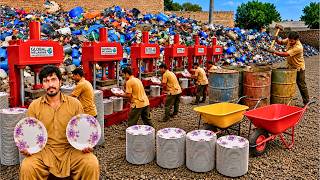
Top 5 Crazy & Amazing Recycling and Manufacturing Processes in the World | Amazing Factories
Sep 02, 2026
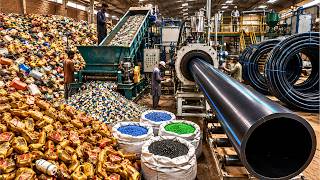
How Plastic Waste Becomes Brand New Pipes | Incredible Process
Aug 29, 2026
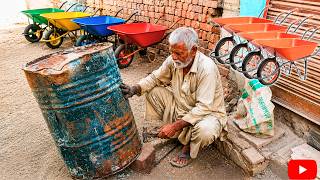
Massive Recycling Turning Scrap Oil Drums into Functional Wheelbarrow | Amazing Process
Aug 22, 2026

Ladies Slipper Making Full Process | From Raw Material to Finished Product
Aug 14, 2026