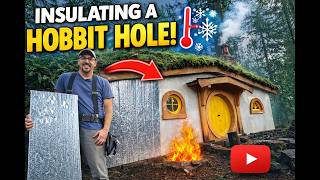
I Cut a Hole Into My Hobbit Hole | Framing the Rough Opening For a Window
Audio Brief
Show transcript
This episode details a significant shift in a creator's Hobbit hole construction project, moving from cinematic ASMR to practical, vlog-style problem-solving.
There are three key takeaways. First, adaptive construction is essential when initial plans clash with material realities. Second, retrofitting windows into existing masonry requires distinct strategies compared to standard wood framing. And third, builders must learn to embrace utility over perfection for hidden structural elements.
The narrative centers on a specific structural error where a rough window opening in concrete block was cut too small and unevenly. The builder demonstrates that flexibility is often more important than precision in custom DIY projects. Rather than restarting, he adapts by creating a level wooden buck frame to fit inside the irregular masonry. This highlights a crucial lesson for retrofitting: anticipate imprecise cuts in stone or concrete and build liners smaller than the opening to allow room for shimming.
The episode also explores the logistics of custom material preparation. Because the walls are non-standard, lumber must be ripped down to specific dimensions to accommodate insulation and finish panels. The builder notes that while the underlying concrete work may look "janky" or sloppy, the final aesthetic is saved by ensuring the framing itself is level and plumb. He reinforces the idea that expanding foam can bridge gaps caused by uneven cuts, effectively covering structural "sins" without compromising stability.
Ultimately, this update serves as a realistic look at the improvisation required in ambitious construction projects, proving that course correction is just as valuable as the original plan.
Episode Overview
- This episode marks a shift in content strategy for the creator, moving from long-form ASMR-style videos to shorter, vlog-style updates that explain the "what" and "why" of his Hobbit hole construction project.
- The narrative focuses on correcting a structural mistake made during the initial block work: a rough opening for a window that was cut too small and unevenly for the intended sash.
- Viewers follow the process of problem-solving a "janky" construction error, demonstrating that even ambitious DIY projects involve improvisation, mistakes, and course correction.
Key Concepts
- Adaptive Construction: The video illustrates the reality of DIY building, where initial plans often clash with material realities. The creator had to adapt a rough opening cut into concrete block to fit a specific salvaged window sash, showing that flexibility is as important as precision.
- The "Rough Opening" Challenge: A core concept in framing is the "rough opening"—the space left in a wall to accept a window or door. Here, the creator explains the difficulty of retrofitting a rough opening into existing masonry versus framing it with wood from the start.
- Material Management: The episode highlights the logistics of sourcing and prepping materials. From salvaging cedar siding to ripping down lumber to non-standard dimensions (10 3/4 inches) to accommodate insulation and finish panels, the builder demonstrates how custom builds require custom material prep.
- The Utility of Imperfection: The creator uses the phrase "spray foam covers a multitude of sins," introducing the concept that not all underlying structural work needs to be visually perfect. As long as the framing is level and plumb, gaps caused by uneven concrete cuts can be filled with insulation foam without compromising the final aesthetic.
Quotes
- At 0:41 - "I'm just going to do little clips explaining what I'm doing, why I'm doing it... but actually it takes quite a bit of time to do that [ASMR style]. You have to tell the story through a thousand little clips versus just showing little bits as I go and talking about it." - Explaining the shift in content strategy from cinematic storytelling to practical, explanatory vlogging.
- At 3:07 - "I had my saw and it was gigantic... and it was just I just ended up with this janky weird cut, so then I like put a bed of mortar on there and squished a board into it to create an even flat surface and the whole thing is kind of a joke." - Revealing the honest reality of DIY errors and the sometimes messy solutions required to fix them.
- At 5:36 - "The ends are just right where they need to be, but even backfilling with that mortar, you can see how sloppy that was. So, I'm going to have to fill that with foam." - Illustrating the troubleshooting process when leveling a sill plate on an uneven foundation.
Takeaways
- Embrace "good enough" in hidden structural elements; if a surface is level and secure but ugly, use expanding foam or other fillers to bridge the gaps rather than re-doing the entire substrate.
- When retrofitting windows into masonry, anticipate that your rough cuts will be imprecise; build wooden buck frames (liners) smaller than the opening to allow room for shimming and insulation.
- Don't underestimate the utility of a minivan for construction projects; removing seats transforms a standard family vehicle into a capable hauler for long lumber and supplies.