HOC E TROYJO: A NOVA ERA DO JOGO GEOPOLÍTICO | Market Makers #289
Audio Brief
Show transcript
This episode covers the current global geopolitical landscape, focusing on the escalating US China rivalry, the weaponization of economic policy, and Brazil's strategic role within this new world order.
There are four key takeaways from this discussion. First, the world is undergoing a major geopolitical realignment driven by intense US China competition and the transformation of economic tools into weapons. Second, Brazil, despite its immense potential in food and energy security, is hindered by reactive foreign policy and pervasive populism. Third, unconventional, pressure based diplomacy can be highly effective in breaking long standing geopolitical deadlocks. Fourth, long term national success depends more on understanding macro structural trends than reacting to short term micro geopolitical events.
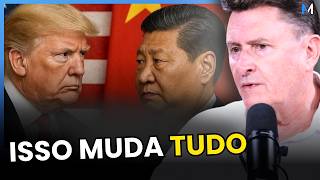
Experts Marcos Troyjo and Professor Hoc detail a major global realignment. The US and China weaponize economic tools like tariffs, transforming trade into a geopolitical battleground and re engaging historical adversaries. This shift signals a more transactional, interest based approach to international relations.
Brazil possesses vast potential due to its resources in food, water, and energy. However, reactive foreign policy, a culture of populism, and a failure to define its national interest prevent it from capitalizing on these advantages. The 2026 election is seen as a critical turning point for Brazil to define a modern national project, overcoming political hurdles and reducing strategic economic dependencies. Its most viable global role is as a neutral diplomatic mediator, built upon strong regional leadership.
Traditional diplomacy is evolving, exemplified by Donald Trump's unconventional tactics. His immunity to public pressure allowed him to apply immense leverage on all parties, disrupting established strategic calculus and achieving outcomes like the Abraham Accords. This highlights how non economic drivers like national honor and identity can influence geopolitical decisions more than pure cost benefit analysis.
Long term success for nations hinges on structural macro trends such as demographics and resource security. These fundamentals often outweigh short term micro geopolitical events. While political instability can be a challenge, Brazil's inherent strengths in resource security make it a resilient nation with significant long term upside if it can embrace non populist leadership.
The analysis underscores the urgent need for nations to adapt strategic thinking to navigate this complex and rapidly shifting global order.
Episode Overview
- This episode convenes geopolitical experts Marcos Troyjo and Professor Hoc to analyze the current global "geopolitical temperature," focusing on the escalating rivalry between the US and China and the weaponization of economic policy.
- The discussion provides a deep dive into Brazil's role in this new world order, critiquing its reactive foreign policy and populist domestic politics, which prevent it from capitalizing on its immense potential in food and energy security.
- The experts evaluate the effectiveness of different diplomatic styles, contrasting traditional approaches with Donald Trump's unconventional, pressure-based tactics, particularly in the context of the Middle East.
- The conversation concludes by distinguishing between short-term "micro-geopolitical" events and long-term "macro" trends, identifying which nations, like Brazil and India, are structurally positioned to thrive in the coming decades if they can overcome political hurdles.
Key Concepts
- The New Geopolitical Landscape: The world is undergoing a major realignment characterized by the US-China rivalry, the "weaponization" of economic tools like tariffs and currency, and the re-engagement of historical adversaries ("o romance entre os bicudos").
- Brazil's Strategic Paralysis: Brazil possesses vast potential due to its resources in food, water, and energy, but is hindered by a reactive and naive foreign policy, a culture of populism, and a failure to define its national interest.
- US Foreign Policy Shift: American diplomatic language is moving away from traditional concepts like "allies" and "the West," signaling a more transactional and interest-based approach to international relations.
- Populism as a Geopolitical Obstacle: A pervasive culture of populism and victimhood mentality prevents Brazil from developing a long-term, modern national project, making the 2026 election a critical turning point for its future.
- Brazil's Diplomatic Vocation: Brazil's path to global influence is not through military power but through skilled diplomacy, leveraging its traditional neutrality to act as a mediator in a polarized world. Regional leadership in Latin America is a prerequisite for this global role.
- BRICS Expansion: The recent expansion of the BRICS bloc is viewed as a "diplomatic defeat" for Brazil, as it diluted the country's influence and further centralized power around China.
- Trump's Unconventional Diplomacy: Donald Trump's effectiveness in foreign policy, such as with the Abraham Accords, stemmed from his immunity to public pressure, which allowed him to apply immense pressure on all parties and disrupt the traditional strategic calculus of groups like Hamas.
- Micro vs. Macro Geopolitics: The distinction between short-term political events (micro) and long-term structural trends like demographics and resource security (macro). Long-term success is dictated more by macro fundamentals.
- The Role of Values in Politics: Geopolitical and economic decisions are not purely rational or technical; they are heavily influenced by deep-seated values like national honor and identity, which can override cost-benefit analysis.
Quotes
- At 0:31 - "Eles já vieram várias vezes aqui, mas é a primeira vez que eles vêm com uma companhia, e um fazendo companhia pro outro." - Thiago Salomão highlights the unique format of having both Marcos Troyjo and Professor Hoc together for the discussion.
- At 6:12 - "Como é que está a temperatura do planeta? E eu não tô aqui falando em COP30 feelings, tô falando mais em geopoliticamente falando." - Thiago Salomão poses the central question of the episode to the guests, clarifying he means the geopolitical climate, not climate change.
- At 25:07 - "Você tem um efeito que eu chamo de 'o romance entre os bicudos'... a sabedoria popular no Brasil diz que dois bicudos não se beijam." - Marcos Troyjo explains that in the current geopolitical game, historical rivals are re-engaging, defying old norms.
- At 26:06 - "Da mesma maneira que os Estados Unidos 'weaponizaram', né, agora tá muito na moda o termo 'weaponização'... transformar ou a moeda ou as tarifas como arma." - Troyjo describes a key feature of the new global order: the use of economic instruments as tools of geopolitical power.
- At 27:14 - "Qual é o país que tem uma condição quase que automática de fornecer esses bens em velocidade e em escala? É o Brasil." - Troyjo highlights the massive opportunity created for Brazil when China retaliated against US agricultural exports.
- At 29:29 - "O déficit em si, eu não acho que é um problema. O que eu acho que tem por trás do déficit é um modelo econômico chinês que gera dependências nos Estados Unidos... e dependências na lógica ou ótica geopolítica é vulnerabilidade." - Professor Heni Ozi Cukier clarifies that the US trade deficit is a symptom of a Chinese model that creates strategic vulnerabilities.
- At 40:50 - "O Brasil tem que diminuir, sim, a sua dependência da China." - Professor Cukier makes a direct strategic prescription for Brazil, arguing that reducing its economic dependence on China is a national security imperative.
- At 42:25 - "Parece que o Brasil está vendo do lado de lá amigos, né? Quando na realidade, quando eles olham para nós, eles veem... um frango assado." - Troyjo criticizes Brazil's foreign policy toward China as naive, suggesting China sees Brazil as a resource to be consumed.
- At 53:49 - "2026 vai ser um ano muito decisivo pro Brasil, saber se a gente consegue começar a desenhar esse objetivo e caminhar em direção a ele." - Professor HOC RÖCK highlights the 2026 election as a critical turning point for defining and pursuing a long-term national project.
- At 55:30 - "Se a gente conseguir ter quatro mandatos de uma visão de mundo e de Brasil moderna, sem populismo e sem ressentimento e ranço de vitimismo... aí o Brasil talvez possa se desenhar nesse caminho." - Professor HOC RÖCK outlines the political conditions necessary for Brazil to achieve its potential.
- At 56:53 - "Ele pode ser um grande líder diplomático... porque ele é bem recebido, se a gente souber navegar com uma política externa condizente, com você se manter neutro." - Professor HOC RÖCK argues that Brazil's most viable role on the world stage is that of a neutral mediator.
- At 58:14 - "Ninguém se torna uma potência global sem antes ter uma presença e uma força no seu quintal." - Professor HOC RÖCK emphasizes that global influence must be built upon a foundation of regional leadership.
- At 1:03:15 - "Um dos 7 a 1 diplomáticos brasileiros foi esse processo de expansão dos BRICS... quanto você mais miniaturiza as ações das economias menores, mais você dá um epicentro para a economia chinesa." - Marcos Troyjo criticizes the expansion of BRICS as a major diplomatic defeat for Brazil.
- At 1:08:33 - "O Trump é imune a essa pressão. E isso mudou o cálculo da equação. Porque o Hamas não conseguiu fazer a guerra parar. E aí ele percebeu que ele iria morrer. E isso é um mérito do Trump." - Professor HOC RÖCK explains how Donald Trump's immunity to public opinion broke Hamas's strategy.
- At 84:48 - "O problema é impossível, ele é muito difícil. Ele não é um problema de Israel, é um problema de todo mundo." - Professor Hoc describing the complexity of resolving the conflict with Hamas.
- At 85:57 - "Nunca ele foi tão bem sucedido em ter tanta gente ao redor do mundo marchando e protestando pelo mundo gritando 'Free Palestine from the river to the sea'." - Professor Hoc commenting on Hamas's success in delegitimizing Israel globally.
- At 1:27:02 - "Se a gente somar isso que você falou do contexto... com um resultado diferente, a chegada no poder de um líder no Brasil não populista, aí o Brasil decola." - Professor Hoc outlines his belief that Brazil's geopolitical advantages can only be unlocked with non-populist leadership.
- At 1:29:21 - "O Brasil pode ir bem em áreas do tempo que são pautadas por geopolítica." - Marcos Troyjo noting that Brazil has historically shown it can prosper during periods of intense geopolitical activity.
- At 1:31:37 - "Eu acho que a gente não decola, entendeu? E é uma tristeza não decolar. Mas a gente não afunda." - Professor Hoc expressing a bittersweet optimism for Brazil, stating its fundamentals prevent collapse even if it fails to reach its potential.
Takeaways
- To mitigate risk, nations must actively work to reduce strategic economic dependencies on geopolitical rivals.
- Brazil must shift from a reactive to a proactive foreign policy, creating a long-term national strategy to convert its vast resources into global influence.
- For Brazil to unlock its potential, its primary domestic challenge is to overcome the cycle of populism and elect a succession of modern, pragmatic leaders.
- Brazil's most effective path to global relevance is to embrace its identity as a neutral diplomatic power, not a military one.
- Aspiring global powers must first establish undisputed leadership and stability within their own geographic regions.
- Be cautious of expanding multilateral blocs, as they can dilute the influence of mid-sized members and concentrate power for the largest players.
- Unconventional, pressure-based diplomacy can be a powerful tool for breaking long-standing geopolitical deadlocks by altering the risk calculus of all actors.
- When assessing geopolitical trends, focus on long-term macro fundamentals like demographics and resource security over short-term political noise.
- Geopolitical analysis must account for non-economic drivers like national identity and honor, as they often dictate decisions more than pure economic logic.
- Despite its political instability, Brazil's fundamental strengths in food, water, and energy security make it a resilient nation with enormous long-term upside.
- The 2026 election is a crucial inflection point that will likely determine whether Brazil embarks on a path of modernization or remains mired in populist stagnation.
More from Market Makers

EUA OU CHINA: QUEM VAI MANDAR NO MUNDO NO SÉCULO XXI?
Feb 13, 2026
CHINA E EUA: QUEM TEM MAIS PODER GLOBAL HOJE?
Feb 12, 2026

A ELEIÇÃO NÃO ESTÁ NO PREÇO (E O MERCADO PODE QUEBRAR A CARA)
Feb 11, 2026

BOLSA NA MÁXIMA HISTÓRICA: O QUE ESTÁ ACONTECENDO E COMO SE POSICIONAR | Second Level #32
Feb 11, 2026