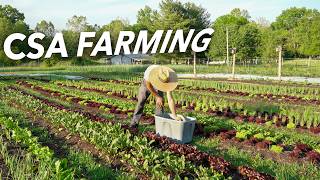
Half of All Life on Earth is Above You + Inside My Harvest Stations
Audio Brief
Show transcript
This episode covers the biological significance of tree canopies alongside practical farm management techniques for market gardeners. There are three key takeaways from this discussion. First, tree canopies play a vital role in terrestrial biodiversity and climate regulation. Second, the broadfork is an essential tool for deep soil health in no till systems. Third, creating a linear flow in wash and pack stations significantly improves operational efficiency.
Forest canopies hold an estimated fifty percent of terrestrial biodiversity and serve as a critical component of local and global climates. Through processes like evapotranspiration, trees create atmospheric rivers necessary for rainfall. Deforestation threatens this delicate water cycle, and losing as little as twenty percent of a forest could trigger a tipping point that transforms lush ecosystems into deserts. Farmers should view their land holistically and appreciate the pest control, shade, and biological magic provided by surrounding trees.
Moving from the canopy to the soil, the broadfork serves as a vital implement for no till agriculture. Its primary function is to loosen deep soil compaction without inverting the delicate soil layers. This action allows roots to penetrate deeper and improves overall soil structure. For the best results, farmers should apply amendments like compost before using the broadfork, allowing nutrients to settle naturally into the newly loosened earth.
Operational efficiency is just as crucial as soil health for small scale farms. A well designed wash and pack station should minimize unnecessary movement to reduce handling time and farmer fatigue. By implementing a linear flow system, produce moves seamlessly from washing to drying to packing. Simple additions like pedal operated sprayers and dedicated drying areas can transform a cumbersome process into a streamlined operation.
By balancing a deep understanding of natural ecosystems with efficient daily operations, growers can build more resilient and productive farms.
Episode Overview
- This episode of "Growers Daily" features Farmer Jesse discussing the fascinating biology of tree canopies and their importance in terrestrial biodiversity.
- The episode provides a practical tour of the farm's root washing and pack stations, demonstrating a simple, efficient setup for small-scale operations.
- The discussion covers the purpose and use of broadforks, an essential tool for deep soil loosening in no-till farming.
- The content is designed to provide actionable insights for market gardeners, focusing on both conceptual understanding and practical farm management.
Key Concepts
- Tree Canopies and Biodiversity: Tree canopies hold an estimated 50% of terrestrial biodiversity, serving as an unexplored frontier until recent decades. These ecosystems are vital for maintaining global and local climates through processes like evapotranspiration, which creates the "atmospheric river" necessary for rainfall in areas like the Amazon.
- The Tipping Point of Deforestation: Deforestation can trigger a tipping point where a forest loses enough trees to disrupt the water cycle, potentially transforming rainforests into deserts. Recent estimates suggest this point could be reached with as little as 20% deforestation in the Amazon.
- The Role of the Broadfork: The broadfork is a crucial tool for no-till farmers, designed to loosen deep soil compaction without inverting the soil layers. This allows roots to penetrate deeper and improves soil structure, making it a critical step before or after applying amendments like compost.
- Efficient Farm Workstations: A well-designed wash and pack station should minimize unnecessary movement. Farmer Jesse emphasizes the importance of a linear flow system, where produce moves from washing to drying to packing in a streamlined process, saving time and energy.
Quotes
- At 2:30 - "Forest canopies are home to an estimated 50% of terrestrial biodiversity but remain relatively unexplored until just four decades ago." - Highlighting the immense and often overlooked biological importance of tree canopies.
- At 5:25 - "We look deep inside at that down... but what we don't do is spend enough time looking up and appreciating the forest canopies and all the magic they hold." - Emphasizing the need for a holistic view of farm ecosystems that includes the benefits of surrounding trees.
- At 14:13 - "Tools should not be judged on how they look, but what they actually do for the soil." - Clarifying the purpose of the broadfork as a tool for soil health rather than just a traditional tillage implement.
Takeaways
- Consider the broader ecosystem of your farm, including tree canopies, which provide critical benefits like pest control, shade, and biodiversity.
- Design your wash and pack stations for a linear, efficient flow to reduce handling time and fatigue; use simple tools like pedal-operated sprayers and dedicated drying areas.
- Use a broadfork specifically to address soil compaction and facilitate deeper root growth, ideally applying amendments like compost beforehand so they can settle into the loosened soil.