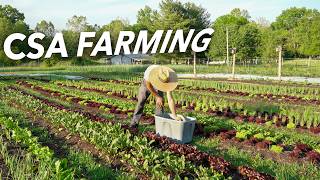
Fall Kale Breakdown + Interplanting…Don’t Overthink (or Underthink) it
Audio Brief
Show transcript
This episode covers the strategic essentials of growing fall kale, managing winter crop survival, and implementing high-yield interplanting techniques.
There are three key takeaways to optimize cool-season production. First, select winter-hardy kale varieties and adapt spacing for high-humidity tunnels. Second, treat winter gardening as a preservation phase rather than an active growth cycle. Third, manage light competition and soil fertility to ensure successful interplanting.
To withstand freezing temperatures, growers should prioritize curly varieties like Winterbor and Redbor over flatter varieties. These cultivars naturally contain less water in their leaves, preventing cell walls from rupturing during deep freezes. Additionally, wider spacing of eighteen inches is critical in fall tunnels to maximize airflow and prevent foliar disease caused by increased humidity.
Success in cold-weather farming requires a shift in mindset from active crop growth to winter preservation. Because plant regrowth slows dramatically under limited sunlight, crops must reach maturity before freezing temperatures set in. Growers should plant double their typical spring volume to maintain a consistent harvest throughout the winter months.
When co-planting multiple species, managing light levels is more critical than below-ground competition. Shading often limits plant development more than root interactions, requiring precise physical placement. To support these dense systems, growers must increase overall bed fertility, water more frequently, and consider under-sowing cover crops like crimson clover late in the season.
By adjusting variety selection, spacing, and soil fertility, growers can successfully navigate the summer-to-fall transition and secure a steady winter harvest.
Episode Overview
- Explains the benefits of growing fall kale, focusing on variety selection, pest protection, and winter harvesting.
- Demystifies the core principles of interplanting, including root space, nutrient competition, and light management.
- Provides actionable soil preparation tips to maximize crop yields during the challenging summer-to-fall transition.
Key Concepts
- Winter Kale Hardiness and Variety Selection: Varieties like Winterbor and Redbor have lower water concentrations in their leaves, preventing cell wall rupturing during freezes. This makes them significantly more winter-hardy than flat-leaf varieties like Red Russian.
- The Trade-Offs of Dino (Lacinato) Kale: Lacinato/Dino kale is highly marketable but yields less weight because of its lower leaf water content, requiring growers to charge a premium or plant in larger quantities.
- Airflow and Spacing in Fall/Winter Tunnels: While spring kale can be spaced tightly, fall kale in tunnels requires wider spacing (18 inches) to maximize airflow, since frequent covering and uncovering increases humidity and foliar disease risks.
- The Concept of Winter Keeping: Winter gardening is less about active plant growth and more about "keeping" established plants alive; because winter regrowth is slow, growers must plant double their typical spring volume to maintain a continuous harvest.
- Rules of Interplanting Compatibility: Successful interplanting requires pairing heavy feeders with light feeders, managing shade, and increasing overall bed fertility to sustain multiple root systems.
Quotes
- At 3:25 - "They have low concentrations of water in the leaves, which makes them less susceptible to the cell walls freezing and thawing... and ultimately bursting." - Explaining why curly winter varieties like Winterbor survive deep freezes better than flatter, high-water varieties.
- At 9:30 - "It's not winter growing, it is winter keeping stuff alive." - Defining the fundamental limitation of winter farming, which requires pre-establishing crops before sunlight and temperatures drop.
- At 14:46 - "Generally if one plant shades out another, it's a negative thing for the shaded plant... the shading is going to be a bigger issue for most plants than what's happening below ground." - Emphasizing that light competition is often a more critical factor in interplanting failure than root or chemical (allelopathic) interactions.
Takeaways
- Plant fall kale starts in 1- or 2-inch blocks, keep them under insect netting, and water them from the bottom to prevent pests and foliar rot before transplanting.
- Increase interplanted bed fertility and watering beyond standard single-crop requirements to prevent nutrient competition between co-planted species.
- Under-sow crimson clover into field kale roughly four weeks before the first expected frost to establish a winter cover crop as the cash crop slows down.